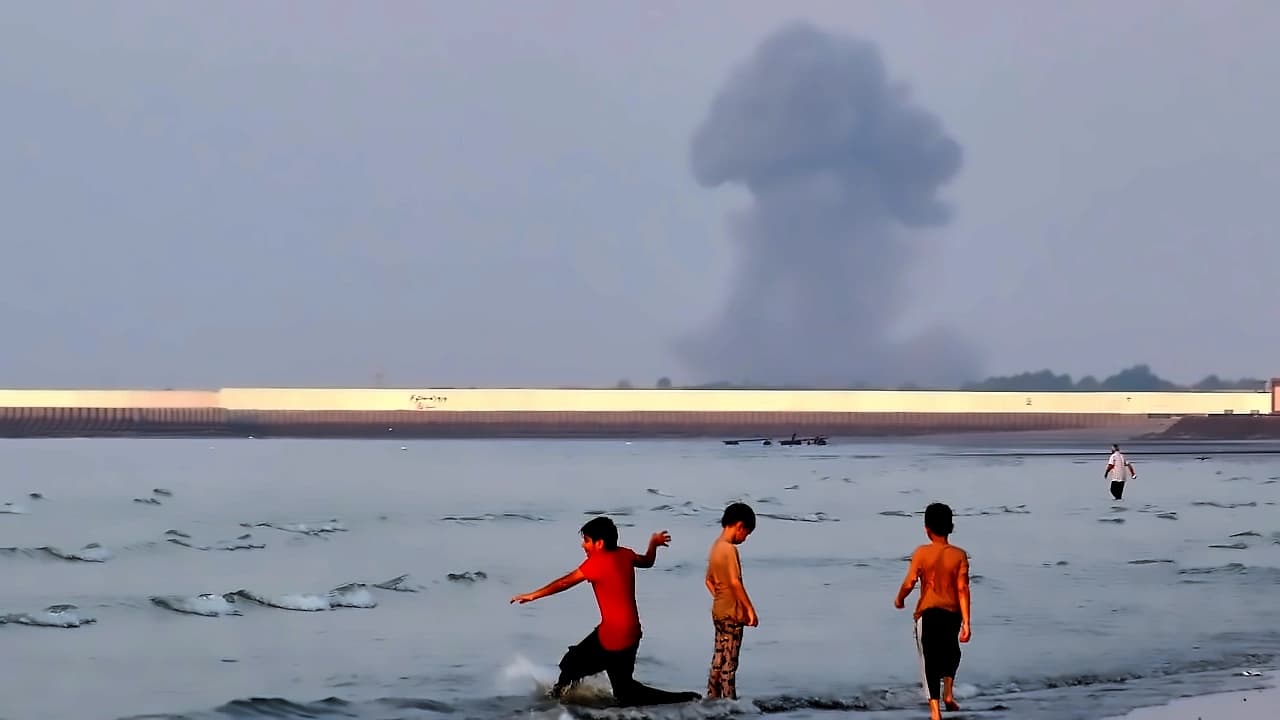
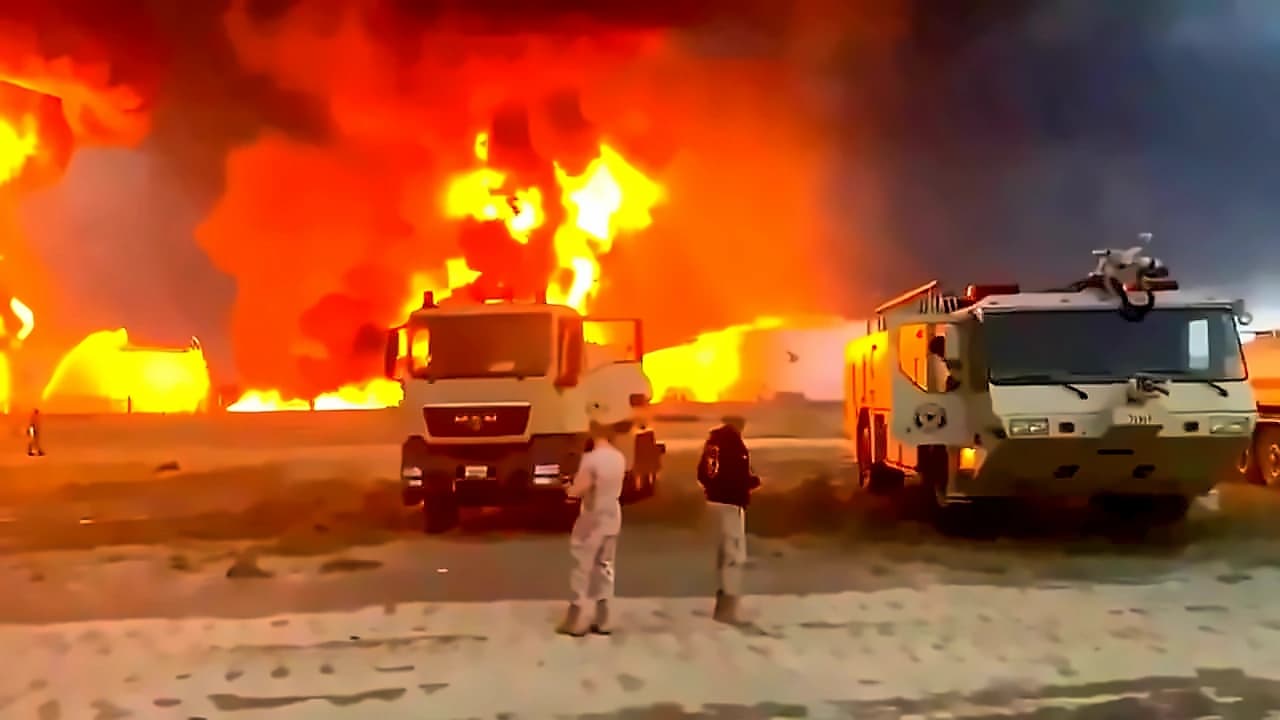
Kuwait has accused Iran of attacking a power generation and water desalination plant for the third time in three days, with authorities confirming that the latest strike triggered a large fire at the Al-Subiya facility amid Tehran's widening retaliation following US military action. According to Al-Jazeera, Kuwait's Ministry of Electricity, Water and Renewable Energy said the attack caused a blaze at the power and water distillation plant, with firefighting teams deployed to contain the fire. The ministry stated that emergency crews were working to extinguish the fire, which affected several electricity generation units, though there was no immediate official update on casualties or the extent of the damage. Kuwaiti Prime Minister Sheikh Ahmad Abdullah Al-Ahmad Al-Sabah visited those injured in the attacks at Al-Adan Hospital, accompanied by Health Minister Ahmad Abdulwahab Al-Awadhi, reviewing the medical response and reaffirming government commitment to supporting affected residents.
The conflict has intensified with Kuwait's armed forces intercepting hostile projectiles over the country's airspace throughout the day, as reported by Kuwait Army GHQ. Major General Saud Abdulaziz Al-Otaibi, the official spokesman for the Ministry of Defence, confirmed that hostile ballistic missiles and drones were detected within Kuwaiti airspace since dawn and successfully intercepted. Al-Otaibi emphasized that "the reprehensible Iranian aggression continues to target civilian and vital facilities in the country," specifically pointing to strikes on installations affiliated with the Ministry of Electricity, Water, and Renewable Energy that caused fires and severe damage. Meanwhile, Iran and the US have been launching strikes for nine days now as they vie for control of the Strait of Hormuz, with the latest exchange of attacks expanding beyond direct military installations to include critical civilian infrastructure in Gulf states increasingly coming under fire. This escalation represents a significant shift in the conflict's scope and potential impact on regional stability.
The attack has highlighted the extreme vulnerability of infrastructure in one of the world's driest regions, which relies almost exclusively on technology to produce freshwater. As reported by Associated Press, about 90% of drinking water comes from desalination in Kuwait, along with roughly 86% in Oman and about 70% in Saudi Arabia. The process removes salt from seawater through ultrafine membranes in reverse osmosis, with hundreds of desalination plants sitting along the Persian Gulf coast. Without these systems, major cities could not sustain their current populations, as more than 90% of the Gulf's desalinated water comes from just 56 plants, making each critical facility extremely vulnerable to sabotage or military action. The latest developments show that any disruption can threaten life in the small, desert nation, emphasizing the critical nature of these facilities for regional stability.
The confrontation has intensified after recent US military action against Iran, with the latest exchange of attacks coming despite a Pakistan-brokered memorandum of understanding signed in June, under which the US and Iran had agreed to pursue a lasting peace framework and halt hostilities. The Associated Press reported that the latest exchange of attacks has expanded the conflict beyond direct military installations, with critical civilian infrastructure in Gulf states increasingly coming under fire. This escalation represents a significant shift in the conflict's scope and potential impact on regional stability, with Iran previously accusing the US of striking Iranian desalination plants on Qeshm Island on March 8, cutting off water supplies for 30 villages. The conflict has now expanded to include Iran's Revolutionary Guards targeting US radar systems and military aircraft in Qatar to "punish the aggressor," as reported by the IRGC, while Jordan's military intercepted and shot down four drones that entered Jordanian airspace over the past 24 hours, with the interceptions causing no casualties or damage.
The escalating conflict has prompted international diplomatic intervention, with China's Foreign Minister Wang Yi and his Pakistani counterpart Ishaq Dar calling for a cease-fire and the resumption of dialogue between the United States and Iran, according to the Chinese foreign ministry. This diplomatic push comes as the conflict has intensified with Iran's Revolutionary Guards saying no oil or gas would be exported through the Strait of Hormuz as long as US attacks continue, according to Tasnim News Agency. The escalation has also seen Iran's Revolutionary Guards attacking a US special operations command centre at al-Tanf in Syria in retaliation for the killing of Iranian soldiers in Iranshahr, as reported by Tasnim news agency. Meanwhile, Arab League Secretary-General Nabil Fahmy warned that the escalating confrontation between the US and Iran risks pushing the Middle East into a deeper cycle of violence, destruction and economic disruption. Fahmy condemned Iranian attacks on Arab states, saying they should not bear the cost of the conflict, while urging Washington and Tehran to de-escalate tensions, honour their memorandum of understanding, safeguard freedom of navigation through the Strait of Hormuz and return to negotiations.