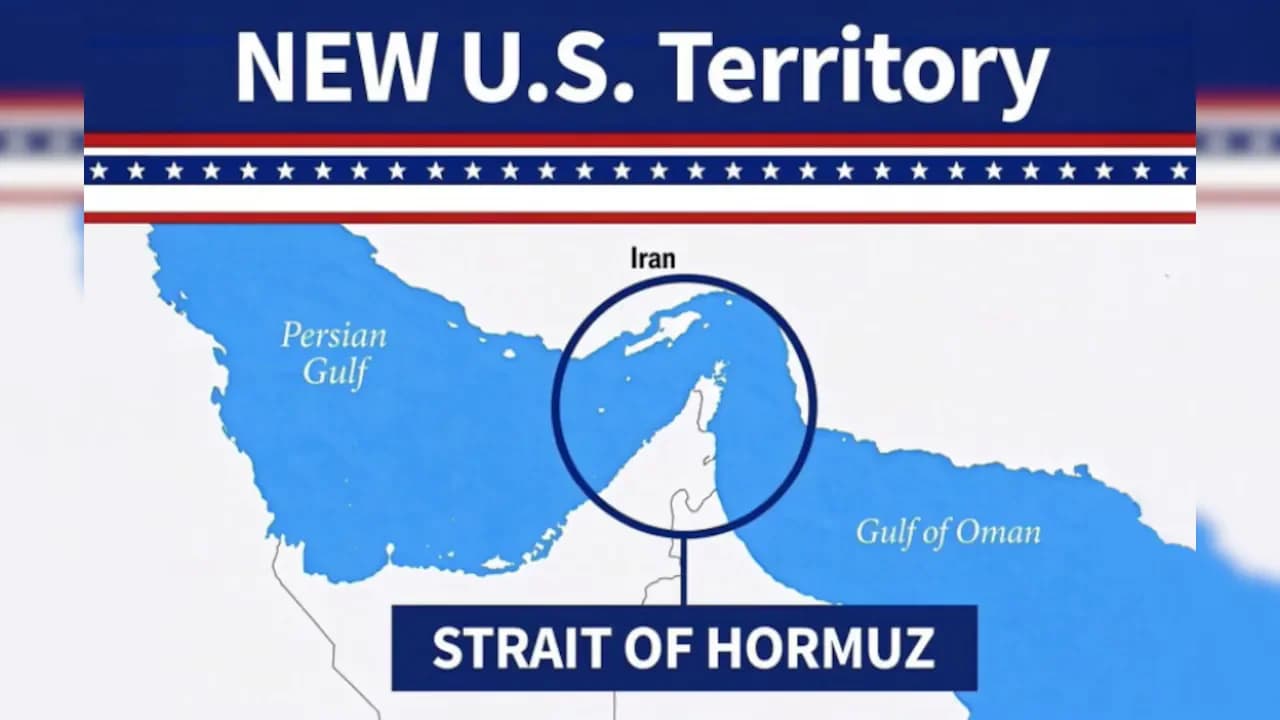
Iran's Islamic Revolutionary Guard Corps Navy has escalated its actions in the Strait of Hormuz, with the latest reports confirming Iran seized two vessels on Wednesday as they attempted to cross the strait "without authorization," according to the state news agency Tasnim. The MSC Francesca and Epaminondas vessels were reportedly seized by Iran's paramilitary Revolutionary Guard, with Iranian media stating the container ship had "ignored repeated warnings" before being fired upon, causing heavy damage to the bridge. Iran's Revolutionary Guard Corps claimed the seized vessels were "allegedly operating without proper authorization, repeatedly violating regulations, and manipulating navigation systems." Additionally, a cargo ship was fired upon on Wednesday and is now stopped in the water, according to an incident report from the UK Maritime Trade Operations Centre (UKMTO). The attacks come after Iran previously seized two container ships on April 22, citing maritime violations, and a third vessel was also reportedly targeted and disabled off Iran's coast.
The Strait of Hormuz has not broadly opened to ship traffic after President Trump extended the ceasefire with Iran, with ship traffic remaining at dangerously low levels. At least eight ships transited the strait Wednesday, including three oil tankers, according to tracking data from LSEG. The Iranian tanker Atlantis II appears to have crossed the strait into the Gulf of Oman despite the U.S. blockade, while a big empty tanker named Virgo entered the Persian Gulf though its destination was unclear. The Virgo is a very large crude carrier that can transport up to 2 million barrels of oil. Traffic was little changed compared with Tuesday when at least six ships made the trip, and about a dozen commercial vessels transited on Monday. Traffic remains way below normal levels before the war when more than 100 ships crossed the strait daily. Iran's parliament speaker Mohammad Bagher Ghalibaf said "reopening the Strait of Hormuz is impossible" as long as the U.S. blockade is in place.
White House Press Secretary Karoline Leavitt stated that President Trump does not view Iran's Revolutionary Guard Corps' seizure of two ships in the Strait of Hormuz as a violation of the ceasefire, telling Fox News that "These were not US ships. These were not Israeli ships. These were two international vessels." Leavitt downplayed the incidents, stating "These are two, two boats in grave comparison to the more than 160 naval vessels that the United States has sunk." She continued that "Iran has gone from having the most lethal navy in the Middle East to now acting like a bunch of pirates. They don't have control over the strait. This is piracy that we are seeing on display." The White House confirmed that the US naval blockade of Iranian ports would continue, with Trump planning to give Iran a limited timeframe to come up with a proposal to get diplomatic negotiations back on track.
President Trump announced an indefinite extension of the ceasefire with Iran on April 21, giving Tehran's leaders time to produce a unified peace proposal, as reported by NPR. However, Trump confirmed that the US naval blockade of Iranian ports would not be lifted. Iranian Foreign Ministry spokesperson Esmaeil Baghaei said Iran "appreciates" Pakistan's efforts to end the war, with the ministry acknowledging the ceasefire extension. Trump has not set a specific timeline for the extension, with White House Press Secretary Karoline Leavitt stating "the cards are in President Trump's hands right now" when asked about war duration. Iranian President Masoud Pezeshkian said in an online statement Wednesday that Iran welcomes dialogue but "breach of commitments, blockade and threats are main obstacles to genuine negotiations."
President Trump has escalated his economic pressure campaign, claiming Iran is "collapsing financially" and losing $500 million a day under the blockade. Treasury Secretary Scott Bessent wrote on social media that under Trump's orders, the U.S. Navy will continue the blockade, stating "In a matter of days, Kharg Island storage will be full and the fragile Iranian oil wells will be shut in." The airline industry is particularly affected, with German airline Lufthansa cutting 20,000 flights through October due to jet fuel prices doubling since the war began. Meanwhile, a poll in the U.K. shows 1 in 10 people are already stockpiling fuel as the war continues to rattle global markets. Iran's attacks on oil tankers before the ceasefire led to a plunge in traffic through the strait, triggering what's been described as the largest oil supply disruption in history. About 20% of the world's crude supplies passed through the strait before the war, and it will take until July for oil flows to reach up to 90% of prewar levels, with up to another two months for barrels to arrive at refineries around the world for processing into products, according to Rystad Energy.
The United Kingdom and France are hosting a two-day conference starting Wednesday aimed at reopening the Strait of Hormuz, with military planners from more than 30 countries meeting at a Royal Air Force base north of London. One of the challenges is removing undersea mines Iran is believed to have planted there. U.N. Secretary-General António Guterres cautiously welcomed Trump's announcement, stating "This is an important step toward de-escalation and creating critical space for diplomacy and confidence-building between Iran and the United States." The security situation remains extremely volatile, with the UKMTO warning ships that there are "high levels of activity" in the strait and they should report suspicious activity. The International Maritime Organization reports that the situation remains extremely volatile, with nearly 20,000 seafarers stranded in the Persian Gulf unable to return home due to dangers from missiles overhead and falling debris. The International Transport Workers' Federation has received almost 2,000 requests for assistance from seafarers stranded in the region and their families since the war began.