The Trump administration is preparing to announce what Treasury Secretary Scott Bessent calls 'unprecedented economic measures' against Iran, marking a significant escalation in the US economic pressure campaign. As reported by Business Standard, Bessent announced Thursday in an interview with Newsmax that 'Watch this space for more announcements coming next week because we are going to apply measures like have never been seen in the history of economic isolation on a country'. The measures will form part of what Bessent describes as a 'one-two punch' that includes the continued blockade of Iran's ports. This announcement comes as the US faces a munitions shortage and appears wary of expanding its military campaign against Tehran. President Donald Trump has also renewed his administration's push for economic pressure, telling Axios over the weekend that he is 'low-keying it' with Iran, noting 'We are just watching Iran with its huge inflation and the fact they have no money'. The upcoming announcement signals the Trump administration's intensified commitment to forcing Tehran's capitulation through financial pressure.
Iran's economy has already suffered significant damage from the ongoing conflict, with much of its industrial capacity destroyed and crude exports severely curtailed by the US blockade. According to Business Standard reports, Iran has weathered waves of sanctions that have failed to force Tehran to bend on its nuclear program or relinquish control over the Strait of Hormuz. In response to the economic pressure, Iran has reorganized its military to be more aggressive abroad as talks on ending the war with the US remain in stalemate, signaling Tehran's preparation for a protracted era of regional conflict. The US has added some 2,200 sanctions on Tehran since Trump began piling on new designations in 2018, with around 350 of those being part of Bessent's Economic Fury push. Oil held losses, with Brent trading near $87 a barrel after falling 2.2% in the previous session, reflecting the ongoing market impact of the escalating tensions.
The economic pressure campaign continues amid a broader standoff over the Strait of Hormuz, where both sides claim control of the waterway through which one-fifth of the world's oil and gas is shipped. As reported by Business Standard, there is little sign of a breakthrough between Iran and the US over the strait. Over the weekend, Iranian Foreign Minister Abbas Araghchi said a pact with Oman to establish a shipping route through the strait was 'very close,' without providing details. However, Mohsen Rezaee, the newly appointed secretary of Iran's Supreme National Security Council, said any agreement with Oman would remain separate from a full reopening of the strait. The Treasury Department's recent sanctioning of individuals and firms accused of helping Iran's Shahr Bank move funds clandestinely represents part of Washington's sustained financial pressure campaign. The two sides have not yet announced an agreement, with both demanding concessions that are unlikely to be met.
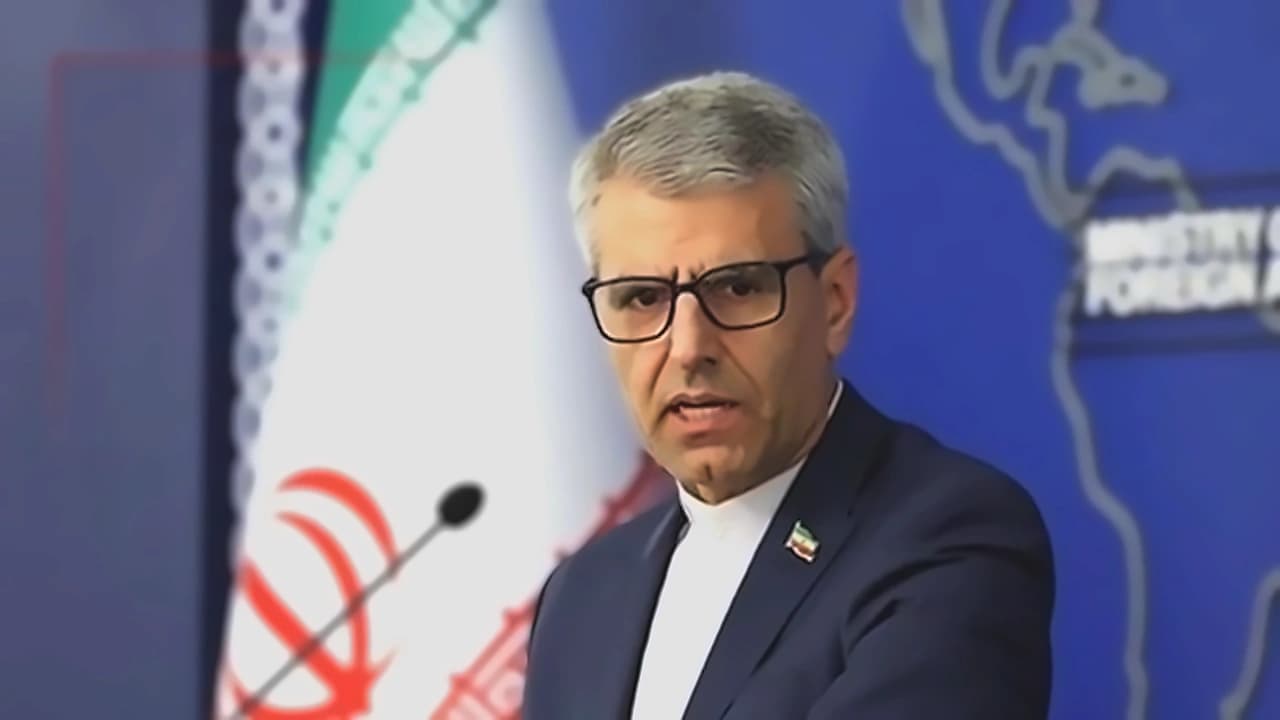
Iran's Foreign Ministry spokesman Esmaeil Baghaei has strongly rejected the US Treasury Secretary's boast of 'suffocating' Iran through economic sanctions. According to reports from IRIMFA_SPOX, Baghaei responded to comments made by US Treasury Secretary Scott Bessent on Fox News' Sunday Morning Futures program. Bessent had boasted of 'suffocating' Iran through economic sanations under what he termed 'Operation Economic Fury'. Baghaei's response came in a direct post on social media platform X, where he characterized the US approach as a symptom of what he termed 'compulsive addiction' to punitive measures rather than diplomacy. 'Beyond its sheer pathos, the claim is a stark testament to America's compulsive addiction to sanctions,' Baghaei wrote, adding that this is 'no longer policy—it is habit'.
The escalating tensions have impacted oil markets, with Brent trading near $87 a barrel after falling 2.2% in the previous session. As reported by Business Standard, the US has several options to tighten economic pressure on Iran, including targeting China and India, the two biggest buyers of Iranian oil - with China being responsible for over 90% of oil exports from Tehran. The US has already sanctioned some Chinese teapot refineries and firms but has stopped short of targeting major Chinese banks that finance the trade. Other possible targets include exchange houses in countries like the United Arab Emirates that help Iran repatriate funds, though experts note that 'will that get Iran to capitulate? Likely not on its own'. The upcoming announcement of unprecedented measures signals the Trump administration's commitment to intensifying economic pressure despite Iran's resilience to previous sanctions campaigns.