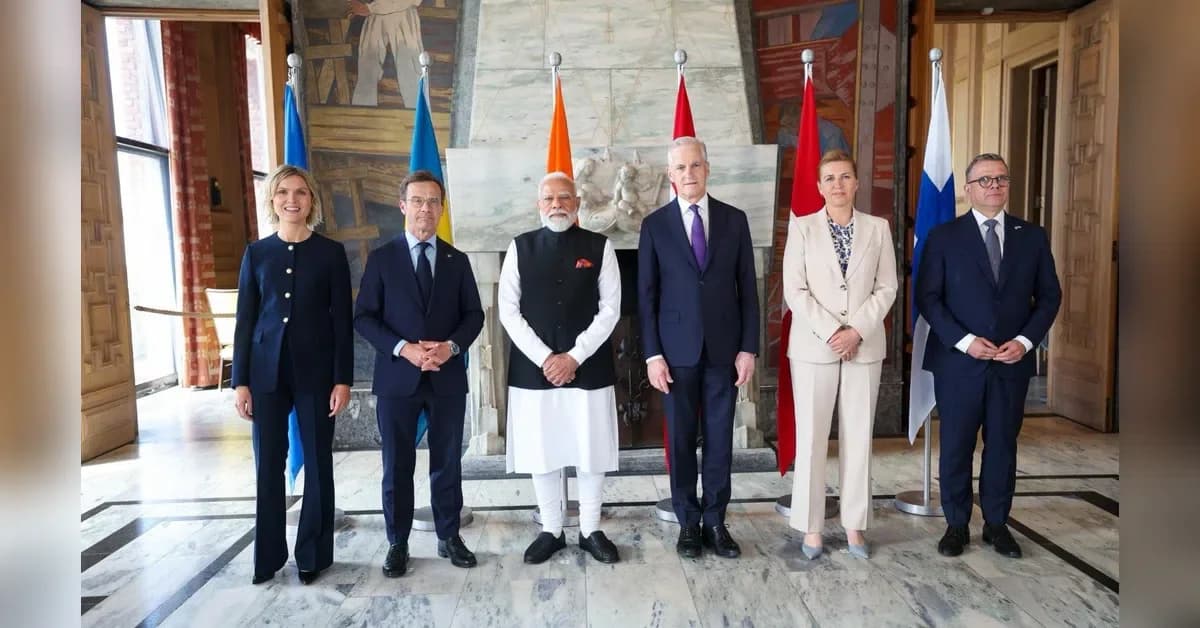
India's engagement with the Nordic region is gaining momentum as the countries explore technology-driven partnerships. According to reports from Business Standard, bilateral trade between India and the Nordic region has reached nearly $19 billion, while more than 700 Nordic companies currently operate in India. This partnership reflects India's shift towards geoeconomic and technology-driven diplomacy, moving beyond traditional trade relationships to focus on specialized expertise and infrastructure development. The cooperation is closely linked to the emergence of "technology geopolitics", where control over advanced supply chains has become a central axis of global power competition, with Europe and the United States seeking alternatives to China-centric manufacturing ecosystems.
The Nordic countries bring complementary technological capabilities that align closely with India's industrial priorities. As reported by Business Standard, Norway's strengths include offshore wind technology, carbon capture and storage solutions, and sovereign wealth capital. Denmark contributes expertise in renewable energy, port logistics, and cybersecurity, while Sweden offers advanced manufacturing and defence technologies. Finland provides telecom and digital infrastructure capabilities that support India's industrial transformation goals. The partnership is particularly significant as it aligns with India's "Make in India" ambitions and broader economic transformation agenda, with cooperation involving advanced semiconductor ecosystems and industrial innovation.
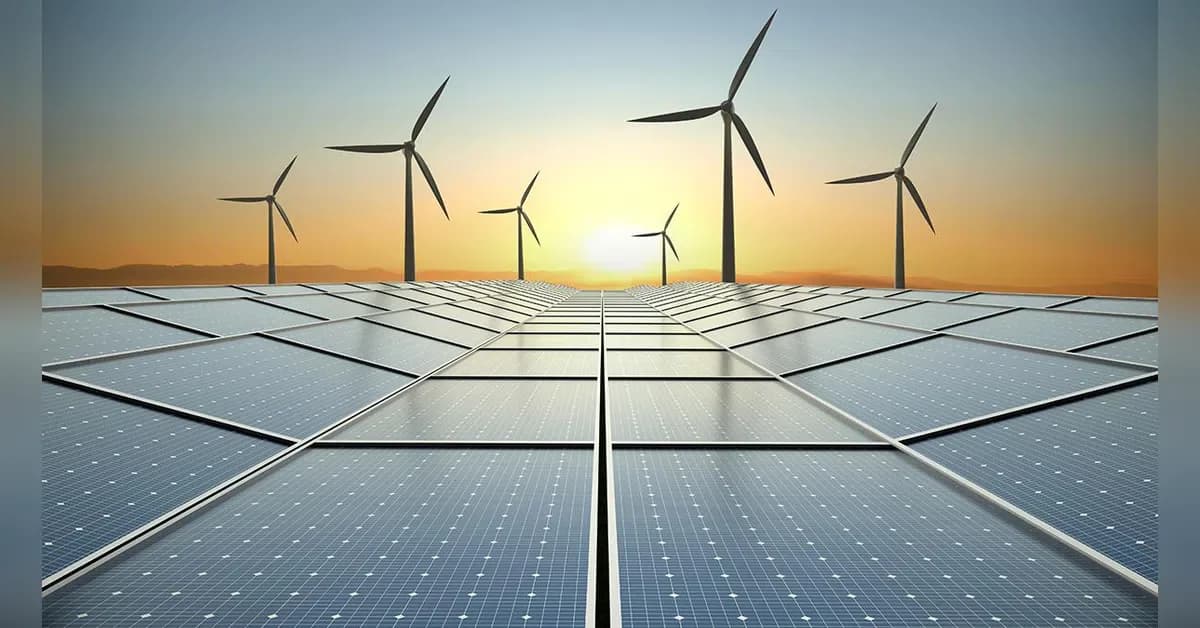
The clean-energy dimension represents a significant area of cooperation between the regions. According to Business Standard, India's transition to green industrialisation requires wide-range technological inputs, infrastructure financing, and specialized expertise. Norway's $2.1 trillion sovereign wealth fund, the world's largest, already holds investments worth over $34 billion across several Indian companies and can play an important role in financing India's infrastructure and energy transition projects. The partnership is gaining further strategic depth as India and Norway announced a "green strategic partnership" spanning clean energy, outer space cooperation and development partnerships for the Global South, as highlighted during the recent India–Nordic Summit in Oslo.
The partnership serves India's broader strategy to diversify its strategic partnerships amid growing global uncertainty. As reported by Business Standard, supply chains remain heavily concentrated in China and East Asia, making India's outreach about building trusted technology ecosystems and resilient economic networks with advanced innovation-driven economies. The cooperation extends beyond traditional trade to include access to expertise in polar research, maritime technologies, and emerging governance discussions around the Arctic region. With China's growing presence and Europe's growing security focus in the Arctic, India's engagement with the Nordic region is strategically significant as the Arctic emerges as a new frontier of great-power rivalry.
Despite the strategic benefits, challenges remain in attracting sustained long-term capital from Nordic investors. According to Business Standard, Nordic investors operate under strict environmental, governance and transparency standards, as reflected in controversies surrounding investment in certain Indian companies. India will therefore need to strengthen regulatory predictability and governance standards to attract sustained long-term capital from these advanced economies. The partnership reflects India's commitment to strategic autonomy, diversified partnerships, and a wider global reach, with the objective not only to balance power politics but to shape global economic and technological transitions.