Goldman Sachs has identified bond puts as some of the most effective hedges against a renewed rate shock scenario, according to reports from CNBC TV18. The investment bank made these recommendations following last week's hawkish Federal Open Market Committee meeting, which has significantly increased uncertainty over the outlook for short-term interest rates. The bank's analysis comes as uncertainty around the Federal Reserve's policy path rises under Chairman Kevin Warsh, with Goldman strategists led by Christian Mueller-Glissmann noting that uncertainty around future FOMC communication could keep front-end rates volatility elevated. The most attractive hedges in a renewed policy or rates shock scenario are investment-grade bond puts, long-dated payer options in both euros and dollars, and other trades designed to profit if bond prices fall as yields rise.
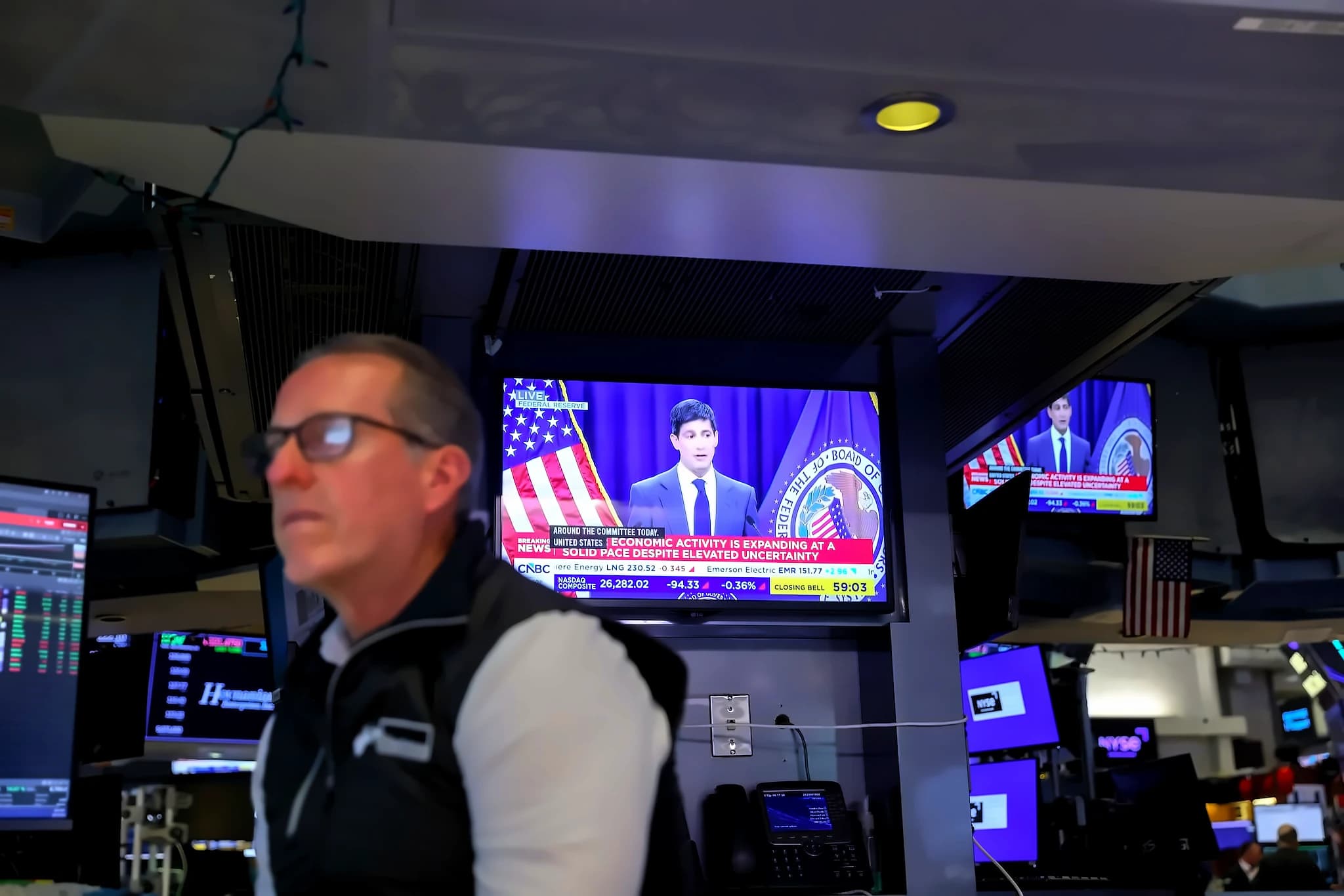
The hawkish stance taken by the Federal Open Market Committee has created a more challenging environment for interest rate predictions, as reported by CNBC TV18. Warsh held the Fed's benchmark rate unchanged at 3.50%-3.75% in his first meeting as chairman, but his communication was interpreted as hawkish by investors, which pushed the dollar to a one-year high. Goldman's hedge recommendations reflect this increased uncertainty, with the bank specifically citing the Federal Reserve's policy path as a key concern for investors. The bank's analysis suggests that current market conditions warrant defensive positioning against potential rate volatility.
While a sharp repricing in rates is not the bank's base case, Goldman estimates the options market is assigning roughly 41% probability that two-year Treasury yields will move more than 50 basis points in either direction over the next six months. This remains above the lows seen earlier this year but below the levels reached during the aggressive tightening cycle of 2022 to 2025. The bank noted that investors are no longer betting on a dramatic repricing of rates, but are instead expecting a 'sticky' front end of the yield curve, where short-term borrowing costs remain elevated for longer than previously anticipated. Short-term Treasury yields remain elevated, with the two-year currently hovering around 4.22%.
Goldman was less enthusiastic about gold as a hedge, noting that higher real yields and a stronger dollar have weighed on bullion prices, while gold options have become relatively expensive compared with equity and rates derivatives. Even as lower oil prices have eased inflation concerns and prompted Goldman economists to cut their probability of a U.S. recession over the next 12 months to 15% from 25%, the bank's analysis suggests that investors are increasingly grappling with the risk that rates remain elevated for longer, with markets pricing a wider range of possible policy outcomes.