Goldman Sachs sees healthcare as the next phase of the AI trade following the US midterm elections, according to Lou Miller, global head of Custom Basket Trading at Goldman Sachs FICC and Equities. Speaking on Goldman Sachs' "The Markets" podcast published on November 6, Miller believes healthcare could offer investors a combination of defensive characteristics and the potential for faster earnings growth. The shift represents a move beyond companies that build AI infrastructure to businesses that use the technology to improve products and services, particularly in medical tools and diagnostics. Miller notes that the midterm elections could reinforce the rotation in equities that has already begun, with the shift having started before voters went to the polls. He says the next leg of the AI trade is actually healthcare, as the AI investment opportunity could gradually move beyond companies that build data centres, supply chips and provide networking equipment to businesses that use the technology to improve products and services.
The first phase of AI investment was driven by demand for infrastructure, with data centre stocks declining 36% from market highs, memory stocks falling 42%, optical networking stocks dropping 46%, and NeoCloud stocks falling 57% from their respective highs in 2026. According to Miller, the correction in several parts of the AI infrastructure trade had been sharper than he expected. The valuation multiple for the data centre trade has fallen to about half its June level, representing what he describes as a reset that has brought valuations to healthier levels. He sees opportunity in lower expectations, noting that "the bar is much, much lower for surprises." The correction has also changed how investors value these businesses, with Miller pointing to the possibility of positive developments supporting parts of the trade.
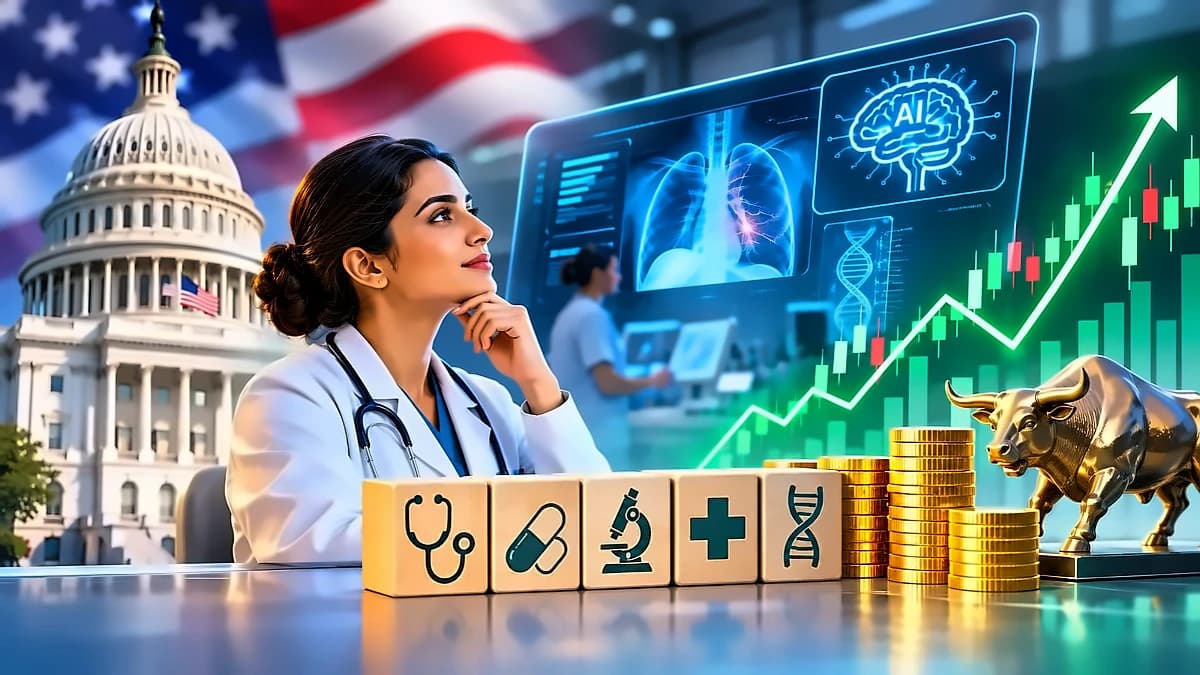
Goldman Sachs expects healthcare to be among the relatively few sectors that could record accelerating earnings growth next year. Miller notes that healthcare companies have started moving from facing headwinds to benefiting from new opportunities at the tools and diagnostics level, with both cyclical and secular factors supporting the sector. The combination of potential earnings improvement and defensive characteristics makes healthcare worth watching as investors reconsider their portfolios, particularly given its historically limited correlation with AI-related stocks. In healthcare, wider technology adoption and the use of AI could provide a longer-term growth driver, with the sector benefiting from both cyclical factors linked to shorter-term economic changes and secular factors representing longer-term industry trends.
The midterm elections could reinforce a rotation in equities that has already begun, with Miller noting that the shift had started before voters went to the polls. He favours the S&P 500 excluding AI-related stocks, arguing that investors can find high-quality businesses with attractive balance sheets and earnings growth prospects without paying premiums attached to some popular defensive stocks. Miller compares paying around 25 times earnings for certain consumer businesses with buying companies at high-teen earnings multiples that could deliver low-teen earnings growth, describing the latter as quality compounders. However, he cautions that investors should not assume every traditionally defensive sector is automatically a safe investment, noting that "expensive defensives I don't think are defensive." The second half of 2026 had been difficult for active investors, with positioning in Goldman Sachs' prime book falling to very low levels compared with historical levels.