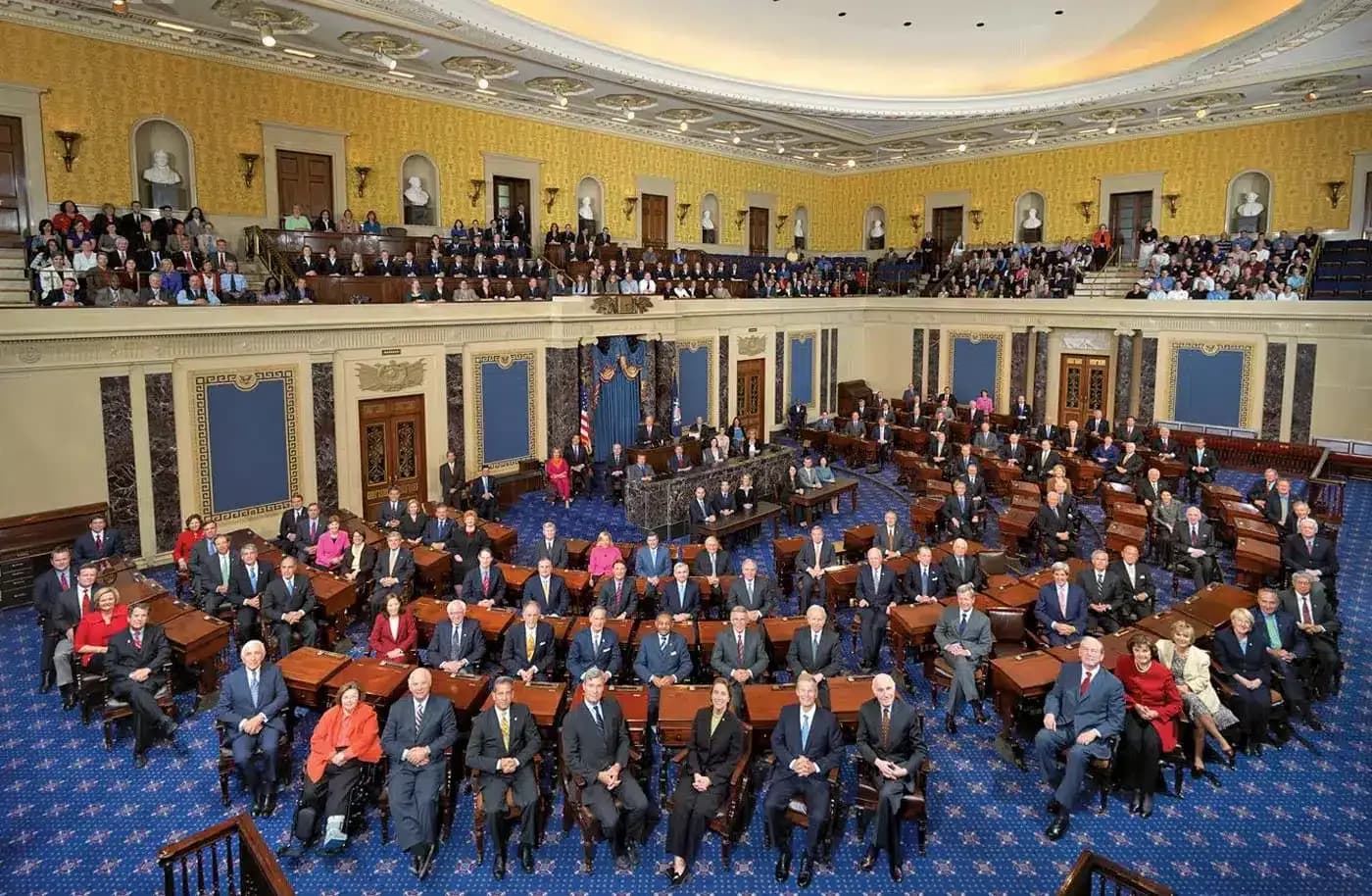
The November 3 US midterm elections are emerging as a critical factor reshaping the artificial intelligence investment landscape. According to reports from Reuters, a Democratic victory in both chambers of Congress would represent a significant political shift, potentially increasing regulatory scrutiny of AI companies and data center development. Trading on prediction markets Kalshi and Polymarket has indicated that a Democratic sweep is the most likely outcome, with Polymarket giving Democrats a 93% chance of winning the House and 65% for the Senate. Analysts expect Democratic control of Congress to result in more hearings and investigations into AI development, data center construction and their broader economic and environmental consequences, even if sweeping legislation to restrict construction remains unlikely. Brian Gardner, chief Washington policy strategist at investment bank Stifel, noted that "There will be congressional hearings. There will be investigations. You never know where that stuff leads, and there can be negative headlines."
Public opposition to data centers is emerging as a potential risk to the artificial intelligence investment boom, with the backlash becoming increasingly tangible as massive facilities proliferate across the United States. As reported by Reuters, communities across the United States are increasingly worried about the environmental impact of large facilities, rising electricity costs and the broader implications of AI adoption. A Reuters/Ipsos poll released this month found that 69% of registered Democratic voters supported limits on data center construction, compared with 43% of Republican voters. Christopher Gannatti, US chief investment officer at WisdomTree, emphasized that "This is and has become a very tangible issue. Since the launch of ChatGPT in November 2022, the key signal for the market has been how much money are these five or six huge companies spending" on data centers. Despite this opposition, analysts remain skeptical that Congress would pass legislation capable of significantly slowing the industry's expansion. Trump has supported AI development and would likely oppose measures that substantially constrain investment, analysts said. However, Trump also said on Wednesday that companies building data centers should provide a dividend to local communities to improve public acceptance of such projects.
The AI market is experiencing significant repricing as funding costs increase and growth momentum slows across the sector. Dan Niles from Niles Investment Management notes that agentic AI uses 10 to 100 times more tokens than inference, crediting this development for his cautious outlook despite not calling the market top. The PHLX Semiconductor Index (SOX) lost 3.2% last week, while the S&P 500 fell 0.5%, with chip stocks declining faster than the broader market. CoreWeave's debt market example illustrates the funding strain, as the company sold $1.25 billion of unsecured 2032 notes in June with a 9.625% coupon, but those notes have yielded around 15% this month, with CoreWeave stock falling 36% since the start of October. Anthropic's quarterly revenue growth slowed from 145% in Q2 to 45% in Q3, highlighting the deceleration in AI-native firm growth. Amazon dropped plans for 4 data center buildings on a $427 million campus in Loudoun County, Virginia, with opposition blocking or delaying US projects worth $68 billion between April and June, according to Data Center Watch.
Beyond funding challenges, Dan Niles flags political risk as a significant concern, noting that both US parties seem to agree on data center moratoriums, which could worsen after the midterm elections. He worries these moratoriums could hurt cloud growth guidance for the December quarter despite very strong growth in the September quarter. Australia's NextDC demonstrates how quickly political risk can impact share prices, with its stock falling 39.5% on October 21 after power delays tied to community opposition forced a guidance cut. Microsoft and Alphabet report after the close on October 28, followed by Amazon on October 29, with Niles expecting their stock moves to hinge on comments about capex, expenses, cash flow, and financing needs. Morgan Stanley strategists are monitoring elections for governor in Texas, Ohio, Pennsylvania, Georgia, Nevada, Wisconsin and Michigan, as the geographic concentration of data center investment makes these contests particularly important for investors.