The United States' ambitious Golden Dome missile defence programme could cost as much as $1.2 trillion over two decades, according to a new Congressional Budget Office (CBO) analysis. This figure far exceeds the administration's earlier estimate of $175 billion, highlighting the significant scale of the proposed space-based defence system. The updated cost estimate represents a substantial increase from the Pentagon's original projection, reflecting the complexity and scope of the proposed architecture. As reported by Fox Business, space-based layers are identified as the costliest component of the system. The CBO's estimates were complicated by the lack of details from the Department of War about how many systems would be deployed, making it impossible to estimate the long-term cost.
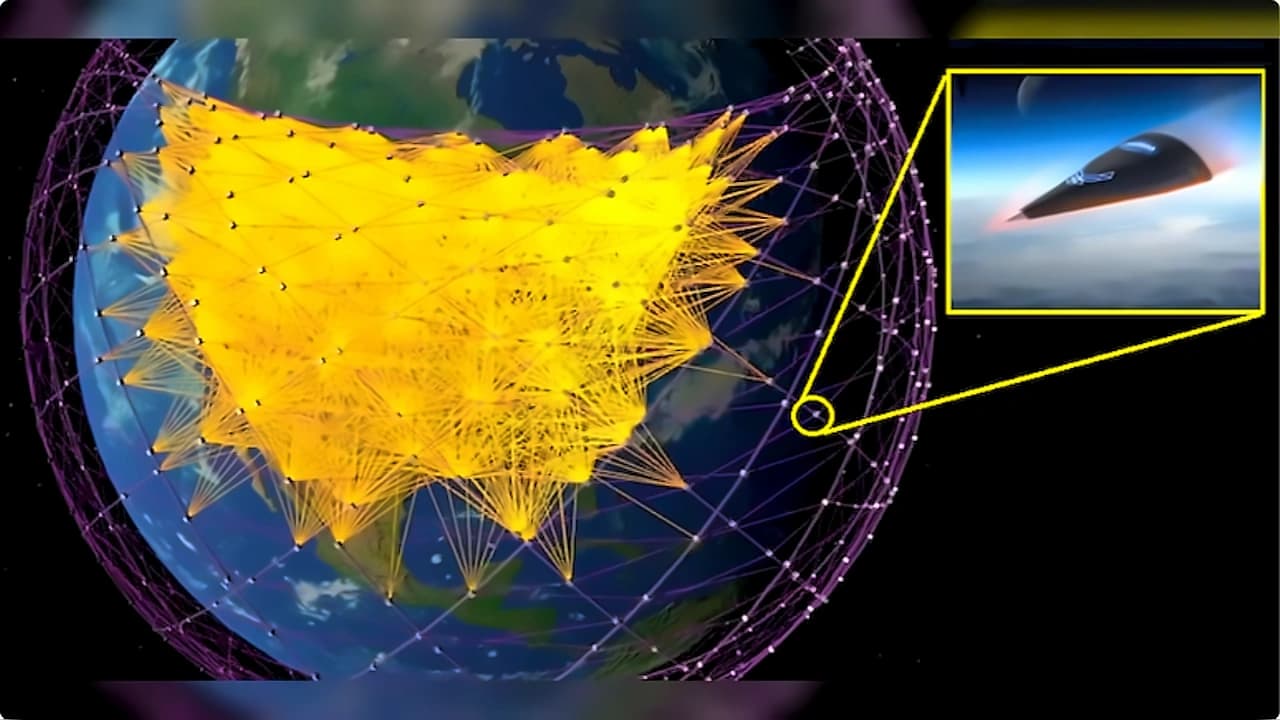
The proposed Golden Dome programme features an architecture that aims to place interceptors directly in space to destroy enemy missiles during their boost phase—the period immediately after launch when missiles are still accelerating and easier to track. According to the analysis, around 70 per cent of the acquisition cost would go into building and maintaining a massive constellation of interceptor satellites in low Earth orbit. The operational space-based interception system has never been deployed before, representing a fundamental shift in missile defence capabilities. The system would require four interceptor layers—one based in space, an upper and lower national system and regional defences, as detailed by the CBO.
As reported by The War Zone (TWZ), the proposed network would involve thousands of interceptors continuously orbiting the Earth to ensure global coverage. However, even this enormous constellation may only be capable of simultaneously engaging around 10 intercontinental ballistic missiles at a time. The Golden Dome is intended to defend the continental US and Hawaii against ballistic, hypersonic and cruise missile threats. The system would require advanced tracking capabilities and integrated command-and-control networks to maintain operational effectiveness. According to the CBO analysis, the system would have the capacity to fully engage an attack mounted by a regional adversary or a small-scale attack by a peer or near-peer adversary, though it could be overwhelmed by a full-scale attack from Russia or China.
The CBO analysis reveals significant operational challenges for the Golden Dome system. Roughly 30,000 satellites would be needed to keep 7,800 in orbit for 20 years, with each interceptor satellite costing $22 million and requiring nearly 1,600 replacements every year due to an estimated five-year service life. As noted by the CBO, atmospheric drag at the altitudes where interceptor satellites would orbit causes their orbits to decay over time, necessitating frequent replacements. The system would also require 35 new regional ground-based sites alongside the massive satellite constellation. Congress approved $24 billion for the Golden Dome in Trump's One Big Beautiful Bill Act last summer.
The proposed concept echoes former US President Ronald Reagan's 1983 idea for the Strategic Defense Initiative, nicknamed 'Star Wars'—a futuristic space-based defence shield designed to intercept and destroy incoming nuclear ballistic missiles. However, it never evolved into a fully operational shield due to technological and financial limitations. Trump has acknowledged that one of his Republican predecessors was the inspiration for his Golden Dome project, stating in January that "Ronald Reagan wanted this many, many years ago, he was ahead of his time but the problem is you didn't have equipment that worked. Today the equipment is unbelievable." The current proposal leverages modern advances in satellite networks, sensors and autonomous tracking systems to achieve practical implementation.
Critics argue that the programme could trigger a fresh space arms race while imposing an enormous burden on US taxpayers. The CBO warned that deploying the Golden Dome might encourage regional adversaries to increase their inventories of long-range missiles or pursue more effective countermeasures to improve their chances of penetrating the system. General Michael Guetlein, director of the Golden Dome project, testified to Congress that "We are laser-focused on affordability," while Democratic Senator Jeff Merkley called the project "nothing more than a massive giveaway to defence contractors paid for entirely by working Americans." The CBO noted that the system would not be an impenetrable shield or be able to fully counter a large attack of the sort that Russia or China might launch, emphasizing that "fully engage" is not the same as "fully defeat" because no defence works perfectly every time.