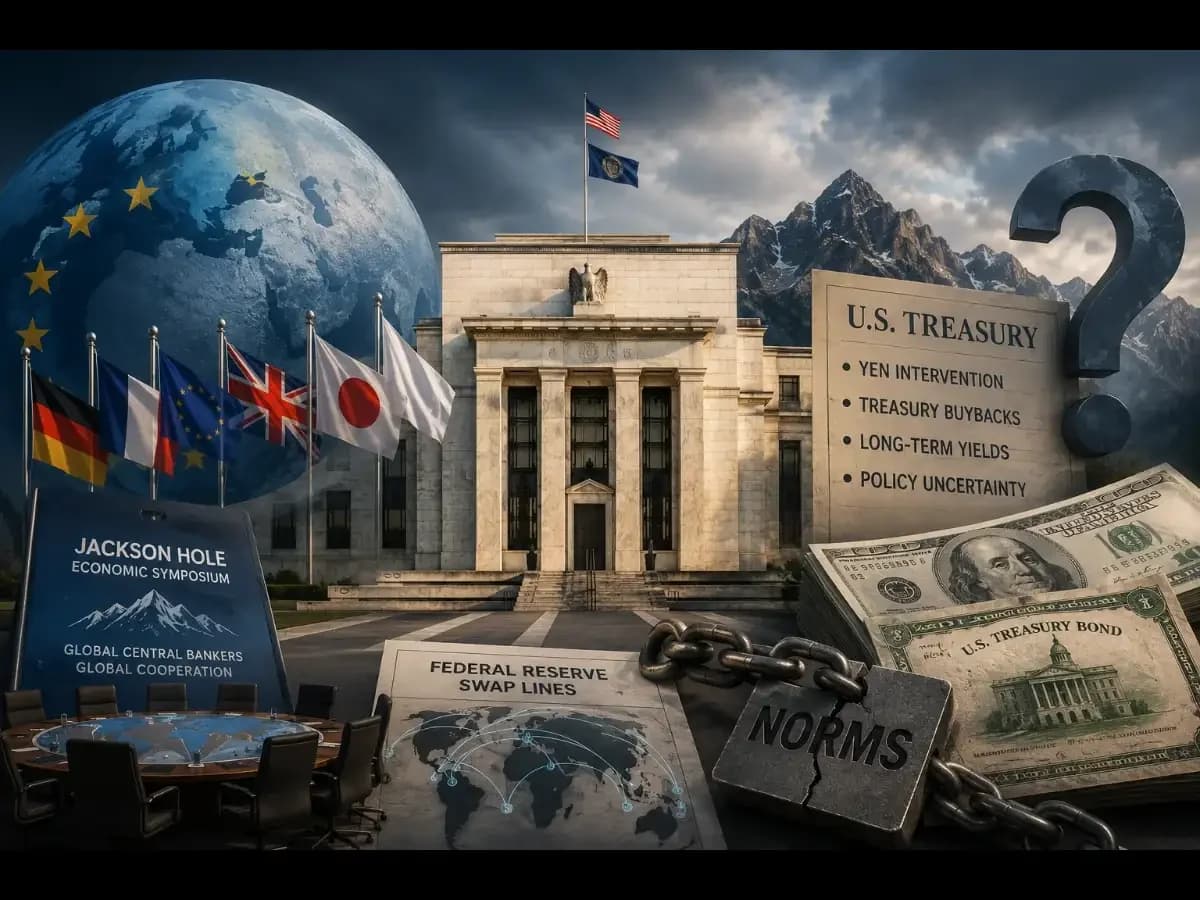
The Federal Reserve is navigating one of its most challenging policy environments as supply chain pressures intensified in March 2026, with the Global Supply Chain Pressure Index rising to 0.68 from 0.54 in February. According to the Federal Reserve Bank of New York, this marks the highest level in over a year and breaks a long cooling trend seen since 2023. The Iran conflict continues to destabilize global energy markets and raise uncertainty about inflation and economic activity. The Fed faces an exceptionally narrow path: tightening too aggressively risks tipping the economy into recession, while easing too soon could reignite inflation. Current Fed policy remains modestly tight, based on unemployment rate and year-over-year CPI changes, giving policymakers space to take a wait-and-see approach. However, Chicago Fed President Austan Goolsbee suggests a rate hike could be near, characterizing economic risk as 'orange with a chance of meatballs' - not great but not catastrophic.
Global central banks are growing increasingly concerned about geopolitical tensions, now ranking them as the most significant risk to the global financial system. According to a survey conducted by Central Banking Publications between January and March, nearly 70% of central banks identified geopolitics as their top concern in 2025. This marks a sharp rise from 35% in 2024, when geopolitical risks were still secondary to concerns around U.S. trade protectionism. The survey covered nearly 100 institutions collectively managing more than $9.5 trillion in reserves, even before the escalation of tensions linked to developments around Iran in late February. The ongoing tensions linked to US–Israeli attacks on Iran have disrupted key shipping routes and increased uncertainty in energy and commodity markets, contributing to the recent supply chain pressures.
Despite the near-term shift toward geopolitical concerns, inflation and interest rates continue to dominate the longer-term outlook. Over a five-year horizon, just over half of the respondents expect these factors to remain the most influential in reserve management decisions. However, their importance has moderated compared to last year, when 76% of central banks cited them as the primary concern. Geopolitical risks have simultaneously gained prominence in long-term planning, with nearly 30% of respondents highlighting them, which is double the proportion seen a year ago. The uneven recovery of global logistics systems compounds these challenges, as ports, shipping companies, and freight networks had only recently normalized after the pandemic shock, making even minor disruptions have amplified effects.

The survey points to evolving perceptions around the U.S. dollar, which has faced pressure, declining more than 12% against a basket of major currencies between early last year and this year, before recovering part of those losses. Around 80% of reserve managers still view the dollar as the primary safe-haven currency, though its dominance is increasingly being scrutinized amid shifting global dynamics. Reflecting this shift, 16% of respondents said the dollar's position would influence their reserve management decisions over the next five years, a notable increase from just over 3% last year. The current index level of 0.68 remains far below the pandemic peak of 4.49 in December 2021, but the direction of change is drawing attention from policymakers.
Confidence in U.S. government bonds has also weakened significantly. Only about one-third of central banks now expect U.S. bonds to outperform those of other major economies, including Group of Seven nations and China. This is a significant decline from more than half of respondents last year and over 70% in 2024, indicating a reassessment of relative returns and risk. The shift reflects growing concerns about the dollar's long-term role in a fragmenting global economy. The sustained rise in supply chain stress could complicate monetary policy decisions, especially if inflation proves more persistent than expected, potentially delaying or reducing the number of anticipated rate cuts in 2026.
Meanwhile, gold continues to benefit from the uncertain geopolitical backdrop, with nearly three-quarters of central banks reporting holding gold as part of their reserves. A growing number of central banks are considering increasing their exposure to gold, highlighting its enduring appeal as a hedge against volatility and systemic risk. This trend underscores how central banks are actively evaluating alternative safe-haven assets amid the changing global financial landscape. The moderate supply chain pressure of 0.68 signals a clear deviation from normal conditions but remains below crisis levels, representing an early warning signal rather than a supply chain meltdown.