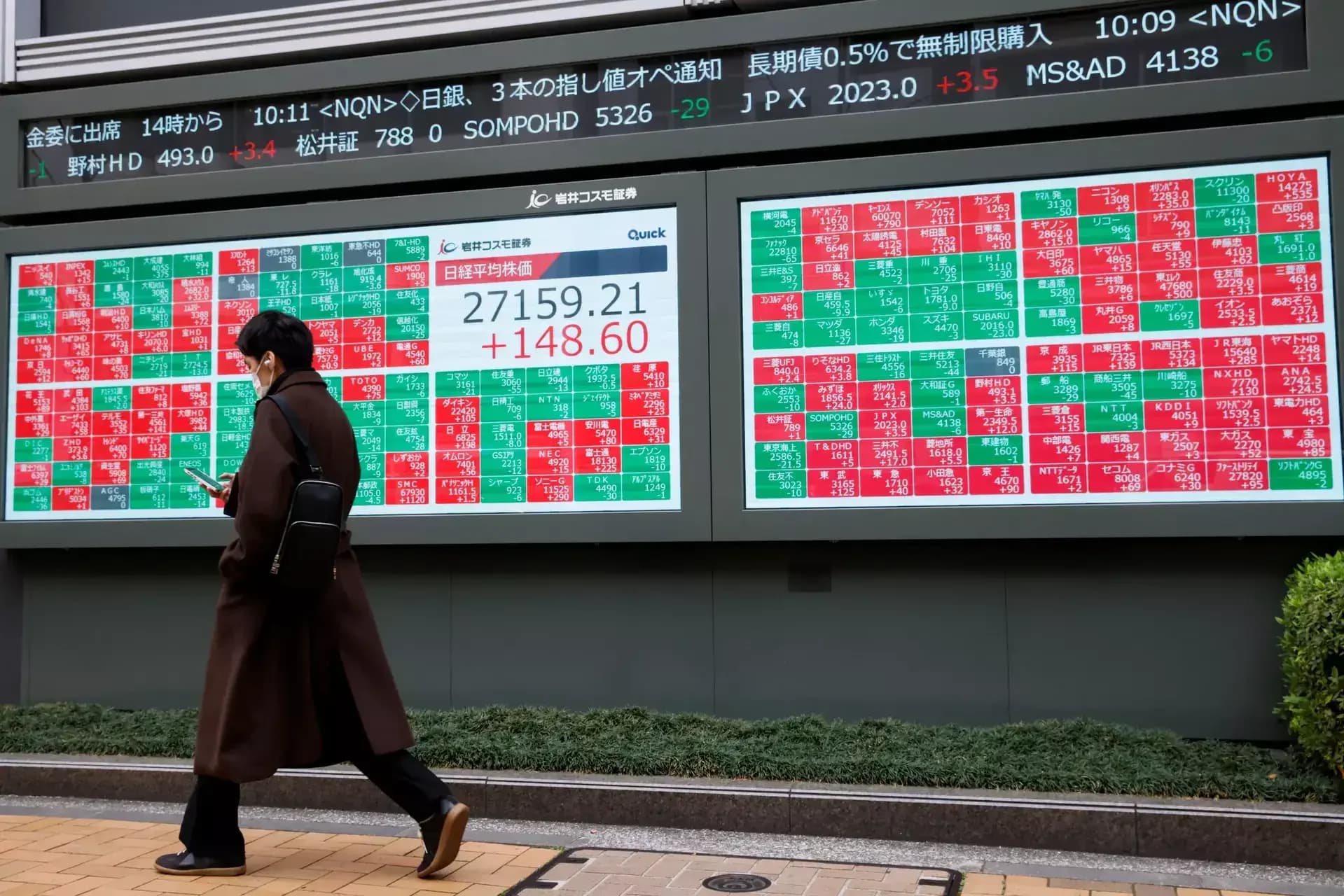
Foreign investors made a dramatic ₹2.96 trillion ($18.65 billion) investment in Japanese stocks during the week through April 4, marking a complete reversal from three consecutive weeks of selling. According to TradingView News, this represents a record weekly inflow that demonstrates how quickly overseas sentiment towards Japanese equities can shift. The Nikkei 225 climbed 5.39% on Wednesday and touched a three-year high as buying spread across blue-chip stocks, with exporters and cyclical shares among the main beneficiaries. The rebound came as investors grew more confident that a temporary truce between the US and Iran would hold, easing fears of a broader regional conflict and helping revive appetite for risk assets across Asia.
Seasonal factors played a crucial role in the foreign investment surge, as reported by TradingView News. Foreign financial institutions often move Japanese shareholdings to offshore arms at the end of Japan's fiscal year to capture dividend-related tax advantages and manage voting rights more efficiently. This creates artificial selling pressure in March, followed by a rebound in early April. Tomochika Kitaoka, an analyst at Nomura, explained that these seasonal flows likely amplified the rally as investors unwound positions built before the fiscal year-end. The improvement in geopolitical sentiment gave investors an additional reason to buy back into the market, with the relief that the US-Iran stand-off had eased supporting a broad-based rebound in global risk assets.
The surge in benchmark Japanese government bond yields to a near three-decade high also attracted ₹2.46 trillion in foreign inflows into local long-term bonds during the week, as reported by TradingView News. Meanwhile, Japanese investors pumped roughly ₹1.44 trillion into foreign stocks, representing the largest amount in 11 months. However, Japanese investors remained net sellers of foreign long-term bonds by a net ₹2.46 trillion, marking their fourth successive week of selling foreign bonds. The simultaneous pickup in demand for both equities and bonds points to a broader reassessment of Japanese assets, with higher domestic yields making Japan's bond market harder to ignore.
The investment turnaround reflects more than short covering, with investors returning to large, liquid stocks that tend to attract foreign money during periods of improving confidence. As per TradingView News, this suggests the move was driven at least in part by fresh allocations rather than purely tactical repositioning. Japan has remained a favoured market for global funds seeking exposure to Asia without taking on the same degree of direct China risk. The key question now is whether the rebound in foreign buying can be sustained once the seasonal effect fades. If inflows continue in the coming weeks, investors may read that as evidence that Japan's rally has deeper support from global asset allocators, provided the geopolitical backdrop remains calm and domestic yields stay supportive.