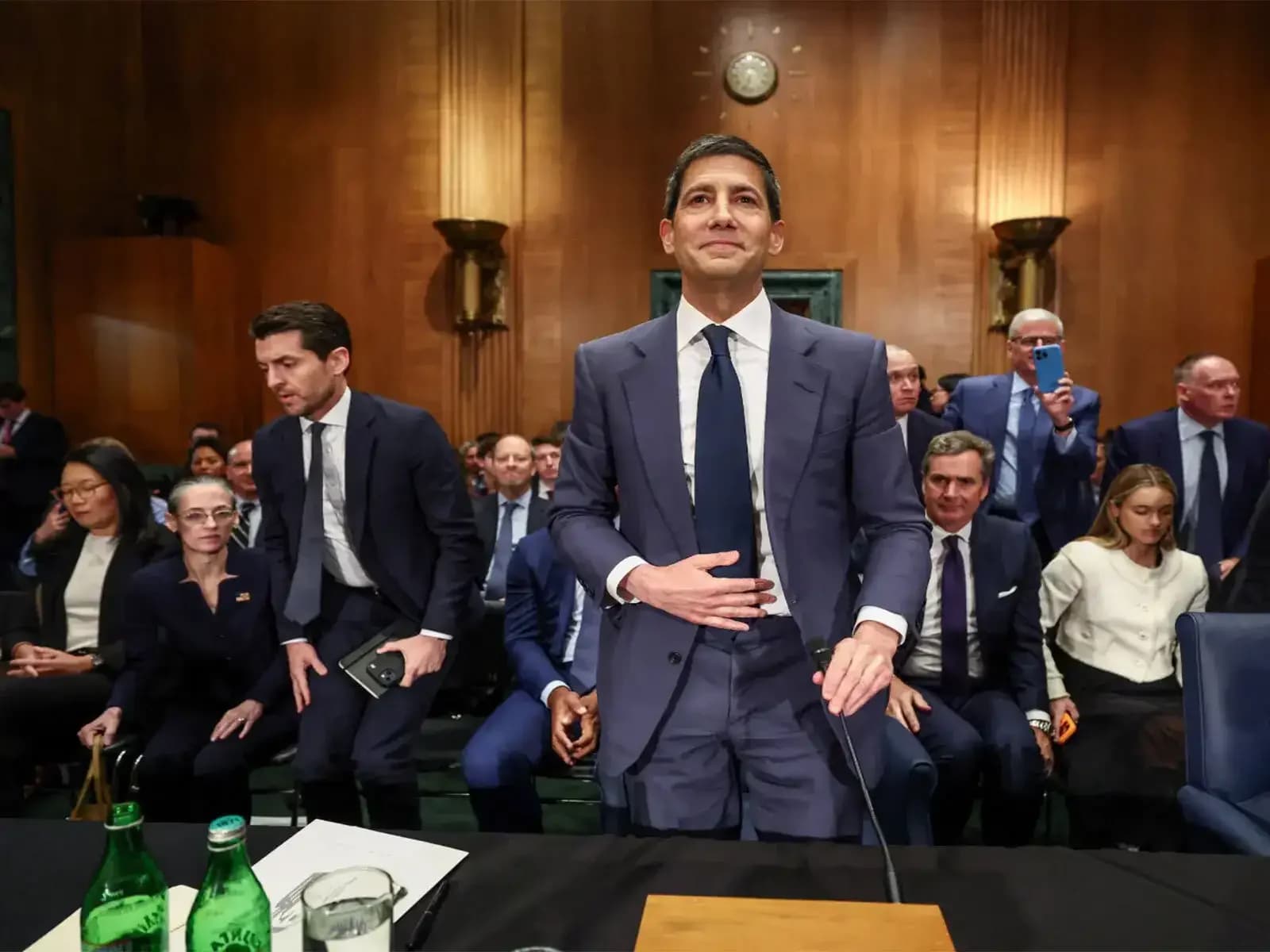
As Kevin Warsh prepares to be sworn in as Fed chair on Friday by President Trump, he faces what Standard Chartered CEO Bill Winters describes as a 'difficult boss' amid challenging economic conditions. According to Winters, speaking in Hong Kong, 'Inflation is stubbornly high and unlikely to come down, but he's got the political environment (in which) he will be criticised if he doesn't cut rates.' The incoming chair inherits an environment where U.S. CPI increased 3.8% in the year to April, marking the biggest annual increase in three years due to rising energy prices following the U.S.-Israeli war with Iran. While there's a palpable push for interest rate reductions from political circles, some Fed policymakers are already concerned about high inflation and want to use the Fed's policy statement to signal that rate hikes, not rate cuts, may be coming. Market pricing currently shows roughly a 60% chance the Fed raises rates by year-end.
Former Federal Reserve officials are advising incoming Fed Chair Kevin Warsh to focus on establishing clear principles for deploying the central bank's balance sheet during future economic shocks rather than simply reducing its size. According to reports from Reuters, experts argue that shifting holdings toward shorter-term Treasury bills would likely matter more than simply cutting the total balance sheet size. The Fed's current balance sheet stands at approximately $6.7 trillion, largely consisting of U.S. Treasury and mortgage-backed securities accumulated during years of quantitative easing and pandemic-era stimulus measures.
Former Fed officials warn that the balance sheet has become an 'optical political football' due to political attention surrounding its size. As reported by Reuters, Charles Evans expressed skepticism over how much the Fed could realistically reduce its balance sheet, noting that when he joined the Chicago Fed in 2007, the balance sheet was roughly $800 billion, but returning to those levels is unrealistic given today's banking system and liquidity requirements. Warsh had previously suggested the balance sheet could potentially be reduced by around $2.5 trillion, though Evans questioned whether such targets are achievable without major regulatory overhauls.
Warsh's suggestion that independence may not extend fully to the Fed's crisis-fighting role abroad has unsettled central banking peers, who fear any reduction in the U.S. central bank's global footprint could risk market stability. As reported by Devdiscourse, Bank of Canada Governor Tiff Macklem noted that he worked with Warsh during the 2008 financial crisis and believes the Fed's culture and comportment will continue as it has in the past. Nomura Research Institute economist Takahide Kiuchi suggested Warsh could attempt a tightrope of conducting dovish interest rate policy while guiding hawkish balance sheet policy, warning that any rupture in U.S. markets could push up Japanese government bond yields and hurt Japan's economy.
The discussion highlighted broader concerns over how the Fed communicates its asset-purchase programs. According to Reuters, Randall Kroszner argued that the central bank should establish clearer guidelines in advance regarding what assets it buys and for what purpose. Kroszner pointed to the Bank of England's intervention during the 2022 UK government bond market turmoil as an example of effective communication, noting that policymakers clearly stated their bond purchases were temporary measures intended solely to stabilise markets. He argued that the Fed's pandemic-era asset purchases gradually evolved from market-support operations into broader economic stimulus measures, creating confusion about the central bank's objectives.
Warsh, who has been confirmed by the U.S. Senate for a four-year term as Fed chair and is expected to be sworn in soon by Trump, has made balance-sheet reduction a key part of his proposed overhaul of the central bank. As reported by Reuters, although Warsh initially supported quantitative easing during the 2007-2009 financial crisis while serving as a Fed governor, he later became increasingly critical of prolonged bond-buying programs, arguing they distorted markets and contributed to inflationary pressures. The incoming chair's approach represents a significant philosophical shift from the pandemic-era policies that have dominated Fed operations, even as he faces the challenge of balancing political pressure for rate cuts with concerns about persistent inflation.