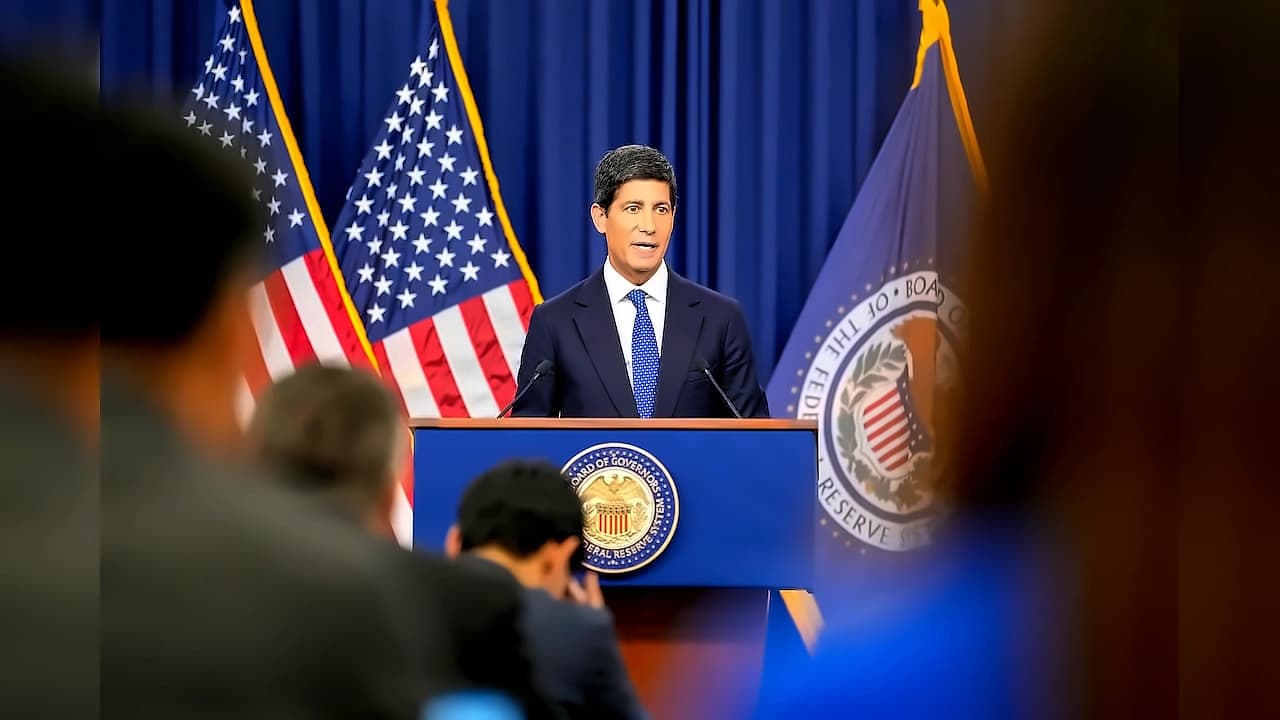
The Federal Reserve raised rates in September to 3.75%-4.00%, marking its first hike since 2023, with the 10-year Treasury yield subsequently topping 5.3% - the highest level since 2007. According to reports from Investing.com India, the Fed's dot plot projects year-end rates between 4.1% and 4.4%, while markets still price roughly three-in-four odds of another hike by December. The analysis suggests that if long-term rates are already doing the tightening, every additional hike from here raises the risk of Fed over-tightening significantly. As Investing.com India notes, the 10% to 15% decline would hit the economy harder than in 2018, directly cutting spending by the top income cohort.
Despite strong economic indicators, the correlation between activity and inflation remains weaker than commonly assumed. As reported by Investing.com India, the ISM Services PMI printed 54.9 in September with new orders at 59.8, while manufacturing came in at 54.5, creating a composite of roughly 54.8. Historical data shows that 37 months with a PMI of 55 or higher were followed by inflation averaging 1.6% outside the pandemic period. The analysis reveals that activity correlates with inflation changes at about 0.55, indicating that strong economic activity nudges prices higher but doesn't set the inflation level. However, the 10-year yield above 5% and the Fed's own estimate of neutral near 3.1% suggest economic troubles could emerge between late 2027 and mid-2028 if current rate expectations materialize.
Rising energy prices are creating additional inflationary pressures that could complicate the Fed's policy stance. According to latest reports, Brent crude closed at around $109 per barrel after exceeding $111 intraday, while WTI traded near $98 - levels that are beginning to weigh on transportation costs, household spending and business margins. The preliminary American Petroleum Institute data suggests a 4.9-million-barrel decline in crude stocks, accompanied by decreases in gasoline and distillate inventories. Since the start of the Middle East war, ocean freight costs have already doubled on some major trade routes, driven by higher fuel prices, insurance premiums and shipping disruptions. These rising transportation costs are beginning to ripple through global supply chains, intensifying inflationary pressures as higher import costs gradually translate into higher prices for businesses and consumers.
The rising interest rate environment is creating significant challenges for the housing market and consumer spending patterns. According to Investing.com India analysis, net transfers from investment accounts into checking funded 6.8% of total spending in April 2026, up from 2.3% in 2015. The JPMorgan Chase Institute data shows that among top earners, withdrawals have funded more than 10% of spending every month this year. With the personal saving rate at 4.1% in August - the lowest since late 2022 - and the top 10% of earners driving roughly half of all spending, the economy becomes increasingly vulnerable to asset price declines. As Investing.com India notes, rising earnings support rising asset prices, so why worry? However, in today's market, the issue is breadth, with earnings revisions concentrated almost entirely in AI and capital spending sectors where cash-rich hyperscalers barely notice a quarter-point rate hike.

Historical data suggests the current tightening cycle may have a shorter lag period than typical. As reported by Investing.com India, the closest match to today's starting spread is the 1999 cycle, which took the least time to break something. Since 1989, the average lag from the final hike to a recession has been about 14 months, with a range of 10 to 18 months. The analysis suggests that with the 10-year yield already near 5.3% and the Fed's own estimate of neutral near 3.1%, economic troubles could emerge between late 2027 and mid-2028 if current rate expectations materialize. However, the bond market and an asset-dependent consumer have already done much of the Fed's work, so each additional hike raises the risk of Fed over-tightening far faster than the historical lag suggests.