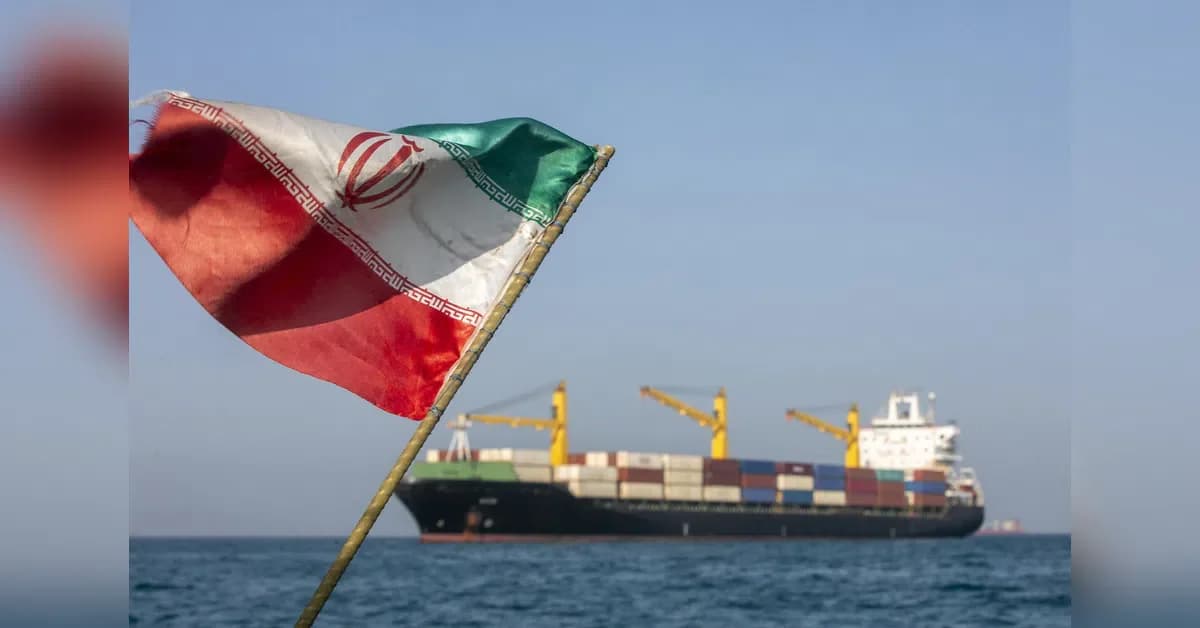
The European Central Bank (ECB) may need to adjust its policy rates if the energy shock from the Iran and Middle East war intensifies, according to ECB Executive Board member Piero Cipollone who spoke on May 6 at the 2026 Sustainable Development Festival in Milan. Cipollone warned that the current crisis represents the second major energy shock in four years and risks pushing inflation well above the bank's 2% target. The eurozone economy is again being tested after a hard-won period of stable prices and robust growth, with inflation having returned to target before war disruption hit energy flows and the closure of the Strait of Hormuz began to choke global supply chains.
Annual headline inflation in the euro area rose to 3% in April, driven by a 10.9% increase in energy prices, while inflation excluding energy fell to 2.2%. The eurozone gross domestic product expanded just 0.1% quarter-on-quarter in the first quarter, below ECB projections. The short-term hit to global oil supply from the war is larger than the three previous energy crises in 1973, 1979 and 2022 combined, with the net decline in supply estimated at around 12 million barrels per day, equivalent to about 11% of pre-war global supply. Even after rerouting pipeline flows and releasing strategic reserves, restoring output will take time given damage to major oil facilities. Gas prices have risen but by far less than after Russia's 2022 invasion of Ukraine.
The closure of the Strait of Hormuz is hitting trade in liquefied natural gas, refined oil products, aluminium, helium, sulphur and fertilisers, with delivery times lengthened and input costs rising, though disruption remains contained relative to 2021-2022. Europe could begin running out of jet fuel and kerosene reserves by the end of May, potentially triggering material restrictions on industrial activity comparable to those seen during the COVID-19 pandemic. The Eurosystem is using economic scenarios to navigate the shock, with under an adverse scenario oil prices peaking at $119 per barrel and gas at €87 per MWh in the second quarter of 2026, lifting cumulative inflation 1.5 percentage points higher and growth 0.8 percentage points lower than December projections through 2028. Under a severe scenario, oil peaks at $145 per barrel and gas at €106 per MWh, lifting cumulative inflation 6.3 percentage points above December estimates.
Federal Reserve officials are increasingly concerned that the U.S.-backed conflict with Iran is fueling a prolonged inflation shock, as elevated oil prices and supply chain disruptions begin to ripple across the economy. According to reports from Reuters, Chicago Federal Reserve President Austan Goolsbee warned on Wednesday that the ongoing conflict is increasing the risk of sustained inflation pressures. Goolsbee told journalists in a video conference after attending a Milken Institute Conference in Los Angeles that "you're beginning to see these problems develop." The war began on February 28, and while business leaders initially viewed the oil price spike as temporary, executives are now increasingly concerned about persistently high energy costs creating severe supply chain pressures. Goolsbee noted that the longer the conflict continues, the greater the risk that businesses will exhaust existing inventories and face broader operational disruptions.
The U.S.-Iran conflict is evolving into a broader food crisis beyond energy market disruptions, according to Bank Islam Malaysia Bhd's research. The crisis has transmitted into the global food system through rising fertiliser supply constraints, rising production costs and logistical bottlenecks. Urea fertiliser prices surged 83.9% year-on-year to US$725.6 per metric tonne in March, partly driven by higher natural gas costs. Malaysia remains particularly vulnerable due to its heavy dependence on imported food and agricultural inputs, particularly fertilisers sourced from Gulf countries. The Strait of Hormuz handles about 20% of global oil and liquefied natural gas flows, serving as a key export route for urea, ammonia and phosphate-based fertilisers essential for crop production. Reduced fertiliser usage could hurt crop yields and worsen food inflation in the 2026–2027 harvest cycles, with the global food system fundamentally dependent on energy inputs creating cascading effects from energy shock to fertiliser shortage to lower yields and food inflation.