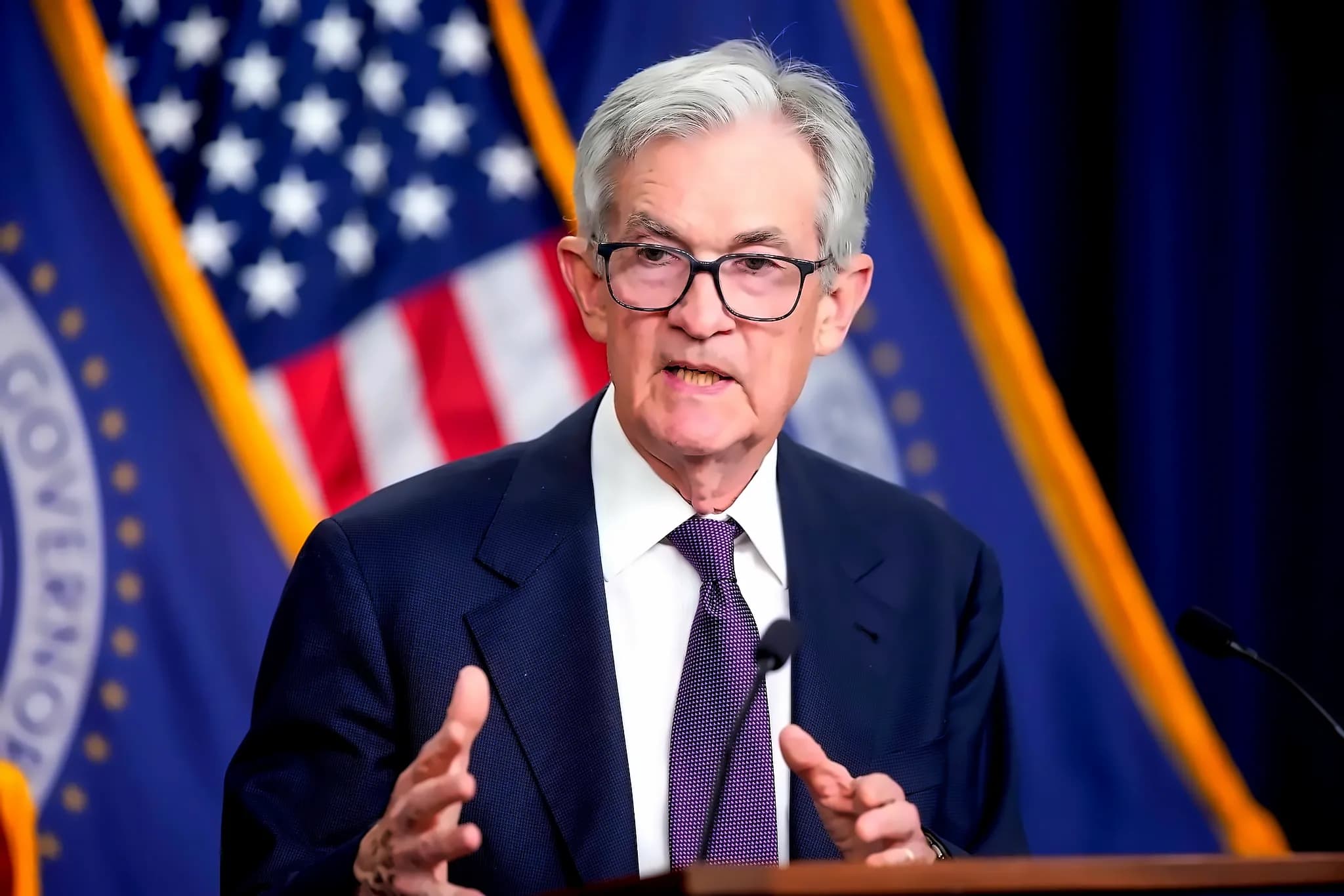
Wall Street strategists say a Kevin Warsh-led Federal Reserve may jolt the $31 trillion Treasuries market out of its narrow trading ranges, urging investors to position for shorter-dated yields to eventually move lower. According to Bloomberg, US yields rose two to three basis points on Monday, staying on pace for their tightest monthly range since late 2020, with the 10-year yield up three basis points to 4.33%. Morgan Stanley strategists led by Matthew Hornbach expect a Warsh-led Fed to target new inflation metrics, provide markets with less forward guidance, and push for a smaller balance sheet — which may lift meeting-to-meeting volatility. To Morgan Stanley, a Warsh-led Fed stands to provide markets with less forward guidance and push for a smaller balance sheet — which may lift meeting-to-meeting volatility. Traders are leaning toward a reduction by the end of the year, pricing in eight basis points of a quarter-point cut by the December meeting, with rate reductions often bringing down front-end yields and helping steepen the gap out to longer-term maturities.
Jerome Powell is preparing for what may be his final meeting as Federal Reserve chair as the central bank gathers in Washington this week. According to The Economic Times, Powell's eight-year term as Fed chair expires May 15, with his successor Kevin Warsh facing confirmation challenges. The U.S. Department of Justice dropped a controversial criminal probe of Powell over renovations of the Fed's headquarters on Friday, potentially satisfying demands of key Republican senators who threatened to delay Warsh's confirmation. Powell had made the end of this probe a necessary condition of leaving the Fed's board, and while U.S. central bank chiefs traditionally resign their board seats when their leadership terms expire, Powell said last month he might stay and would "make that decision based on what I think is best for the institution and for the people we serve." Powell could remain a Fed governor until January 2028, the last full year of Trump's presidency, potentially providing a longer epilogue for the man the president has nicknamed "too late."
The U.S. Dollar ticked lower on Friday as optimism grew around potential U.S.-Iran peace talks, but recent developments show the war's escalating economic impact. According to The Economic Times, oil and gasoline prices remain elevated even if they have peaked, meaning there's certainly an energy shock that's still impacting both consumers and businesses. The oil price hikes came after US-Israeli strikes targeting Iran from February 28 sparked Tehran's retaliation in virtually closing the Strait of Hormuz - a key waterway for energy transit. Brent crude futures, the global oil benchmark, have risen about 50% since the start of the war, with the resulting surge in gasoline and energy prices last month helping propel the U.S. Consumer Price Index to its biggest increase in nearly four years. As reported by The Economic Times, Fed Governor Christopher Waller indicated this month that a prolonged conflict could make it hard for the central bank to cut rates this year. Fed Governor Stephen Miran recently said he is considering slowing his recommended pace of rate cuts because the inflation outlook had become "a little bit less favorable."
The Federal Reserve will hold its next policy meeting on April 28–29, as officials continue to assess the economic outlook and the trajectory of interest rates. According to reports from CNBC TV18, the rate-setting Federal Open Market Committee meets eight times a year to review key indicators such as inflation, growth and employment, and decide on the federal funds rate. The Fed typically releases its policy decision at 2 p.m. ET on the final day of the meeting, followed by a press conference by Chair Jerome Powell. However, RTTNews reports that economists have dissociated themselves from any rate-cut expectations until the Middle East crisis shows signals of resolution. As per The Economic Times, Fed officials are set to keep rates steady at a range between 3.50 percent and 3.75 percent, extending their pause since the start of the year. Bank of America economists wrote that "the Fed will stay firmly on hold at its April meeting" and noted that "the longer energy prices remain elevated and the strait is constrained, the greater the chances that higher inflation gets embedded across a wide variety of goods and services."
The Fed has maintained its benchmark rate throughout 2026, following a series of cuts in 2024 and 2025. As reported by CNBC TV18, at its March meeting, the Fed said it would keep the federal funds rate in the 3.5%–3.75% range, adding that it would "carefully assess incoming data" while remaining committed to its goals of maximum employment and 2% inflation. According to the CME Group's FedWatch Tool, investors are still betting at a 99.50% chance that the U.S. Federal Reserve will hold the interest rates unchanged in its upcoming meeting on April 28-29. According to The Economic Times, Fed officials will likely focus more on containing inflation than the jobs market this meeting, with the war's impact on prices becoming a primary concern. St. Louis Fed President Alberto Musalem said in a Reuters interview earlier this month that "monetary policy right now is in a good place, and I think it's probably going to be appropriate to maintain policy at this level for some time." However, an increasing number of Fed colleagues were already noting the possible need for rate hikes during their discussions at the March 17-18 meeting, with the central bank potentially facing both a weakening labor market and high inflation - a situation that Fed Governor Christopher Waller called "very complicated for a policymaker."
As reported by The Economic Times, analysts will monitor if the Fed signals in its post-meeting statement that rate hikes are a possibility. KPMG's Kenneth Kim said solid hiring recently "gives the Fed some cushion" to temporarily focus more on prices. However, EY-Parthenon chief economist Gregory Daco warned that "under Warsh, we're going to see less Fed transparency, less Fed communication than we had in the past." The Fed maintains its commitment to transparency, with minutes of each meeting published around three weeks later. The Economic Times notes that market participants are watching these developments with "cautious optimism" as U.S. military has assembled a total of three aircraft carrier vessels near Iran, keeping the chances for military offensive alive. According to The Economic Times, "We're at a critical juncture for the Fed," with the central bank facing competing pressures from both inflation concerns and employment market stability. The open issue is whether the Fed's policy statement changes to acknowledge possible hikes in borrowing costs as a next step, and how Powell characterizes the discussion during his final press conference. Already this week, the slightly weaker tone in the market helped entice bidders for sales of $69 billion of two-year notes and $70 billion of five-year notes, with a $44 billion auction of seven-year notes due on Tuesday.