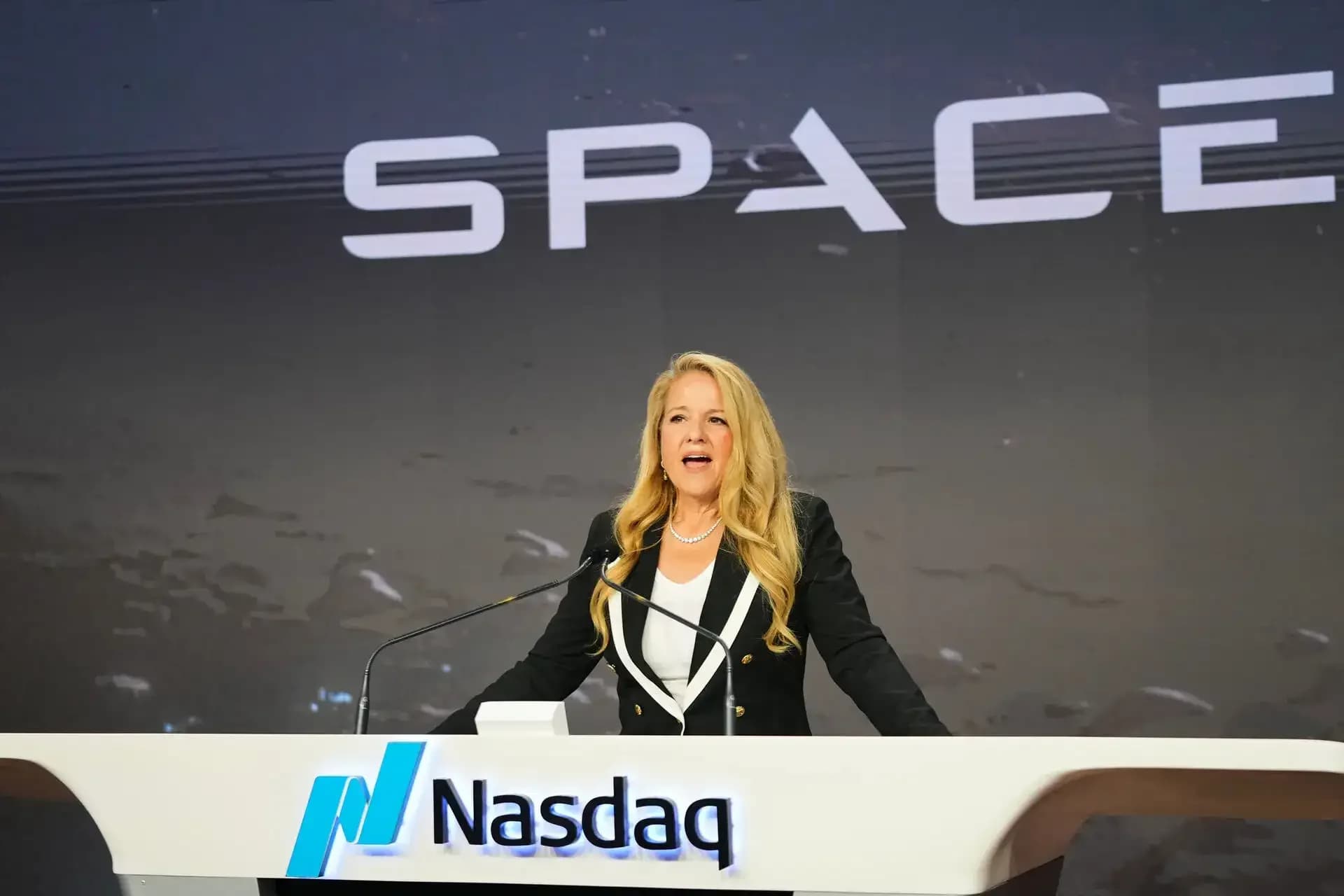
Elon Musk's SpaceX has filed to go public in the US next month, with the company potentially valued at a record-breaking $1.75 trillion after its IPO in early June. According to latest reports, the IPO is expected to raise between $40-80 billion, making it the first US market debut worth above $1 trillion. The filing represents an unusual IPO structure where 30% of shares will be allocated to retail investors, significantly above the typical 5-10% retail allocation. Musk is banking on his star power with individual investors rather than institutions to boost SpaceX's stock market debut, as reported by multiple sources.
The SpaceX IPO announcement continues to drive significant gains across European satellite operators. French satellite operator Eutelsat has seen its share price pop 12% on Thursday, following the initial 20% surge reported earlier. German satellite maker OHB is also higher this morning, with its share price up more than 3%, extending the strong performance seen in recent sessions. The rally reflects growing investor enthusiasm around the global space and satellite industry, with European space stocks benefiting from renewed optimism about the sector's growth potential.
The satellite operator is backed in India through its partnership with Bharti Airtel, as reported by Reuters. This strategic alliance positions Eutelsat as a prominent European alternative in the rapidly expanding satellite communications market. The stock momentum reflects growing expectations around rising demand for connectivity, broadband-from-space services, and strategic satellite infrastructure across regions, with the partnership providing Eutelsat with strong regional presence and market access.
The SpaceX IPO could mark a blockbuster summer for IPOs, with OpenAI also expected to list in the coming weeks. This could result in two mega-cap IPOs within weeks of each other, potentially adding new faces and causing reshuffling of the Magnificent 7. The market impact will be crucial for the future of the AI trade, as both companies are at the heart of the AI revolution. For Eutelsat, the continued rally reflects improved investor sentiment toward European satellite operators after a weak 2025, when investors feared low-Earth orbit constellations would disrupt the market and create overcapacity.