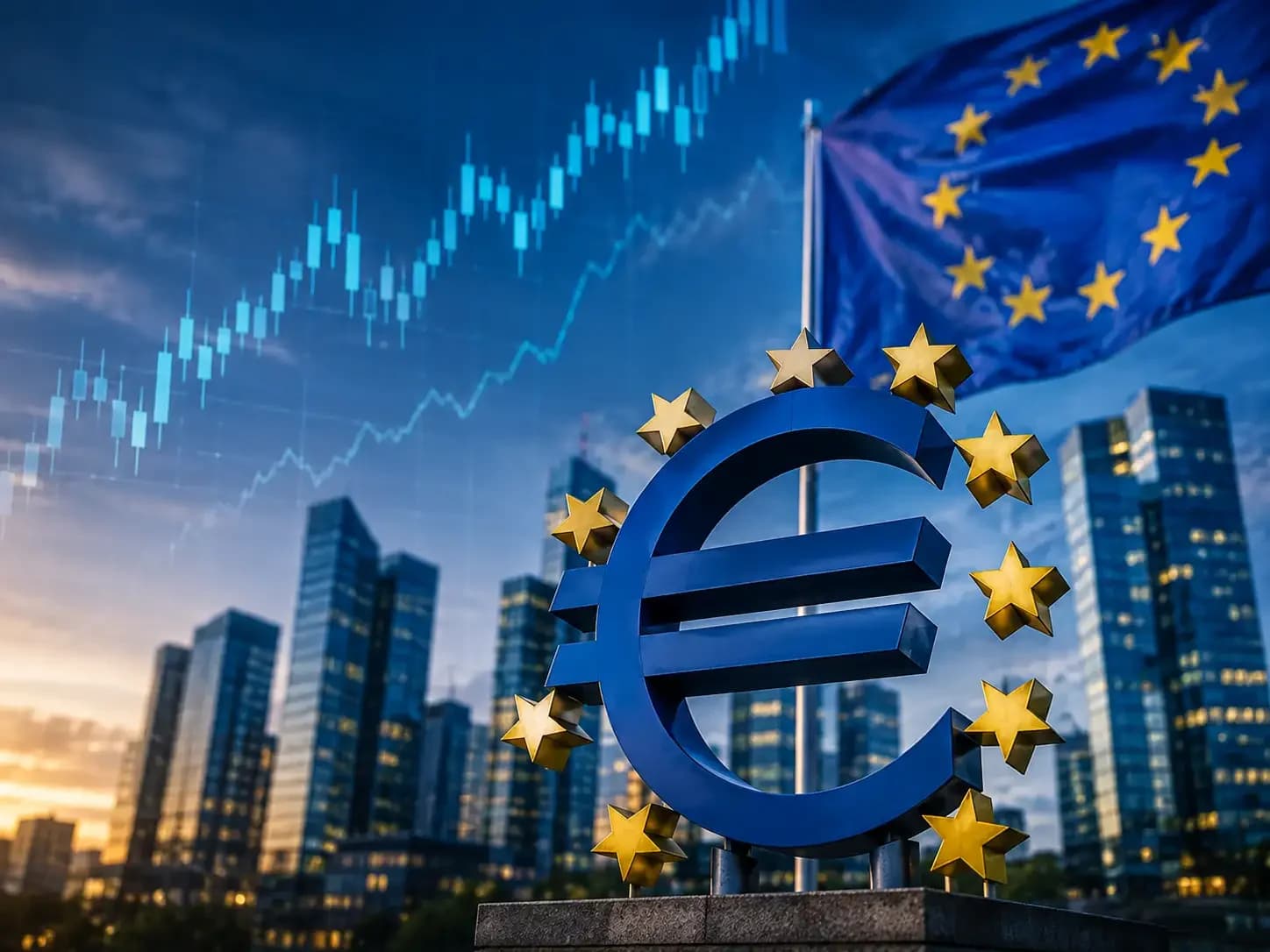
European stock markets have reached unprecedented heights this summer despite mounting climate change concerns, with Paris, Frankfurt, Madrid and Milan exchanges all hitting records in August. According to The Economic Times, this performance aligns with recent all-time highs for Wall Street's key indexes, demonstrating the market's continued resilience. However, the STOXX 600 rose only 0.05% to 659.65 as investors weighed stalled US-Iran negotiations, elevated oil prices and upcoming Eurozone economic data. As per Lombard Odier's Florian Ielpo, "The earnings season has been so strong, and the number one worry in terms of inflation being the situation in Iran, that global warming is really second order." The benchmark remains on track for a modest weekly decline after retreating earlier in the week, though it continues to draw support from strong corporate earnings.
Europe's heatwaves are creating costly disruptions across multiple sectors, with France's Environment Minister estimating the fierce heatwaves will cost 10 to 15 billion euros. The heat is threatening harvests across the Continent, raising the spectre of soaring food prices, while Germany's steel giant Thyssenkrupp warned that record-low levels on the Rhine were threatening raw material deliveries. According to Swissquote's Ipek Ozkardeskaya, "Even though Europe's problems have only gotten worse with this summer's abnormally hot temperatures, drying rivers and further disrupting transport within the continent, earnings expectations for Stoxx 600 companies keep rising!" Among the most vulnerable sectors, agriculture and heavy industry face water scarcity and higher input prices, while insurance companies may face increased claims. As Metzler Asset Management notes, "Financial markets are inclined to short-sightedness, they usually incorporate risks that are two to three years on the horizon, but climate risks... do not fit with these market cycles."
Oil prices climbed around 1% to $87.93 a barrel after the United States threatened an indefinite naval blockade of Iran, raising concerns over potential disruptions to crude supplies. Brent crude futures had previously risen 0.6% to $89.45 a barrel after attacks on shipping in the Middle East and fading hopes for an end to the Iran conflict. The conflict, in its sixth month, showed no signs of ending, with negotiations between Washington and Tehran remaining deadlocked, with both sides adopting tougher rhetoric in recent days. As reported by Reuters, markets have swung between optimism and disappointment since the war began, as investors tried to gauge the risk of a broader disruption to energy supplies and global trade. Europe's energy sector was little changed, while travel and leisure stocks gained 0.6% as lower oil prices improved the outlook for fuel costs.
Softer U.S. consumer and producer inflation data released this week have strengthened expectations that the Federal Reserve could refrain from further monetary tightening, offering some support to risk assets. Markets are pricing a 52.5% chance of a September rate increase by the Fed, according to LSEG data. The inflation data could come in weaker than expected, "helped by more benign energy inputs during the relevant measurement window," as per Tickmill Group. This could strengthen the case for the Fed to keep interest rates on hold in September, though high oil prices, energy supply disruptions and resilient U.S. consumer demand mean that a Fed rate increase remains likely in 2026. Stock futures edged higher Wednesday ahead of inflation data, with analysts expecting year-over-year CPI to come in at 3.4%, down from 3.5% last month.
Technology stocks led gains, advancing 1.4%, while basic resources stocks fell 1.6% and emerged as the biggest sectoral drag. Banks were among the strongest performers, with the sector rising 0.9%, providing support to the broader market. The European earnings season was also entering its final stretch, with only a handful of companies still due to report results. Shipping group Maersk surged 8.3% after beating profit expectations by a wide margin and raising its full-year earnings guidance for the second time this year. The Danish company's performance was supported by higher freight rates amid the Middle East conflict and strong demand. Construction group Balfour Beatty jumped 9% after raising its annual operating profit forecast, citing strong demand for infrastructure projects in the U.S. and UK. Danish wind turbine maker Vestas soared 18.5% to 209.9 Danish kroner after posting higher second-quarter earnings and improving profitability, which enabled the company to increase its full-year margin guidance. TKMS gained 14.6% after the warship manufacturer raised its outlook for the second time in six months. The luxury sector was the STOXX 600's biggest decliner, down 2%, while healthcare stocks fell 1.3%.
Despite current market resilience, experts warn that climate change risks are gradually moving to the center stage over the next 10 to 15 years. As Swissquote's Ozkardeskaya explains, "The biggest risk for European equities is potentially stagflationary: climate change could simultaneously weaken productivity and growth, at the same time pushing food, energy, insurance costs, infrastructure spending and ultimately inflation structurally higher." Some investment managers report growing awareness, with BNP Paribas Personal Investors noting "an increased use of sustainable funds in recent years." Metzler Asset Management has observed "a distinct demand for investment themes linked to electrification, decarbonisation and independence from fossil fuels," though they add that "for all sectors and regions overall, we have not yet seen any structural buying shift that would benefit the most advanced companies" in these areas. The current market positioning reflects a delicate balance between strong corporate fundamentals and persistent geopolitical uncertainties, with climate risks potentially becoming more significant factors in future investment decisions.