The tech selloff that began with Apple's price hikes has now spread globally, with European markets retreating from record highs on Friday as technology shares mirrored the global weakness. The pan-European STOXX 600 index closed 0.7% lower, narrowly marking gains for the week despite the dip. In Europe, the tech sector fell 1.2%, with chipmakers Infineon and STMicroelectronics both slipping 4.5% each. Semiconductor equipment makers BE Semiconductor and ASML dropped 2.2% and 1% respectively, while AI equipment maker Schneider Electric shed 1.3%. Telecom companies Ericsson and Nokia were also down 1.7% and 6.5% respectively, reflecting broader uncertainty around the global technology sector.
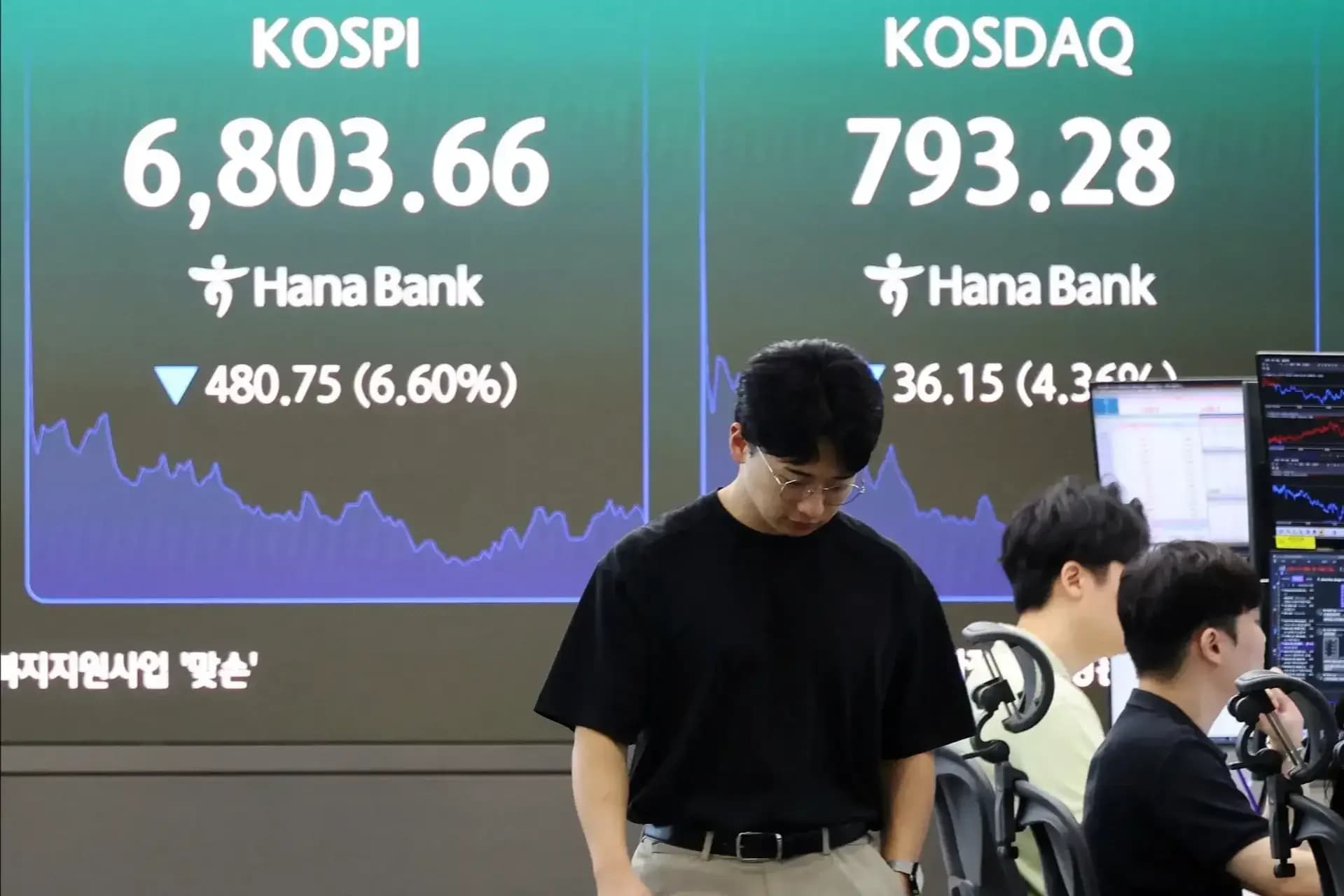
Asian equities retreated sharply on Friday, June 26, hitting two-week lows amid a tech selloff triggered by Apple's price hikes. The MSCI Emerging Markets Asia gauge fell nearly 4%, hitting its lowest point since June 12 and bringing its weekly loss to more than 5%, marking its worst weekly performance since early March. South Korea's KOSPI closed nearly 6% lower on Friday, logging a 7.1% weekly loss - its biggest weekly fall since early March. Taiwan shares fell as much as 3.9% to their lowest level since June 15, putting the market on track for its worst weekly performance since early March. The correction reflects investor concerns about an accelerated schedule of rate hikes by a more aggressive US Federal Reserve under new chair Kevin Warsh, though Fed funds futures pricing in a 75% chance of a hike by September has now eased to 34 basis points of additional tightening by December, down from 36 basis points a day earlier.
Technology stocks remained under pressure as Apple shares tumbled 6.1% after the company announced price increases for Mac computers, iPads and home devices to counter surging memory and storage chip costs from the AI-driven datacenter boom. The price hikes wiped about $250 billion off Apple's market value and tempered investor enthusiasm about a blowout earnings report from chipmaker Micron, whose shares surged almost 16% overnight to a record high following its strong quarterly results. As per Saxo chief investment strategist Charu Chanana, "Apple's price increases were a reflection of how the big tech may at some point start to feel the pain of these higher component costs, and that can become a broader ecosystem headwind." He noted that "higher input costs, heavier capex needs and rising funding demands are making investors more selective about AI exposure." Nasdaq futures declined 1.7% in Asia, while Microsoft is raising prices for its Xbox gaming consoles by up to $150 worldwide, reflecting broader cost pressures across the technology sector. Glenn Yin, director of research at brokerage ACCM, noted that "Apple's sudden price hike has become a reality check for AI trades," as investors begin questioning who ultimately bears the cost of AI infrastructure expansion.
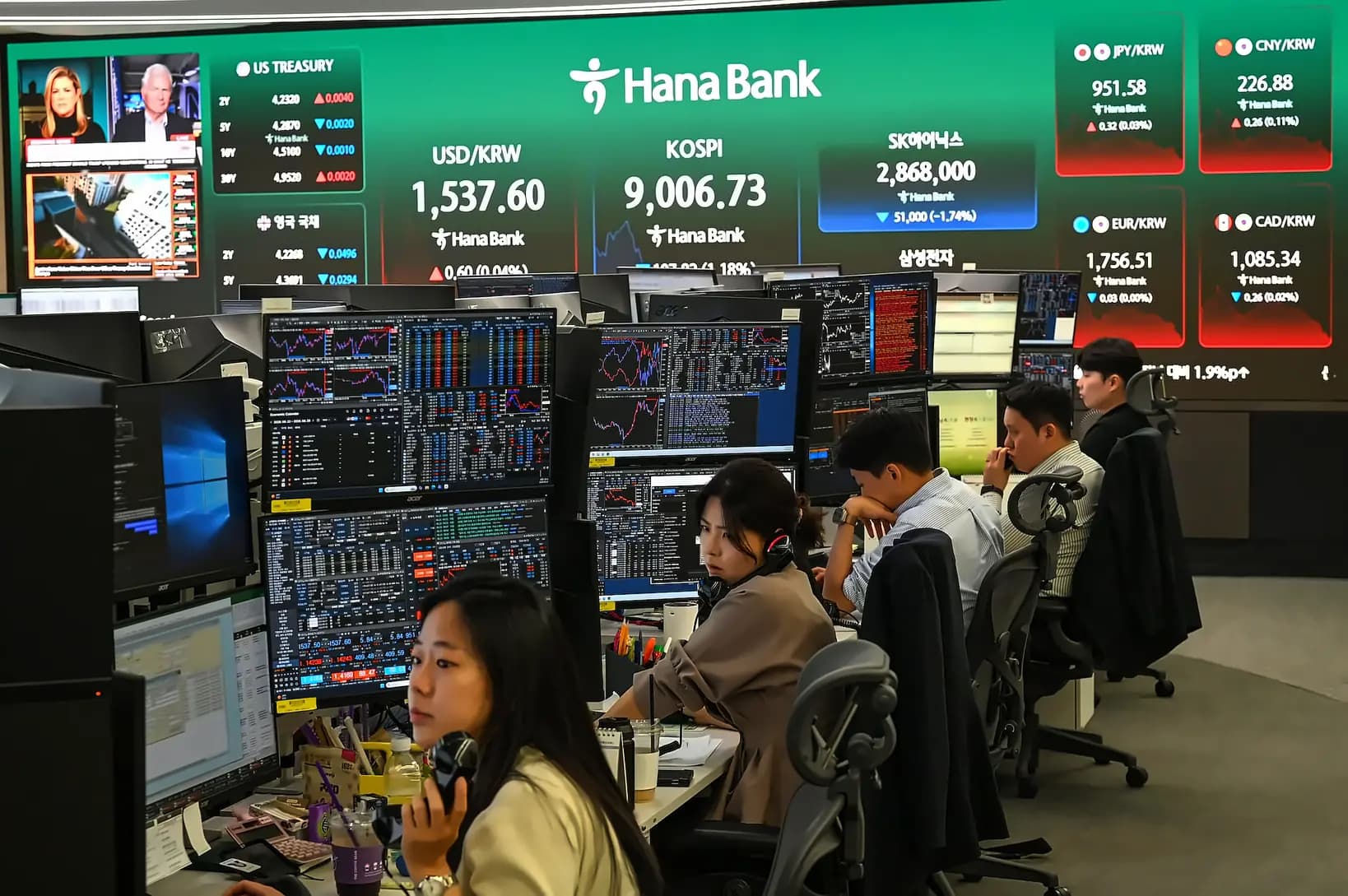
Across Southeast Asia, Singapore stocks fell 0.6%, while those in the Philippines traded 0.4% lower. Stocks in Jakarta shed nearly 3%, tracking their sixth decline in eight sessions and losing 5.5% so far this week, set to snap a two-week gaining streak. Across the region, regional currencies also weakened on Friday, pressured by expectations that the Federal Reserve will keep interest rates elevated and by a broadly stable U.S. dollar. The Thai baht dipped as much as 0.5%, hitting its lowest level since May, and was on track for a seventh decline in eight sessions. The Indonesian rupiah traded 0.2% lower, still hovering around the key 18,000 mark against the dollar. Bucking the broader weakness, the Malaysian ringgit and the South Korean won gained 0.4% each. The dollar inched lower but remained on track for its first back-to-back weekly gain since the start of the Middle East conflict on February 28, with the dollar index holding at 101.46.
Brent crude futures slipped 1.9% to $73.9 a barrel, having bounced 2% from four-month lows overnight on reports that a ship was attacked when exiting the Strait of Hormuz. Tehran has warned vessels against taking routes that it had not approved, though more stranded oil tankers have crossed the key waterway with the help of military escorts, easing supply concerns. Precious metals have had a rough month, with spot gold down 12% to $3,992 an ounce and spot silver sliding 25% to $56.3 an ounce. The weakness in commodities reflects broader market uncertainty as investors reassess growth prospects amid rising borrowing costs and inflation concerns. Gold is also holding just off US$4,000, though barely, with bids being lacklustre in this region, weighed down by rising real yields and expectations of Fed tightening.