European Commission President Ursula von der Leyen arrived in Greenland on Sunday for a two-day visit aimed at reaffirming the bloc's support for the Arctic island amid US President Donald Trump's repeated calls for US control. As per AFP, von der Leyen was welcomed by Greenland's Prime Minister Jens-Frederik Nielsen and Denmark's Prime Minister Mette Frederiksen in the island's capital, Nuuk, where she declared 'We are family.' Speaking at the World Economic Forum's annual meeting in Davos this year, von der Leyen said the EU was working on a 'massive European investment surge' in Greenland in a bid to ramp up Arctic security. The Commission has proposed allocating €530 million to Greenland under its budget for the 2028–2034 period, which it said reflected its 'growing geostrategic importance in the Arctic'. According to the Financial Times, von der Leyen is expected to propose an additional €200 million in support during her visit, bringing the total EU commitment to €730 million for the 2028–2034 period. As per AFP, von der Leyen stated 'Europe is delivering,' adding that the bloc is 'expanding our cooperation to new areas, from better, faster connectivity and clean energy to critical raw materials.'
The EU investment announcement comes amid Donald Trump's campaign to annex Greenland, which the US president has insisted should belong to the United States. As reported by AFP, Trump sparked a crisis in US-European ties and turmoil within the transatlantic Nato military alliance this year when he stepped up demands for US control of the world's largest island. Since his return to the White House in January last year, Trump has claimed the US needs to take control of Greenland for its 'national security,' arguing that either China or Russia would otherwise seize the island. European officials stressed that Greenland is part of Nato territory, meaning it is covered by the alliance's mutual defence pact, and that the US already has the right to increase its military presence there under a longstanding treaty. According to AFP, Mikaa Blugeon-Mered, a geopolitics researcher at the University of Quebec, noted that the timing of von der Leyen's visit coincides with the start of NATO's Arctic Shield military exercise, bringing together soldiers from 10 countries, calling it a 'not insignificant coincidence.' The Trump administration has repeatedly accused Denmark of neglecting Greenland and Arctic security. However, Trump has been less vocal since a May visit by his special envoy Jeff Landry, though media reports of an American oil company's preparatory operations in a remote region of eastern Greenland in August have rekindled concerns on the island.
Greenland Premier Jens-Frederik Nielsen said his country wanted to build on its 'close friendship and good partnership' with the EU. According to AFP, while Denmark is a member of the EU, Greenland left the bloc in 1985 but its people, as Danish citizens, are also citizens of the EU. The EU has long provided funding to Greenland, mainly to pay for fishing rights and support its education system, with the new package representing both a big increase in funding and a broadening of sectors receiving EU cash. As per AFP, von der Leyen's agenda includes a boat outing amid the icebergs, meetings with top Greenlandic and Danish officials and signing a joint statement between Greenland and the European Union. The visit reflects the increasing geopolitical importance of the Arctic to major powers including the United States, Russia, China and Europe, as melting ice opens new shipping routes to make the region's mineral wealth more accessible. Von der Leyen and European Council President António Costa issued a joint statement in January highlighting the importance of 'territorial integrity and sovereignty' and saying the EU stood 'in full solidarity with Denmark and the people of Greenland.'
Von der Leyen's visit reflects the increasing geopolitical importance of the Arctic to major powers including the United States, Russia, China and Europe, as melting ice opens new shipping routes to make the region's mineral wealth more accessible. As reported by AFP, Marc Jacobsen, a researcher at the Royal Danish Defence College, noted that 'Greenland is becoming increasingly important to the EU as a gateway to the Arctic and because of its geopolitical location, critical raw materials and role in Arctic security.' The EU investment package will represent not only a big increase in funding but a broadening of the sectors that will receive EU cash, according to EU officials. The visit comes after Trump and Nato boss Mark Rutte agreed in Davos in January that the United States, Denmark and Greenland would begin talks to resolve their differences, though trilateral talks have yet to yield an agreement. According to AFP, Copenhagen has since reinvested in the region, as has NATO, which launched its Arctic Sentry mission at the start of the year. The Financial Times reported that von der Leyen is set to announce an additional €200 million in funding for the island during her visit, bringing the total EU commitment to €730 million for the 2028–2034 period.
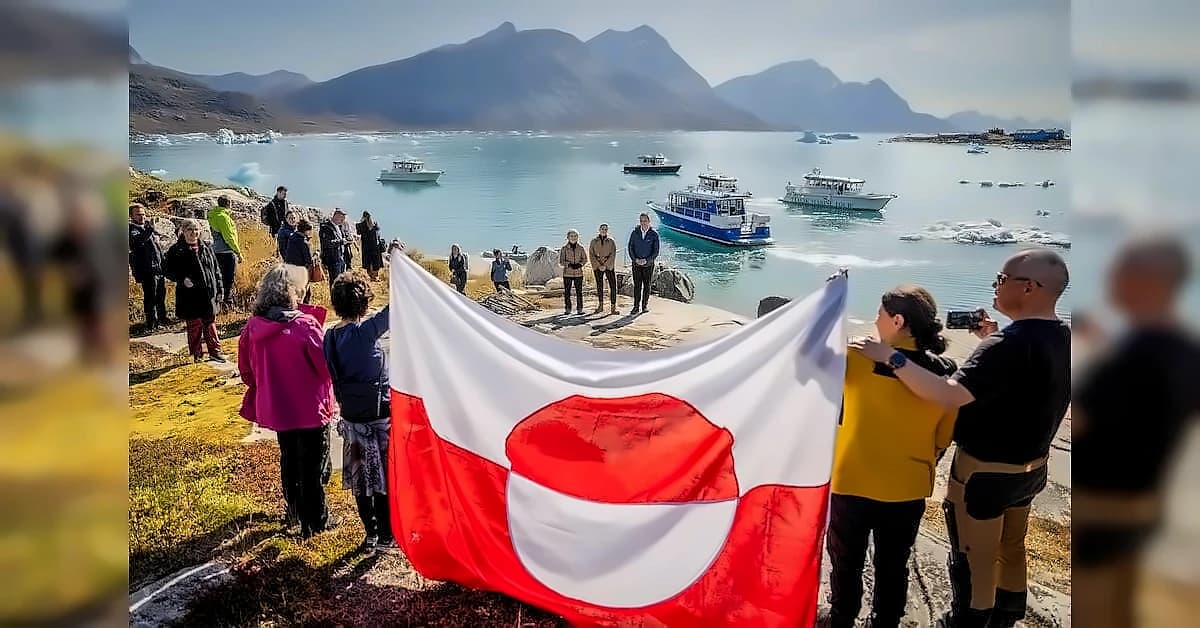
The US currently operates just one base on Greenland, the Pituffik Space Base - the US Department of Defense's northernmost installation. Pituffik is used for missile warning, missile defense and space surveillance missions, according to the US Space Force. In May, Trump's special envoy to Greenland, Jeff Landry, said it was time the US 'puts its footprint back' on the territory during his first visit since his appointment in December 2025. Speaking from Greenland's capital, Nuuk, Landry told Agence France-Presse: 'I think that you're seeing the president talk about increasing national security operations and repopulating certain bases in Greenland.' He continued that 'Everyone that I've talked to in Greenland would love to see the US repopulate those bases,' adding that the territory 'needs the US.' The US is reported to have had 17 military facilities and more than 10,000 troops on Greenland at the height of the Cold War. In May, the leaders of five political parties in Greenland's parliament released a joint statement with a clear message to the US: 'We do not want to be Americans, we do not want to be Danes; we want to be Greenlanders.'