Alphabet's Google announced on Wednesday its largest European investment to date, committing at least $15.1 billion over the next two years for AI infrastructure development in Finland. According to reports from UPI, the investment will involve the development of three new data centres in Finland's northern region, where temperatures can drop well below minus 10 degrees Celsius in winter. The deal represents a significant push for Google in Europe, where colder climates and stable grids in the Nordics offer attractive locations for energy-intensive data centres. Data centres will be constructed in Kajaani, Muhos and Vaala, while Google's existing data centre in Hamina will be expanded. As per The Times of India, Google stated this is its largest single investment in Europe and a testament to Finland's leadership in responsibly building AI infrastructure.
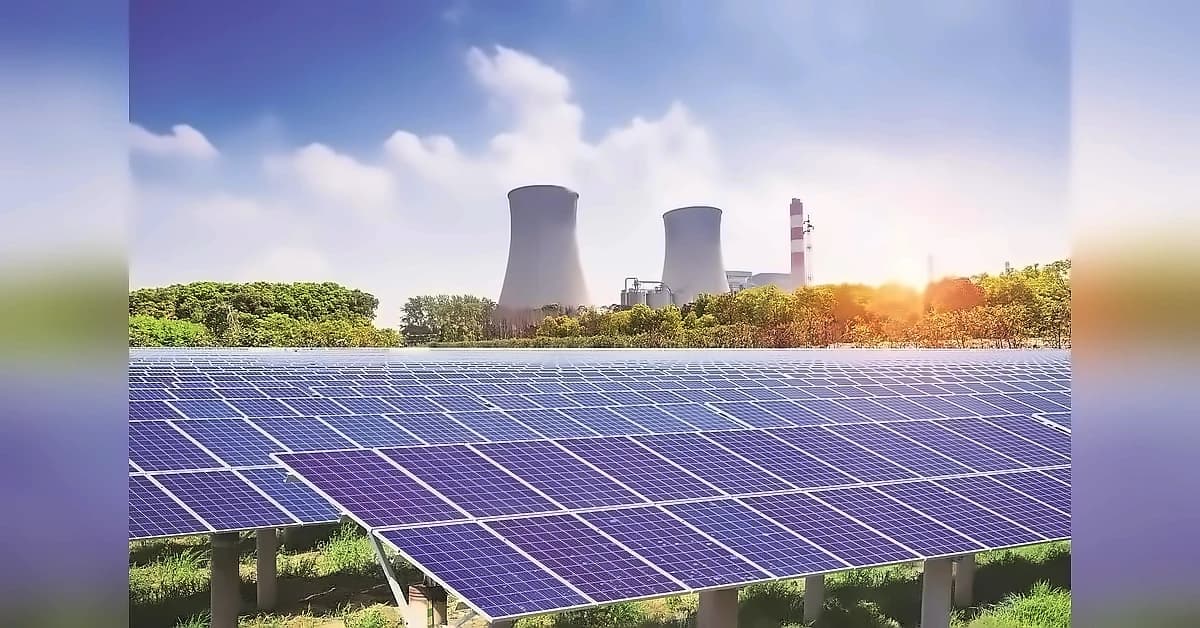
The Finland deal includes a 22-year power purchase agreement with Finnish energy company Fortum to support the life extension of the Loviisa nuclear power plant, which provides 10% of the nation's electricity. According to UPI, this long-term purchase deal provides economic certainty for a lifetime extension and upgrade of the facility through 2050. Google has signed a 22-year contract with Finland's state-owned 'Fortum' to buy up to 50% of the electricity output from the Loviisa nuclear power plant, as reported by The Times of India. The agreement also includes 22-year power purchase agreements with local energy companies to strengthen Finland's grid infrastructure. Google's President and Chief Investment Officer Ruth Porat described this as 'BYOP, bring your own power,' noting it's Google's first nuclear energy deal outside of the United States.
The investments will contribute an annual average of $4.2 billion to Finland's gross domestic product during the construction phase and are projected to support more than 37,000 jobs across the country, as reported by UPI. Once operational, the facilities are projected to support 7,000 jobs annually, with average wages 24% higher than Finland's median wage. The planned investments for 2027 and 2028 will include data centres, electricity grid improvements, and clean energy and battery projects driving services such as Gemini, Search, Maps and YouTube. As part of the investment, Google will support high-impact municipal energy projects in Hamina, Kajaani, Muhos and Vaala, where low-income households will be provided with solar and heat-pump installations. According to The Times of India, the sites were selected to take advantage of existing grid infrastructure near carbon-free energy sources, with nearly 96% of electricity in the country produced from nuclear or renewable sources.

Finland's Prime Minister Petteri Orpo stated the investment is a testament to his nation's strengths, while Minister of Climate and the Environment Sari Multala described it as an example of how to invest in AI infrastructure that benefits local communities and the broader energy system. According to UPI, Multala emphasized that "this long-term approach and commitment are exactly what we need to generate value for both investors and Finnish society." The initiative includes 22-year power purchase agreements supporting new onshore wind projects, bringing Google's total contracted new-to-the-grid wind capacity in Finland to 629 megawatts. Nuclear power, as a source of large amounts of low-carbon energy, represents a key attraction for Finland as companies including Microsoft and TikTok owner ByteDance seek data centre locations while containing energy costs and meeting climate goals. According to The Times of India, data centres need fresh water, which Finland has plenty of, and the country developed a closed-loop system that reduces water waste.
This announcement comes as Alphabet increased its global investment to between $195 billion and $205 billion this year to capture growing AI computing demand, as reported by Business Standard. Finland, with under 6 million people, has had less vocal opposition to data centre build-out than other locations, including the United States. The country's size is similar to Germany but with significantly fewer residents, making it an attractive location for major technology infrastructure investments. Google's President Ruth Porat stated that "this investment underscores Google's commitment to grow our presence responsibly, pairing the expansion of our technical infrastructure with new energy capacity, grid enhancements and energy affordability initiatives." According to The Times of India, the heat generated by the servers in the data centres can be captured to warm up homes, as the centres will reportedly possess heat recovery readiness.