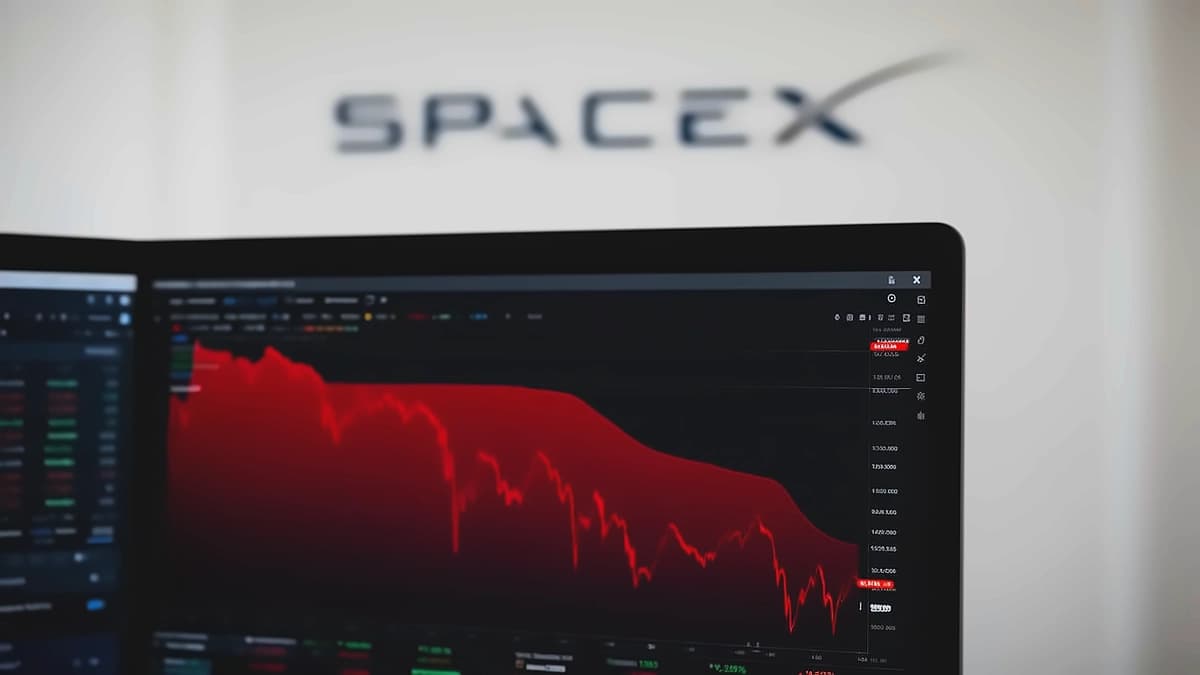
SpaceX shares rebounded more than 3% on Tuesday, snapping a seven-session losing streak and closing at $123.54, giving the company a market capitalization of $1.63 trillion. According to latest reports, the recovery came after the stock had declined in 10 of the past 12 trading sessions amid a broader sell-off in artificial intelligence-related stocks and following the company's aborted Starship rocket launch due to an engine issue. Despite Tuesday's gains, the stock continues to trade below its $135 IPO price, representing a 47% decline from its peak of $225.64. The seven-session fall had wiped out $425 billion from the company's market value, highlighting the significant pressure the stock has faced since its June 12 listing. As per Viram Shah, Founder & CEO of Vested Finance, the current movement reflects price discovery in real time for a stock barely weeks old as a listed entity.
Short sellers betting against SpaceX have accumulated an estimated $15.5 billion in paper profits after the company's shares fell sharply below their initial public offering price, according to Reuters citing data from analytics firm Ortex Technologies. The stock has declined 28% over the past month and fell another 6.7% in the previous trading session on July 22, with SpaceX shares dropping to a fresh low of $115.26 on Wednesday. According to Ortex data through Tuesday, around 360 million SpaceX shares, representing nearly 56% of the company's free float, were on loan to short sellers. "There is no sign of short sellers taking profits on SpaceX," Ortex co-founder Peter Hillerberg said, adding that "if anything they are leaning in harder." Despite the growing bearish bets, Elon Musk has dismissed concerns over short sellers, writing on X that "the survival probability of firms who maintain a significant short position in SpaceX over time is very low."
SpaceX has announced it will release its first quarterly earnings report as a publicly traded company on August 4, covering the second quarter ended June 30. The company, which trades under the ticker SPCX on the Nasdaq, is scheduled to report its results after the US market closes at 9:30 p.m. GMT. SpaceX reported a loss of $4.3 billion in its IPO filings and has set a long-term goal of developing data centres in space. The upcoming earnings will be closely watched as the company faces significant capital intensity challenges, with estimates showing it burned through $19.8 billion in free cash flow over the trailing twelve months while capital expenditure hit $26.9 billion and operating cash flow came in at $7.1 billion.
SpaceX is set to witness one of the largest share unlocks in capital markets history, with as much as $116 billion worth of stock potentially becoming eligible for sale next month. Restrictions preventing certain insiders from selling as many as 911.5 million shares are scheduled to expire on August 6, just two days after the company reports its quarterly results. By early December, the number of SpaceX shares available for public trading is expected to rise to 5.33 billion from around 639 million currently, according to the IPO prospectus. Elon Musk owns an aggregate of 7.8 billion SpaceX shares, representing roughly 60% of the company's outstanding stock, and has agreed not to sell his shares until slightly more than a year after the company's June debut.
Despite the slump, Wall Street remains largely upbeat on the stock, with more than 80% of analysts tracked by Bloomberg rating the company a buy equivalent, and their average price target of about $238 implies roughly 78% upside from current levels. However, experts note that the stock remains expensive even after recent drops, as SpaceX was still valued at 49 times its expected revenue in mid-July, much lower than the nearly 140 times revenue investors were willing to pay during the stock's first few days of trading. Morningstar had put SpaceX's fair value at $780 billion before the IPO even priced, and the market is still paying about double this number. There's potential for a rebound, as about one-third of its float is sold short, and a rise in share price could force short sellers to cover their positions, further fueling the rally. Investor concerns have grown over rising debt-funded spending on artificial intelligence, with the broader focus on AI investments weighing on sentiment after Tesla recently reported negative free cash flow for the second quarter.
Despite the downturn, some prominent investors are maintaining confidence in SpaceX. ARK Invest, led by Cathie Wood, purchased 147,805 shares worth more than $18 million on July 17, distributing the position across four exchange-traded funds after a weekly loss of nearly 15% had already dragged the stock below its offer price. Retail traders have also remained active, with individual investors buying approximately $320 million of SPCX shares during July, making SpaceX the most sought-after US stock among that cohort. However, options market data reveals a nuanced picture, with Friday's options volume exceeding 500,000 contracts, ranking 11th among all US-listed securities, though more than half of the put premium came from contracts being sold, suggesting many traders are positioning for stabilization rather than further declines.