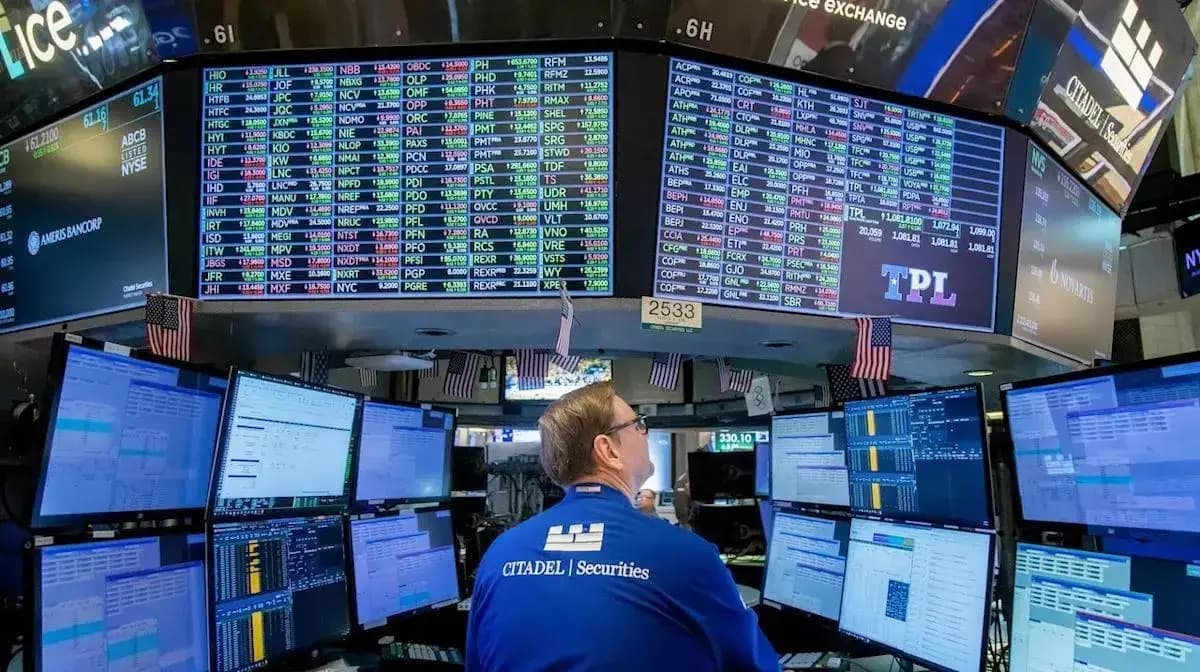
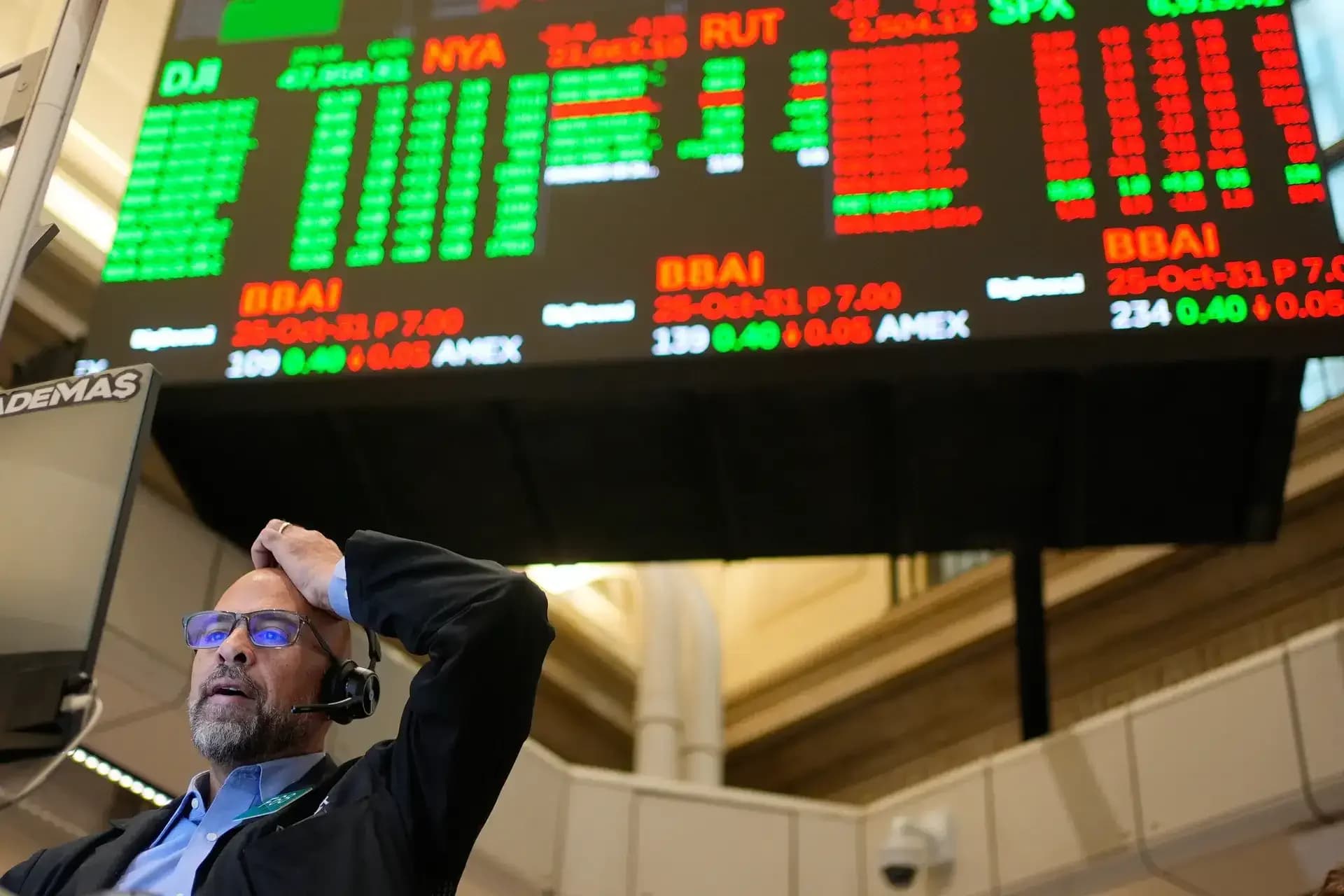
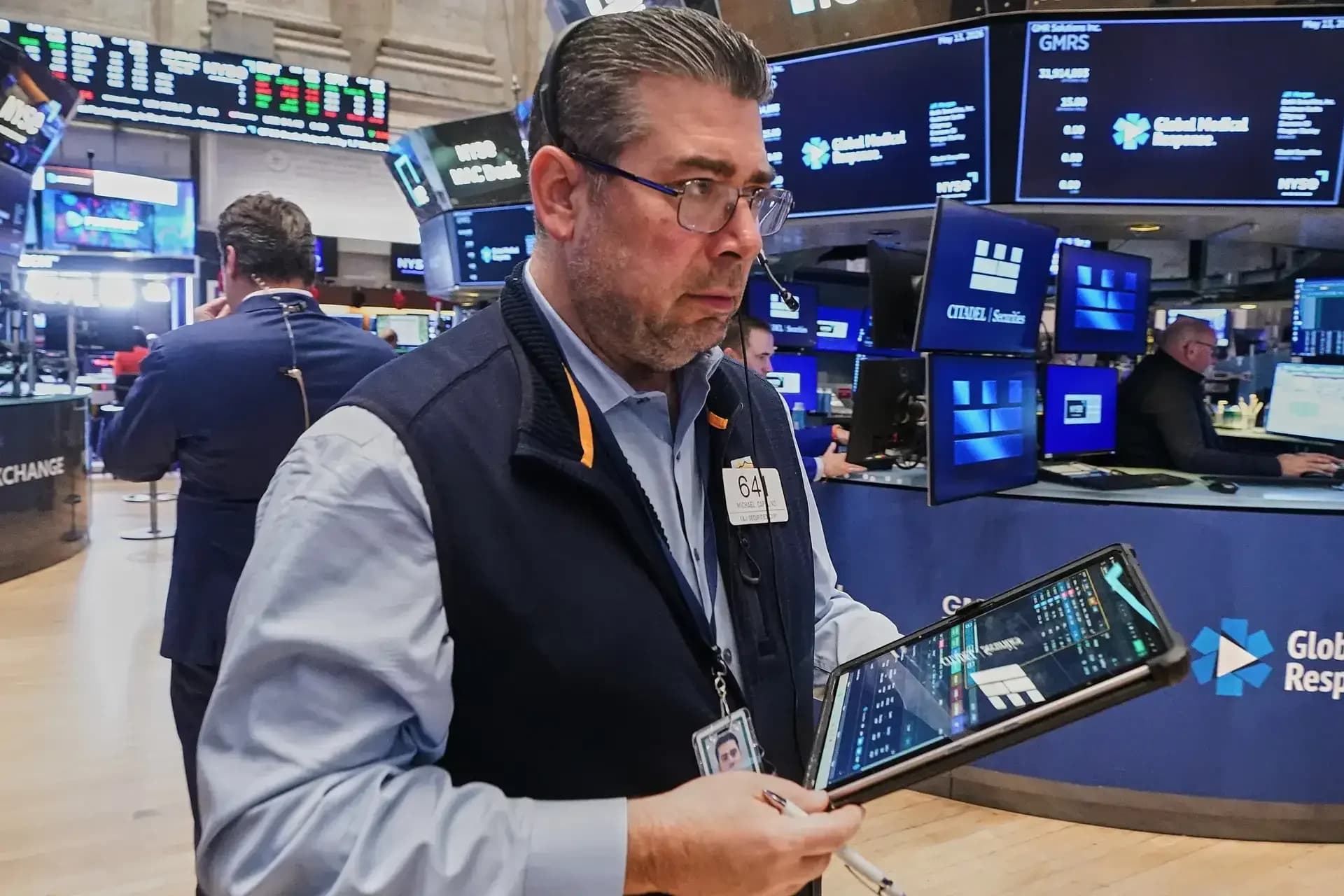
U.S. stocks retreated sharply from artificial-intelligence-fueled record highs on Friday, as oil prices continued rising after the war with Iran dragged on, sending a shiver through the bond market. According to Associated Press, the S&P 500 fell 1.1% from its all-time high set the day before, while the Dow Jones Industrial Average dropped 408 points, or 0.8%, in early trade, and the Nasdaq composite declined 1.6% as heavyweight technology stocks came under pressure. The selloff hit AI-driven tech stocks hardest, with technology stocks tumbling in a sharp turnaround from their meteoric rises for much of the year. Nvidia, widely seen as the face of the AI-driven rally, dropped 3.6% and emerged as the biggest drag on the S&P 500, having come into the day with a gain of more than 26% for the year so far. Micron Technology was another one of the heaviest weights on the market after falling 6.6%, though it's still up nearly 154% for the year so far.
Crude prices surged after the war with Iran continued, with the Strait of Hormuz remaining disrupted amid the ongoing conflict, pushing Brent crude prices up another 2.1% to $107.97 per barrel. As reported by Associated Press, the price for a barrel of Brent crude oil rose 3.3% to settle at $109.26 and is well above its level of roughly $70 from before the war. The yield on the 10-year Treasury rose to 4.56% from 4.47% a day earlier, while the 30-year Treasury yield approached its highest level since 2023 after crossing the 5% mark. The rise in crude prices has increased concerns that inflation could remain elevated for longer, limiting the US Federal Reserve's room to cut interest rates. Higher yields can make mortgages and other kinds of loans going to U.S. households and businesses more expensive, which slows the economy and tends to push downward on prices for stocks and all kinds of other investments.
Friday marks Jerome Powell's last day as U.S. Federal Reserve chair, a position he has held through the pandemic, periods of inflation, and interest rate hiking and cutting cycles. According to Reuters, incoming Chair Kevin Warsh is saddled with the potential need for a rate hike if a protracted Iran war leads to sticky inflation. Market strategist Kenny Polcari from Slatestone Wealth noted that "there's a realization that the market had gotten way ahead of itself, caught up in this momentum AI trade while ignoring bond market and economic data signals." The odds of the Fed hiking interest rates by 25 basis points in December are approaching 40%, up from 13.6% a week ago, according to CME Group's FedWatch tool. Investors are now pricing in a 50% chance of a Fed rate hike in 2026, as concerns about rising inflation and hawkish Federal Reserve policy appeared to be behind the bond market move. A couple of reports on the U.S. economy that came in better than expected also helped to lift yields, with one saying U.S. industrial production improved by more last month than economists expected, while another said manufacturing in New York state is expanding at a faster rate.
The Philadelphia SE Semiconductor Index was dragged lower by stocks that have benefited from the AI hyperscaler phenomenon. As reported by Associated Press, stocks of smaller companies had some of Friday's sharpest drops, with the Russell 2000 index of the smallest U.S. stocks falling 2.4%, double the S&P 500's loss. Many of them need to borrow cash to grow, which means higher borrowing costs can hurt them more than their big rivals. Among the 11 major sectors in the S&P 500, energy shares jumped 2.3%, while the 10 remaining sectors lost ground, with materials and utilities suffering the steepest percentage losses. Microsoft (MSFT) rose 3.1% following the disclosure of a new position in the company taken by Bill Ackman's hedge fund Pershing Square, with Ackman stating that Microsoft is "a company we have followed for many years now offered at a highly compelling valuation." Dexcom (DXCM) jumped 6.6% following the medical device maker's announcement that it will appoint two independent directors and revamp a board committee in collaboration with activist investor Elliott Investment Management.
According to Associated Press data, the S&P 500 fell 92.74 points to 7,408.50, retreating from all-time highs but managing to post a slight gain for the week. The Dow Jones Industrial Average dropped 537.29 points to 49,526.17, while the Nasdaq composite sank 410.08 to 26,225.14. In stock markets abroad, indexes fell by more than 1.5% across much of Europe and Asia, with South Korea's Kospi index tumbling 6.1% after previously touching record highs driven by enthusiasm around AI-related stocks such as SK Hynix. Market breadth showed declining issues outnumbering advancers by a 3.88-to-1 ratio on the NYSE, with 128 new highs and 187 new lows. On the Nasdaq, 1,121 stocks rose and 3,623 fell, as declining issues outnumbered advancers by a 3.23-to-1 ratio. Some on Wall Street have been warning about a possible break in momentum for tech stocks in general and AI winners in particular, with Jonathan Krinsky from BTIG noting that "If nothing else this should be a 'shot across the bow' for how volatility works both ways."