US benchmark indices experienced significant declines on Tuesday, with the Dow Jones falling 322.24 points, or 0.65%, to 49,363.88 while the S&P 500 lost 49.44 points, or 0.67%, to 7,353.61 and the Nasdaq Composite dropped 220.02 points, or 0.84%, to 25,870.71. According to Reuters, the Nasdaq marked its third straight day of declines as investors took profits after a steep rally that started in late March. The decline came amid ongoing uncertainty over US-Iran negotiations and continued pressure from elevated bond yields. Six of the 11 major S&P 500 sectors ended lower, with technology and communications services providing the biggest index-point drags. Declining issues outnumbered advancers by a 2.07-to-1 ratio on the Nasdaq, where 1,544 stocks rose and 3,193 fell. The S&P 500 posted 18 new 52-week highs and 22 new lows while the Nasdaq Composite recorded 51 new highs and 180 new lows.
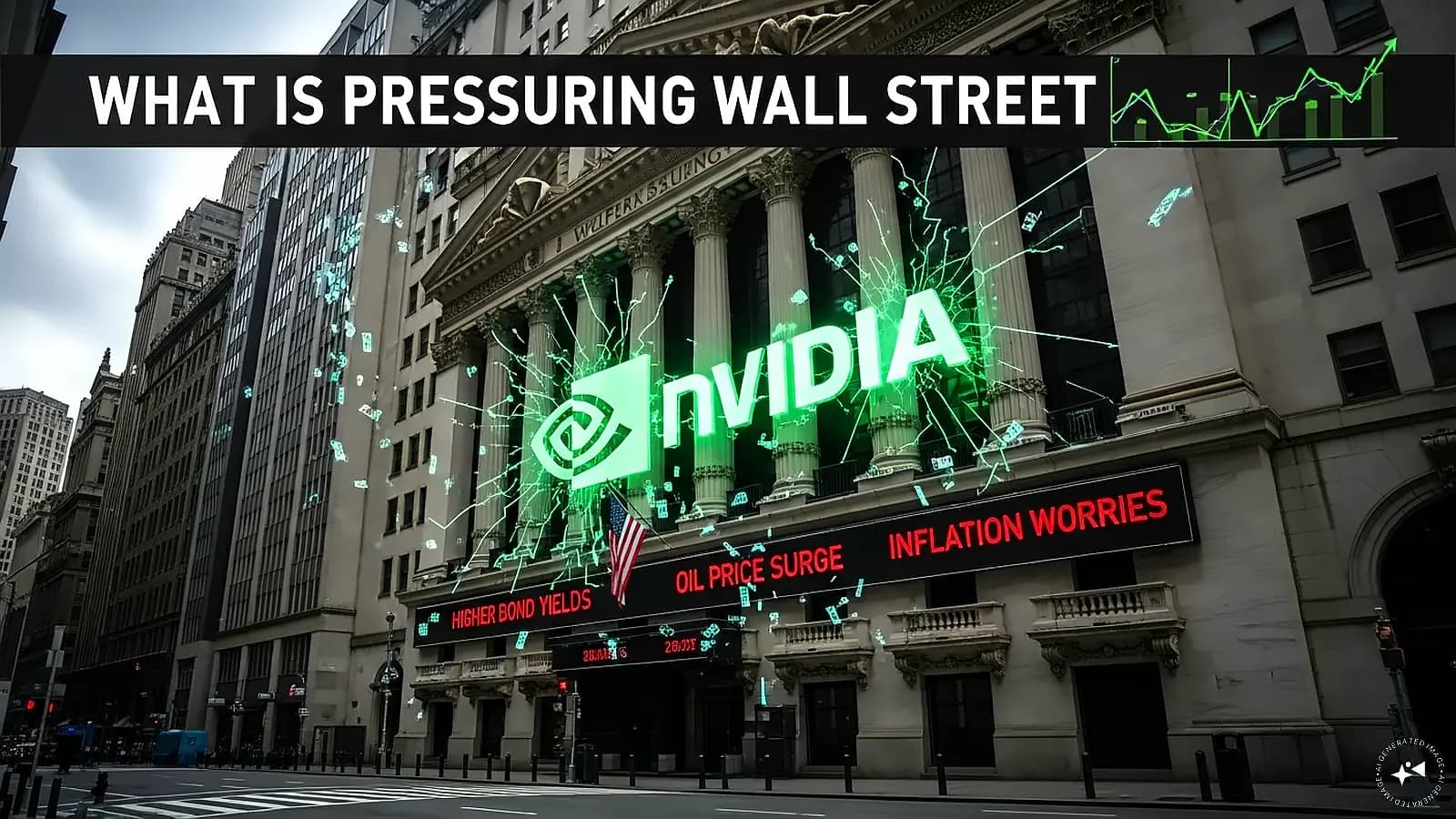
The primary driver of market anxiety was the dramatic surge in US bond yields, with the 10-year note yield spiking to 4.687% during the trading session, marking the highest level since January 2025. As reported by Reuters, the 10-year Treasury yield surged in its third day of gains to 4.687%, after paring gains to around 4.66%. Traders have started to price in higher probabilities for rate hikes from the Federal Reserve, with the latest bets on a 25-basis-point increase in rates for December at a 41.7% probability, while the probability for a 50-basis-point hike was 15.7%, up from 4.7% a week ago, according to CME Group's FedWatch tool. Market experts have issued concerning warnings about potential corrections ahead, with 62% of fund managers surveyed by Bank of America expecting the 30-year yield to reach 6% in the coming weeks, which would be the highest level since late-1999. Garrett Melson, portfolio strategist at Natixis Investment Managers Solutions, noted that "it's really not about the level of rates. It's about the rate of change. Markets can handle a slow, steady grind higher, but when you have these step functions higher, that's where it tends to translate to some indigestion in the market."
The biggest trigger for Tuesday's session beyond yields and geopolitical tensions was the highly anticipated results from Nvidia Corp., the most valuable company in the world. According to Reuters, investors are waiting anxiously for AI chip leader Nvidia to report quarterly results after the bell on Wednesday, with the performance of the world's most valuable company being closely watched for evidence that AI-driven demand is strong enough to justify elevated valuations across semiconductors. Analysts are expecting Nvidia to report earnings of $1.78 per share, up 120% year over year, on revenue of $79.2 billion (+79.5% YoY). As Granite Bay Wealth Management Chief Investment Officer Paul Stanley notes, "Nvidia will help set the tone for a stock market that is in need of its next catalyst after an incredible run since the March lows." However, recent evidence suggests that bumper earnings may not guarantee an automatic rally in Nvidia's share price, with the stock falling in the days immediately following the last three earnings reports. In February, shares tumbled 5.5% the day after fourth-quarter earnings release, even as revenue jumped 94%, while a further 4% slide wiped out $450 billion of market cap in 48 hours.
Memory chip stocks, which had led the decline on Monday, showed signs of recovery on Tuesday with SanDisk and Micron ending with gains between 2% to 3%. According to Reuters, this partial rebound provided some relief to the broader technology sector that had been under pressure from the ongoing sell-off in semiconductor stocks. Afternoon trading in the Philadelphia Semiconductor Index was choppy but it ended close to flat with a 0.03% gain after falling more than 3% earlier in the day. Nvidia shares also recovered from early losses to close down 0.8% despite opening higher Monday morning and being down 1.4% intraday. The chipmaker remains the stock market's "shorthand for everything AI," with equity gains driven in large part by AI initiatives, though analysts warn the stock is "priced for perfection" with concerns about circular spending in the AI space.
Energy markets showed mixed signals with Brent crude futures settling down 0.73% but still above $110 a barrel as traders monitored the latest communications about the Middle East war which has all but closed the Strait of Hormuz, a crucial energy conduit. According to Reuters, materials was the biggest sector decliner, falling nearly 2.3%, while the defensive healthcare sector led gains with a 1.1% advance. Michael James, managing director and equity sales trader at Rosenblatt Securities, explained that "there's nothing constructive that's leading us to believe there's going to be a ceasefire with any sort of substance. As long as there is nothing happening along those fronts, oil is remaining high, bond yields are remaining high, and the market's anxiety levels are getting increasingly elevated." US President Donald Trump said that the US may need to strike Iran again but that Iran was begging for a deal, while US Vice President JD Vance said the US and Iran have made a lot of progress in their talks and that neither side wants to see a resumption of the military campaign.