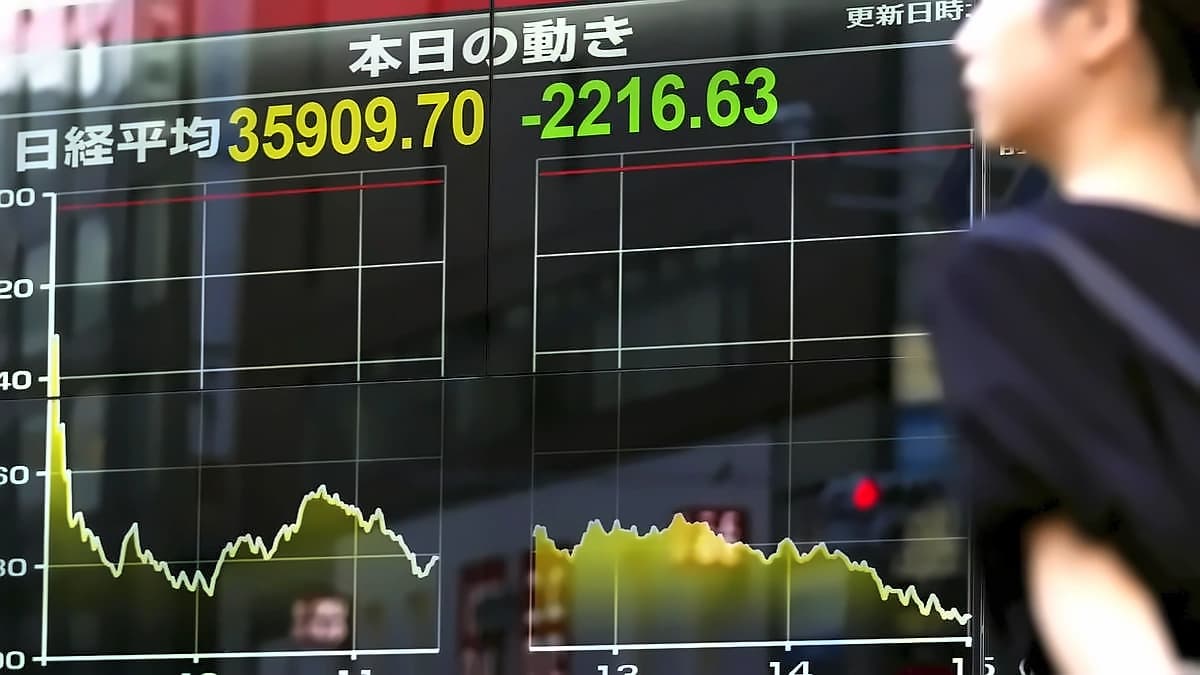
Emerging-market currencies showed mixed performance on Thursday as the US Treasury's announcement of increased bond buybacks was viewed as a temporary measure, allowing the dollar to rebound. According to Bloomberg, Treasury Secretary Scott Bessent doubled down on the policy, saying buybacks could amount to more than $4 billion per issue, further pressuring some Latin American currencies. The Colombian peso fell 1%, ranking as the worst performer, while the Brazilian real retreated 0.3%. South Africa's rand, often a measure of risk-appetite, also weakened against the dollar. However, the MSCI EM Currency index ended the session up 0.1% after end-of-day adjustments, showing resilience despite the dollar's rebound.
Fed funds futures now imply a 66.9% probability that the Federal Reserve holds rates steady at its next meeting, with traders pushing back expectations for any further hike this year. This represents a significant shift from a one-in-four chance only a week ago, as reported by Bloomberg. The repricing of US policy risk is doing more to narrow the yield differential than anything coming out of Tokyo, with currency direction currently being driven more by shifting Fed expectations than by domestic Japanese data. Treasuries rose across the curve, with the yield on the rate-sensitive 2-year falling two basis points to 4.15%, while the benchmark 10-year eased one basis point to 4.68%. The move came despite data showing Japan's economy expanded at an annualised pace of just 1.1% in the April to June quarter, well short of the 2.0% rate economists had expected, with quarter on quarter growth of 0.3% also missing the 0.5% forecast.
Indonesia's rupiah hit the strongest level in two months against the dollar as investors found relief in the delayed decision by FTSE Russell to defer stock index changes. According to Commerzbank AG, the Jakarta composite stock index was among the best performers globally on Thursday, with FTSE may still cut the weighting of limited free-float stocks in September, but the decision delays risk of a downgrade to frontier market status for now. Indonesian markets have faced pressure this year after MSCI raised concerns about market access and transparency and warned that the country's equities could eventually be downgraded to frontier-market status. Jakarta has since announced reforms, including higher free-float requirements, while MSCI deferred its review until November.
The South Korean won was among the worst performers after hitting an 11-month high in the previous session, showing the volatility in emerging market currencies despite underlying strength in regional equities. According to Bloomberg, the country's stock market rose for the first time this week, with the Kospi index posting the biggest daily advance this month. Samsung Electronics Co. and SK Hynix Inc. supported gains in the MSCI's emerging market equity gauge, while the stock of Taiwan Semiconductor Manufacturing Co., another heavyweight in the index and a beneficiary of the artificial intelligence boom, also gained. The contrast between currency weakness and equity strength highlights the complex dynamics affecting Asian markets.
Market volatility concerns are mounting as Fed Chair Kevin Warsh's reluctance to provide forward guidance is fueling uncertainty across financial markets. According to Moody's Analytics, chief economist Mark Zandi warned that the Fed's approach could hurt the U.S. economy by leaving financial markets in the dark about the central bank's next moves. Zandi stated there is "a new potential threat to the economy – a serious mistake by the Federal Reserve" and criticized the Fed's unwillingness to provide even a modicum of forward guidance. The economist warned that "That means more volatility in bond and stock markets, which is likely already reflected in a larger term premium, rising long-term interest rates, and a wobbly equity market." Financial markets swiftly reacted to the Fed's silence, with the yield on the 30-year Treasury bond reaching 5.22% on July 29 – its highest level since 2007. Zandi warned that "If the Fed continues down this increasingly opaque path, a future meeting could trigger a serious market sell-off – putting the broader economy at risk."