Consumer sentiment has declined to 46.3 in early October 2026, marking a significant drop from 48.1 in September and representing a 24% year-over-year decline from the previous year's level of 70.5, according to the latest University of Michigan Consumer Sentiment report. The current conditions component has fallen to 44.7, the lowest on record, while the Index of Consumer Expectations rose to 47.3 from 46.3 in September, though this remains 6.0% below the previous year's level of 50.3. The reading represents a five-month low and is only surpassed by one month during the peak of the recent inflation wave. As per the University of Michigan's report director Joanne Hsu, "Frustration over cost-of-living continues to mount, as consumers across the political spectrum believe that the trajectory of the economy has weakened since the beginning of the year." The sentiment decline has been compounded by Middle East tensions affecting consumer outlooks and a surge in the cost of living that has further dampened consumer confidence.
Two major retail companies are signaling significant strain on American household budgets, despite Wall Street's near-record highs. Domino's Pizza Inc. reported US same-store sales growth of just 0.3% for the third quarter of 2026, down sharply from 5.2% in the same quarter last year, according to its quarterly filing on Monday. Growth came primarily from more orders, but the average order value fell, suggesting customers are still buying but spending less each time. International same-store sales, excluding currency effects, rose only 0.2%. The weak performance continues a concerning pattern, with Domino's US same-store sales rising just 0.9% in the first quarter and 0.1% in the second quarter, well short of analyst estimates. The company has also leaned heavily on discounting, running 50% off menu-priced pizzas from October 5 to 11, a move that brings in orders but squeezes margins. After three quarters of near-zero growth, the company's earlier guidance for about 3% US same-store sales growth for 2026 now looks hard to reach.
Albertsons Companies Inc. is expected to report second-quarter results before the US market opens, with expectations remaining low following the company's July decision to cut its full-year outlook. Albertsons now expects identical sales to fall 0.5% to 1.5% and adjusted earnings of $1.75 to $1.85 per share, down from $2.22 to $2.32 earlier, blaming softer grocery demand and more cautious shoppers. The stock fell about 21% the day after that report and has not recovered, with options pricing a move of about 4% on results day. Part of the sales drag comes from Medicare drug-price negotiation hitting the company's pharmacy business, with about 1.5 percentage points of the drag coming from this factor alone, not only from weaker consumer spending. The weakness comes as American households face multiple pressures simultaneously, with Brent crude hovering around $105 a barrel amid the US-Iran conflict pushing up fuel costs and leaving less room in household budgets for eating out and groceries.
The retail weakness comes as the Federal Reserve raised rates to 3.75%-4% in September, its first hike since 2023, with the next policy meeting scheduled for October 27-28. September consumer price inflation, due Wednesday, is expected to come in at 3.7%, which would strengthen the case for further tightening and add to consumer pressure. The 10-year US Treasury yield is near 5.24%, close to its highest level since the mid-2000s, making borrowing more expensive. Despite these pressures, the S&P 500 has risen 13.8% in the year so far, ending flat on Monday at 7,807.24, just 37.28 points away from its all-time high. For Indian markets, the most direct effect is through foreign investor flows, with a weaker US consumer combined with sticky inflation potentially keeping the Fed hawkish and US yields high, typically weighing on foreign portfolio investment into Indian equities and the rupee. There is also a sector read-across, as Domino's results will be closely watched by investors in Indian quick-service restaurant stocks, including Jubilant FoodWorks, which runs Domino's in India.
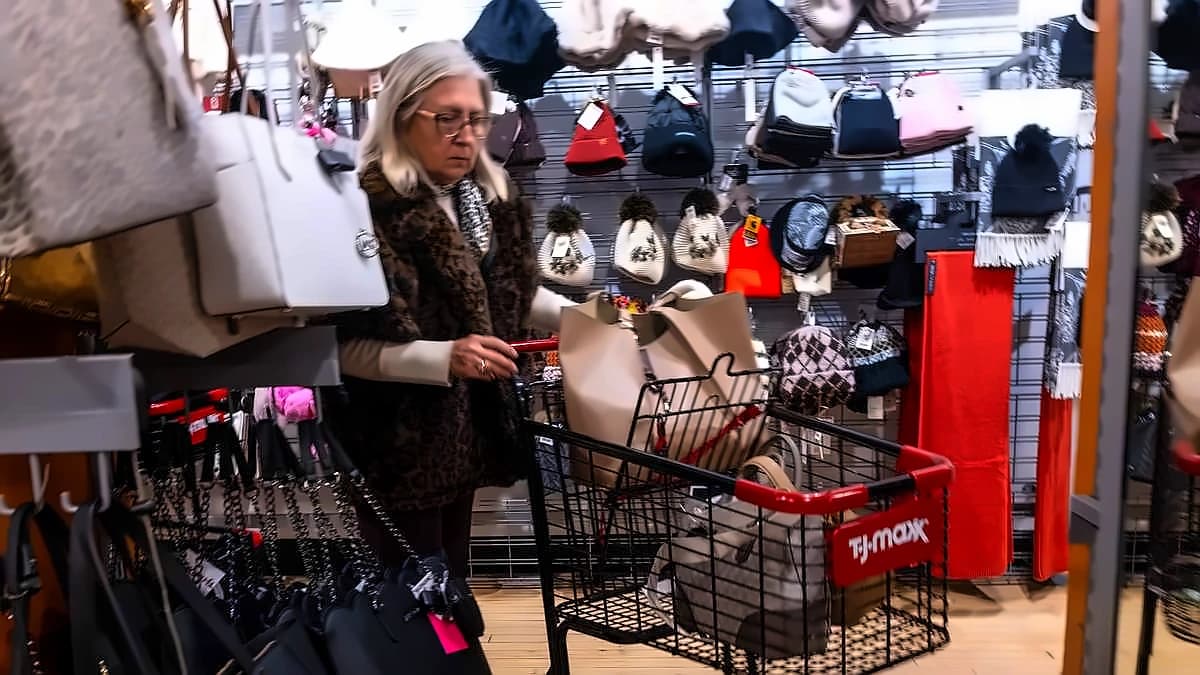
The current sentiment levels represent a significant decline from pre-Covid levels, with the 6-year high pre-Covid reaching 121.2 and the 6-year low pre-Covid at 100.8, compared to the 6-year high post-Covid of 97.2 and the current 6-year low of 46.3. Notably, the three-month moving average of the overall index shows the same pattern, with pre-Covid lows being higher than post-Covid highs. The sentiment never fully recovered after the Covid pandemic, indicating persistent economic challenges in the recovery period. As ING notes, the relationship between spending and sentiment has broken down over the past couple of years, primarily because of the K-shaped consumer story, where high-income households continue to drive spending while the median American faces challenges with barely growing real household disposable incomes. The current conditions gauge hitting an all-time low of 44.7 underscores the severity of the current economic environment facing American consumers.