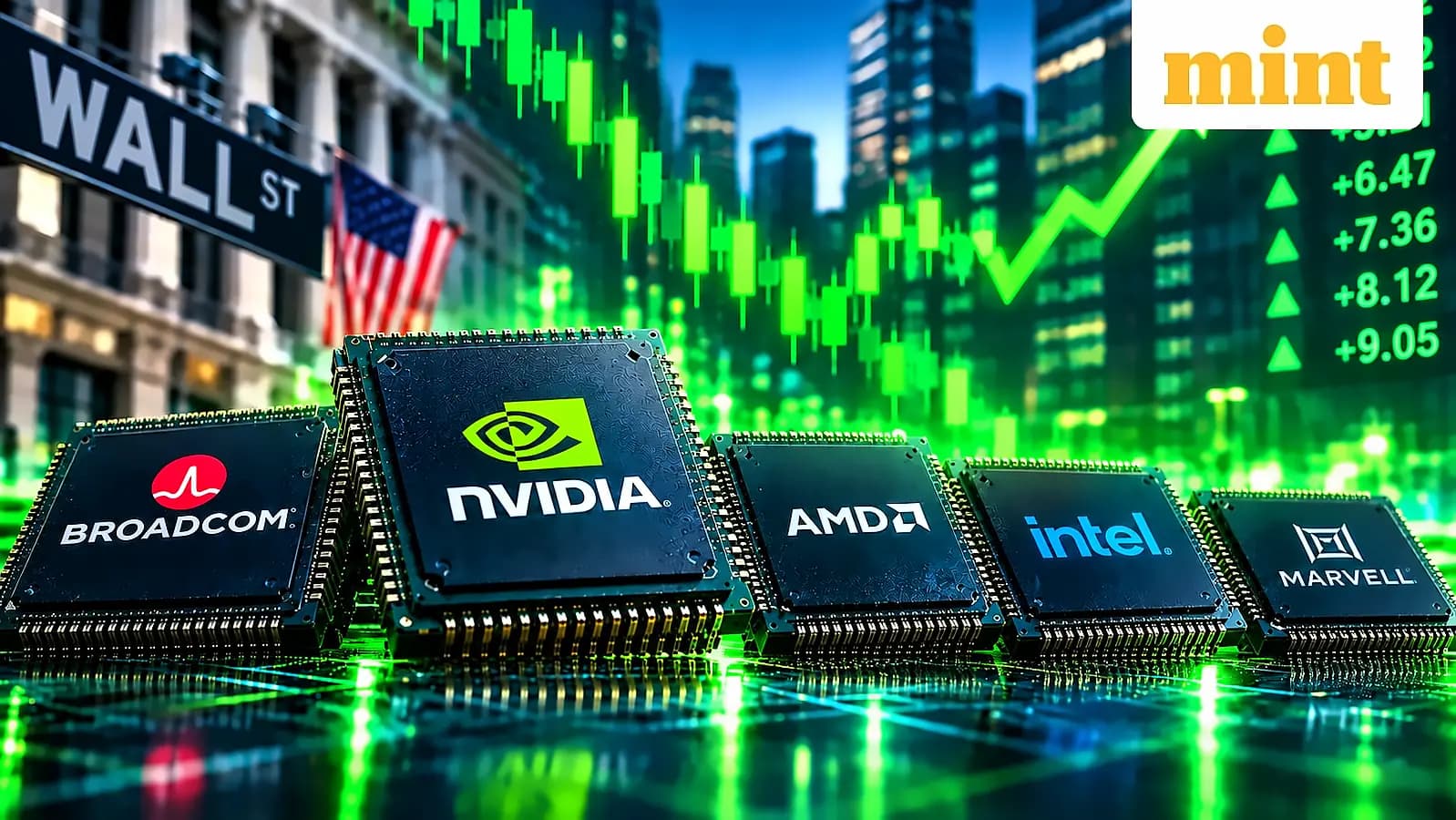
Major US chip stocks retreated in pre-market trading on Tuesday, with Micron Technology down 1.10% to $1,032.50, Advanced Micro Devices falling 1.14% to $608.50, and SK Hynix declining 1.36% to $186.30. According to latest reports, the pullback comes after a sharp rally across semiconductor stocks over the past three to four sessions. As per multiple reports, investors appeared to be booking profits amid high valuations and turning cautious ahead of key macro and geopolitical developments. The move suggests some profit-taking after the recent gains, particularly in stocks that have seen valuations rise rapidly on optimism around artificial intelligence and memory demand.
The sustained rally comes after chip stocks and other AI-linked companies suffered heavy losses earlier this week following calls from AI industry leaders to slow the pace of frontier AI development. As reported by Live Mint, Anthropic CEO Dario Amodei had called for the industry to slow the development of advanced AI models, arguing that safety measures need time to catch up with the rapid pace of technological progress. OpenAI CEO Sam Altman subsequently backed the call for pacing frontier AI development, initially raising concerns among investors about the potential impact on AI infrastructure spending. However, the selling pressure eased in subsequent sessions as analysts maintained that the underlying growth drivers supporting AI infrastructure investment remained intact. The latest gains follow a sharp rebound across semiconductor stocks on Thursday as investors shifted focus away from recent concerns over the pace of artificial intelligence spending and towards tight chip supply and continued data-centre demand.
Intel's shares traded higher following the news earlier in the week of CEO Lip-Bu Tan stating that the company is currently able to meet only about half of customer demand for its CPUs. Speaking at the AI Infrastructure Summit in Santa Clara earlier this week, Tan also warned that the global memory shortage could worsen next year. The comments lifted memory stocks on Friday, as investors assessed whether constrained supply could support pricing and margins for chipmakers such as Micron. According to recent analysis from BigGo Finance, semiconductors represent 70% of the NASDAQ's return, highlighting their outsized influence on technology markets. The AI trade has evolved from a thesis-driven investment to a data-dependent one, with hyperscaler capex running almost dollar-for-dollar with semiconductor companies' free cash flow.
Asian chip stocks rebounded dramatically with SK Hynix shares hitting their first-ever intraday price limit on Friday, surging 29.95% to close at 1.718 million won. The milestone move reflects a sharp recovery in Asian semiconductor stocks following earlier sell-offs driven by AI valuation concerns and competition from Chinese memory chipmakers. The rally was further fueled by stronger-than-expected cloud earnings from Amazon.com Inc. and Microsoft Corp., which sent the iShares Semiconductor ETF up 8.5% overnight. SK Hynix's surge was supported by record Q2 results, with revenue more than tripling to 79.32 trillion KRW ($56.7 billion) and operating profit rising 557% year-over-year to 60.54 trillion KRW ($43.2 billion) driven by surging AI memory demand. Despite missing analyst estimates for operating profit, the company posted a record 76% operating margin and net profit of 93.92 trillion KRW ($67.1 billion).
The broader market context shows mixed signals as the Federal Reserve raised interest rates for the first time in over three years, with the Dow Jones falling over 600 points following the policy decision. According to recent reports, the Fed's unanimous vote to raise rates marked the first major policy shift under new Fed Chair Kevin Warsh, with 16 out of 18 Fed officials expecting at least one more quarter-point rate increase before the end of the year. The rate hike was implemented to combat stubborn inflation pressures, with Warsh emphasizing the central bank's commitment to restoring price stability. While energy stocks declined following the rate hike announcement, semiconductor shares continued their rally, highlighting the divergent performance across different sectors of the technology market. The markets traded lower on Wednesday, September 16, after the benchmark interest rate increased to 3.75% to 4% from 3.50% to 3.75%.