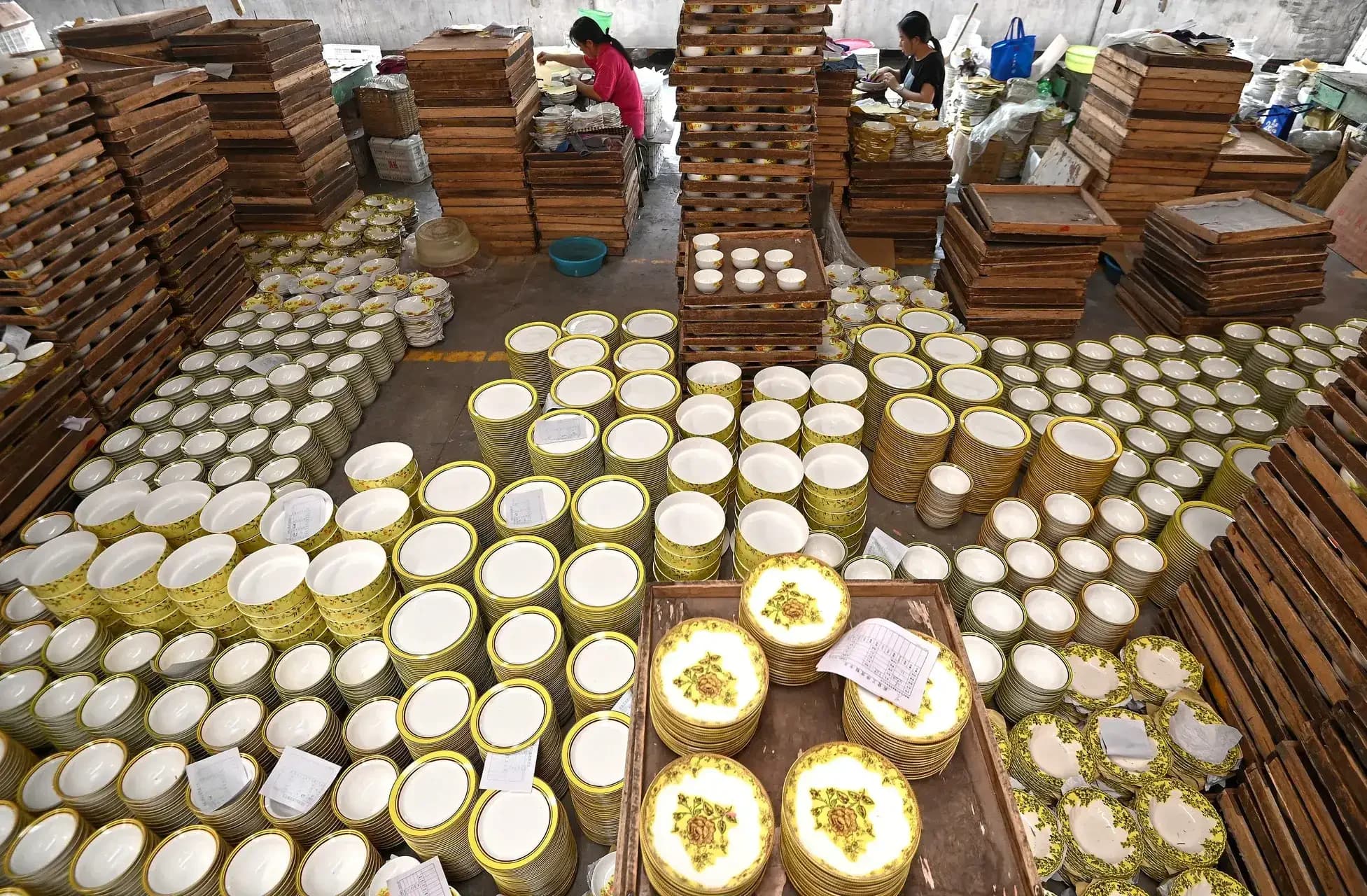
China's manufacturing sector maintained its expansion for a sixth consecutive month in May, though at a slower pace than April. According to the RatingDog China General Manufacturing Purchasing Managers' Index compiled by S&P Global, the PMI fell to 51.8 in May from 52.2 in April, but remained above analysts' forecast of 51.6. The reading, which falls below the 52.2 recorded in April, indicates that while growth continues, it has moderated from the previous month's pace. The official manufacturing PMI published by the National Bureau of Statistics showed activity falling to 50.0 in May, down from 50.3 in April, marking a 3-month low and representing the threshold between expansion and contraction. The sustained expansion in new orders and output provided a floor for the industry, with the manufacturing expansion pace slowing down month-on-month in May, but underlying operations remained stable.

The latest China PMI data reveals a critical divergence between China's export-facing and domestic-oriented sectors. According to Investing.com India, the RatingDog PMI continues to outperform expectations and remains firmly in expansion territory, while the official manufacturing PMI slipped back to 50.0 in May from 50.3. This divergence suggests that export-driven sectors are proving far healthier than domestic-facing industries, creating a scenario where one engine is running smoothly while the other continues to sputter. New orders slipped back into contraction territory while new export orders also retreated below the critical 50 level, yet the broader picture remains surprisingly resilient because production itself continues to expand comfortably. The message is clear that China's industrial giants continue to possess the scale, financing, technology, and market access needed to weather economic crosswinds while smaller operators remain vulnerable to every gust.
Production rose for a sixth successive month, led by investment goods, with firms citing stronger market demand, higher new orders, product improvements and new business as key drivers. As reported by S&P Global, new orders increased for a 12th consecutive month, though the pace of expansion slowed from April. The National Bureau of Statistics data showed new orders falling back into contraction at 49.9 from 50.6, while new export orders contracted to 48.6 from 50.3. The contraction in external demand orders is a risk point that warrants attention going forward, though the sustained expansion in new orders and output continues to support the industry. Large manufacturers have once again reasserted their dominance after smaller firms briefly showed signs of life earlier this year, with their PMI topping medium and small firms in 23 of the past 25 months.
Price pressures eased substantially in May, with both input and output price inflation falling to three-month lows. According to the survey, input cost inflation fell to a three-month low, with the investment goods sector recording the sharpest increase and consumer goods the weakest. Average output inflation eased to a three-month low but remained above the long-run average, with intermediate goods producers recording the fastest rise in output prices and consumer goods firms posting the slowest increase. The National Bureau of Statistics data showed the Raw Material Purchasing Price Index declining to 60.5 and the Ex-factory price index falling to 51.9%, though both remain well above 50, suggesting China's reflation trend continues. The easing cost-side pressures helped improve enterprise profit expectations, providing additional support for the manufacturing sector despite the slower growth momentum.
The services side of China's economy offered a small but welcome surprise, with the non-manufacturing PMI climbing back into expansion territory at 50.1 after slipping into contraction the previous month. However, the components beneath the headline suggest a recovery that remains fragile. New orders and export orders both improved but remained firmly below the expansion threshold, while input prices continued to rise. More significantly, sales prices remained in contraction for a remarkable 32 consecutive months, indicating that businesses are still struggling to pass higher costs onto customers. This profile suggests an economy where competition remains fierce and pricing power remains scarce, not the profile of an economy enjoying robust consumer demand. The services sector's recovery, while positive, remains fragile and lacks the momentum needed for sustained growth.