China's stock markets showed mixed performance on Friday as investors responded to government policy announcements aimed at supporting economic growth. According to Business Standard, the Shanghai Composite remained largely flat at 3,905.2 points while the Shenzhen Component gained 0.87% to 14,094.2, with several major stocks including PetroChina, Ping An Insurance, CATL, Zhongji Innolight and Eoptolink Technology posting gains. However, the Shanghai Composite fell 0.56% over the week and the Shenzhen Component declined 1.81% despite Friday's gains. As reported by Reuters, the Shanghai Composite remained flat at 3,903.81 points while the blue-chip CSI300 index gained 0.52% on Friday, with the start-up-focused ChiNext Composite rising 1.2% and Shanghai's technology-heavy STAR50 index edging up 0.1%.

China will implement additional fiscal policy measures in response to economic developments, with Vice Finance Minister Liao Min confirming on Friday that the government will roll out support measures in a timely manner. According to Reuters, Liao stated that China will maintain the continuity and stability of macroeconomic policies and plan and allocate fiscal resources over a longer time horizon. The Vice Finance Minister announced that a greater share of fiscal spending will be directed towards households and consumption as policymakers seek to shore up weak domestic demand. China will also step up coordination between fiscal, monetary and industrial policies and refine its policy toolkit as economic conditions evolve, with authorities preparing new fiscal-financial support measures for the second half of this year. As reported by Bloomberg, Liao indicated that pressure on policymakers to step up stimulus is on the rise, given many economists estimate gross domestic product growth has slipped further below Beijing's annual target of 4.5% after reaching only 4.3% in the second quarter.
China is doubling down on a programme that's tapping fiscal resources to drive borrowing by businesses and consumers, with new measures set for launch in the rest of the year as economic growth veers below the government's annual target. According to Bloomberg, the programme introduced earlier this year provided perks including discounted lending backed by fiscal subsidies to companies and consumers, alongside loan guarantees to spur private investment. The effort has already been expanded since August 1 to make more types of loans eligible for the interest rate subsidies meant for small and micro businesses and consumers. The fiscal package to boost domestic demand supported more than ₹20 trillion yuan (US$3 trillion or RM12.03 trillion) in new lending during the first seven months of the year, representing an increase of over 4% from 2025. China has now expanded loan interest subsidies for small private firms and consumers, with the scheme subsidising 1 percentage point of interest on eligible small-business loans for up to two years and extending the subsidy to credit-card installment products, while raising subsidy caps. Government data published earlier in the week showed China's industrial output, consumption and investment all softened more than expected in July.
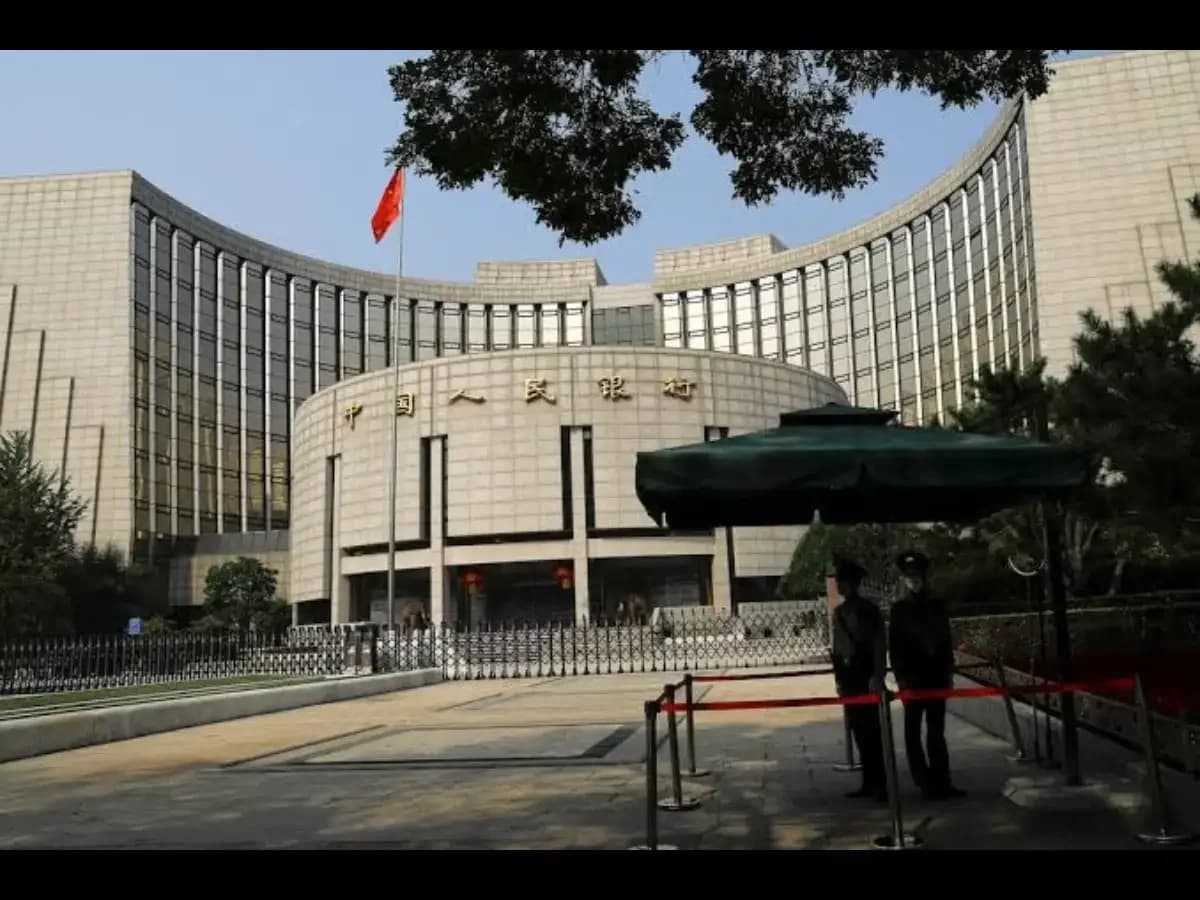
The People's Bank of China has maintained its supportive monetary stance and indicated readiness to introduce targeted measures if needed, though it gave no clear signal of near-term interest rate or reserve requirement cuts. According to Business Standard, the central bank said this month it would maintain an appropriately loose monetary stance and roll out practical, effective measures as needed, but stopped short of signalling explicit cuts to policy rates or banks' reserve-requirement ratio. Vice Finance Minister Liao emphasized that China would deepen fiscal and tax reforms, improve the budget management system, and build a clearer framework for central-local fiscal relations. According to Reuters, Liao stated that China will seek to build a 'stronger, more consolidated, more balanced and sustainable' fiscal system during its next economic plan through 2030. The government will consolidate all revenues derived from administrative powers, government credit, and state-owned resources under China's budget management as they seek to 'continuously cultivate stable and sustainable fiscal revenue sources'.
Market analysts note that while China is getting closer to the point where policymakers can no longer simply talk around the slowdown, this still does not resemble the old China stimulus playbook. Rather than firing the familiar property-and-infrastructure cannon, policymakers are trying to thread support through the economy with a finer needle, focusing on interest subsidies, loan guarantees and incentives for small businesses and consumers. There is still more than ₹2 trillion yuan of government bond issuance available for the remainder of the year, so Beijing is hardly out of ammunition, but the bigger issue is getting the fiscal spending to catch up quickly enough to make a difference. For traders, August and September are the key windows to watch, as markets may start looking through the ugly summer data if bond issuance accelerates and subsidized lending begins generating genuine private demand.