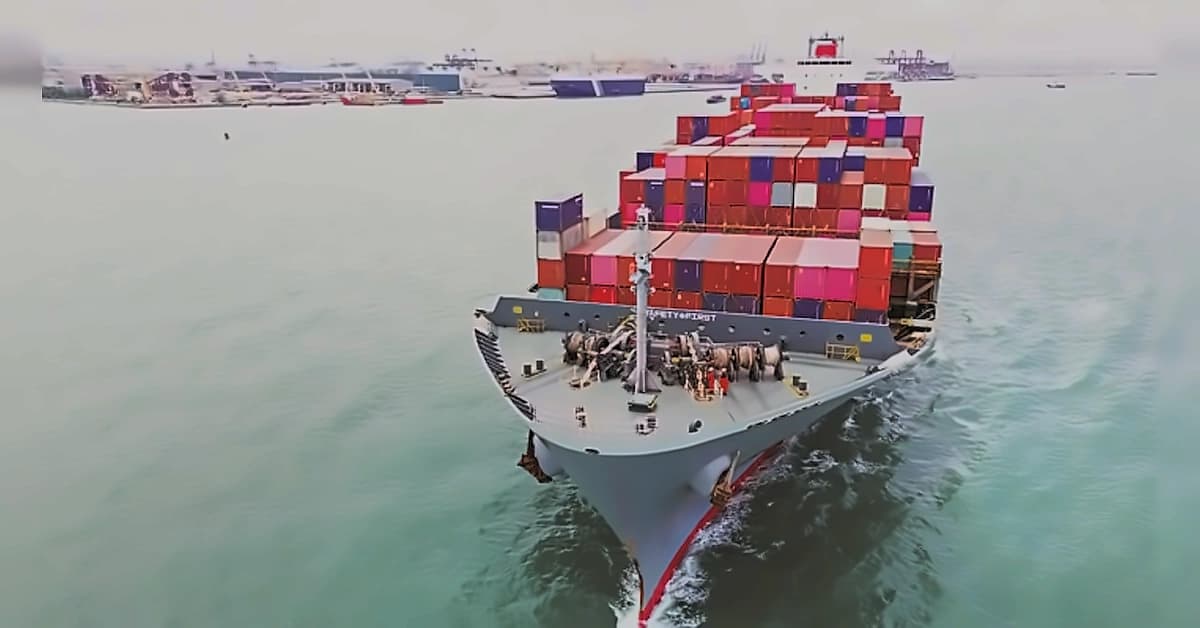
India is preparing to send its first cargo ship via the Northern Sea Route (NSR) to Russia next year, marking a significant expansion in Arctic shipping activity. Aleksandr Tsybulsky, governor of Russia's Arkhangelsk region, told RT that India sees "huge possibilities" in using the route, with discussions covering constructing ships for India at shipyards in the region, using Arkhangelsk's port infrastructure to handle cargo, and exploring manufacturing facilities around ports. According to The Times of India, the discussions include technological options such as placing production around the ports of the Arkhangelsk Region. The route could reduce sailing distance by as much as 40% and cut around two weeks from journeys to northern and eastern Europe compared with conventional shipping through the Suez Canal. Russian President Vladimir Putin recently said Moscow was witnessing "growing interest" from countries such as China and India in tapping NSR economic opportunities.
Chinese shipping company Sea Legend launched the first regular weekly container service using the Arctic's Northern Sea Route to connect China with Europe on August 15. The service, officially called the China-Europe Arctic Express and branded by the Chinese carrier as the 'Ice Silk Road', will sail along Russia's Northern Sea Route. According to reports from Business Standard, this marks a significant milestone in Arctic shipping development, offering a shorter alternative to traditional shipping routes. The deployment represents the most substantial commercial advance in polar shipping since a Maersk vessel first navigated the passage in 2018. As reported by The Guardian, the Arctic route stretches about 5,600 km along the Russian coast, with the Northern Sea Route only navigable during warmer months due to shrinking summer sea ice.
The service runs from Ningbo-Zhoushan in eastern China to Felixstowe in the UK, sailing along Russia's northern coast through the NSR. Sea Legend chief operating officer Li Xiaobin indicated that the direct journey can take as little as 18 days, compared with more than 40 days through the Suez Canal. The company's first scheduled sailing is being operated by the 1,740-TEU container ship Dubai Tower, with plans for eight weekly sailings between August and October during the Arctic navigation season. A trial run by Sea Legend last year completed the Asia-Europe transit in just 20 days, effectively halving the protracted African detour. The latest vessel is carrying high-value and temperature-sensitive products manufactured in the Yangtze River Delta, including energy-storage systems, batteries, photovoltaic modules and components for new energy vehicles. According to The Wall Street Journal, the route is ideal for cargo that is sensitive to temperature, including electric vehicles, lithium batteries and solar products - among which China has become a dominant global exporter.
The Russian Arctic region is rich in hydrocarbons, including LNG, as well as natural resources such as nickel, copper, platinum, palladium and rare earth elements. Located along Russia's Arctic coastline, Arkhangelsk lies on the Northern Dvina River and serves as a major cargo centre connected to the Northern Sea Route. According to The Times of India, Russia's nuclear major Rosatom, which manufactures such vessels, is expected to sign a memorandum of understanding with India for the NSR. The discussions between India and Arkhangelsk cover cargo handling at Arkhangelsk's port infrastructure, ship construction at regional shipyards, and manufacturing facilities around ports in the region. Russian Deputy Foreign Minister Alexander Grushko said at the recent 'Arctic – Regions' Forum that Moscow is pleased with the interest shown by international partners, with Russia making substantial investments in infrastructure along the Arctic route.
Despite advantages, the route faces significant limitations including its seasonal availability and operational risks. As reported by The Wall Street Journal, ships face changing weather, ice floes, and the need for icebreaker assistance, with Arctic insurance premiums about 40% higher than for the Cape of Good Hope route. The route remains small compared with established corridors, with a record 23 cargo ships using the Northern Sea Route last summer compared to more than 30 ships transiting the Suez Canal every day. Russian insurer AlfaStrakhovanie recently disbursed $650,000 after a tanker suffered severe hull damage along the route, despite operating with icebreaker escorts. According to Allianz Commercial's 2026 safety and shipping review, international sanctions imposed on Russia after the invasion of Ukraine could complicate rescue efforts if a vessel gets into trouble. Bellona reports that in 2025 there were a hundred such ships under international sanctions – or nearly a third of the cargo ships sailing the route.
The launch follows China's several years of activity along the Northern Sea Route, with Russia controlling much of the route through its state nuclear company Rosatom, which issues navigation permits and provides nuclear-powered icebreakers. According to The Wall Street Journal, Beijing is concerned that if they don't establish a significant strategic presence in the Arctic now, it's going to be more difficult in the future. Coface forecasts that 3.5% of trade between East Asia, Europe, and North America, representing $64 billion in cargo, could transition to Arctic routes within five years. The route operator has planned at least eight voyages for 2026, with the service connecting China with major ports in Britain, the Netherlands, Germany and Poland. China currently operates three icebreakers and maintains a support vessel on an extended scientific mission north of Greenland. The launch comes as trade in goods between China and the European Union reached $447.8 billion in the first half of the year, up 14.2% from the same period in 2025. However, experts say the economics don't add up for now, with safety concerns, high operating costs, a short sailing season and sanctions risks continuing to constrain Arctic shipping.