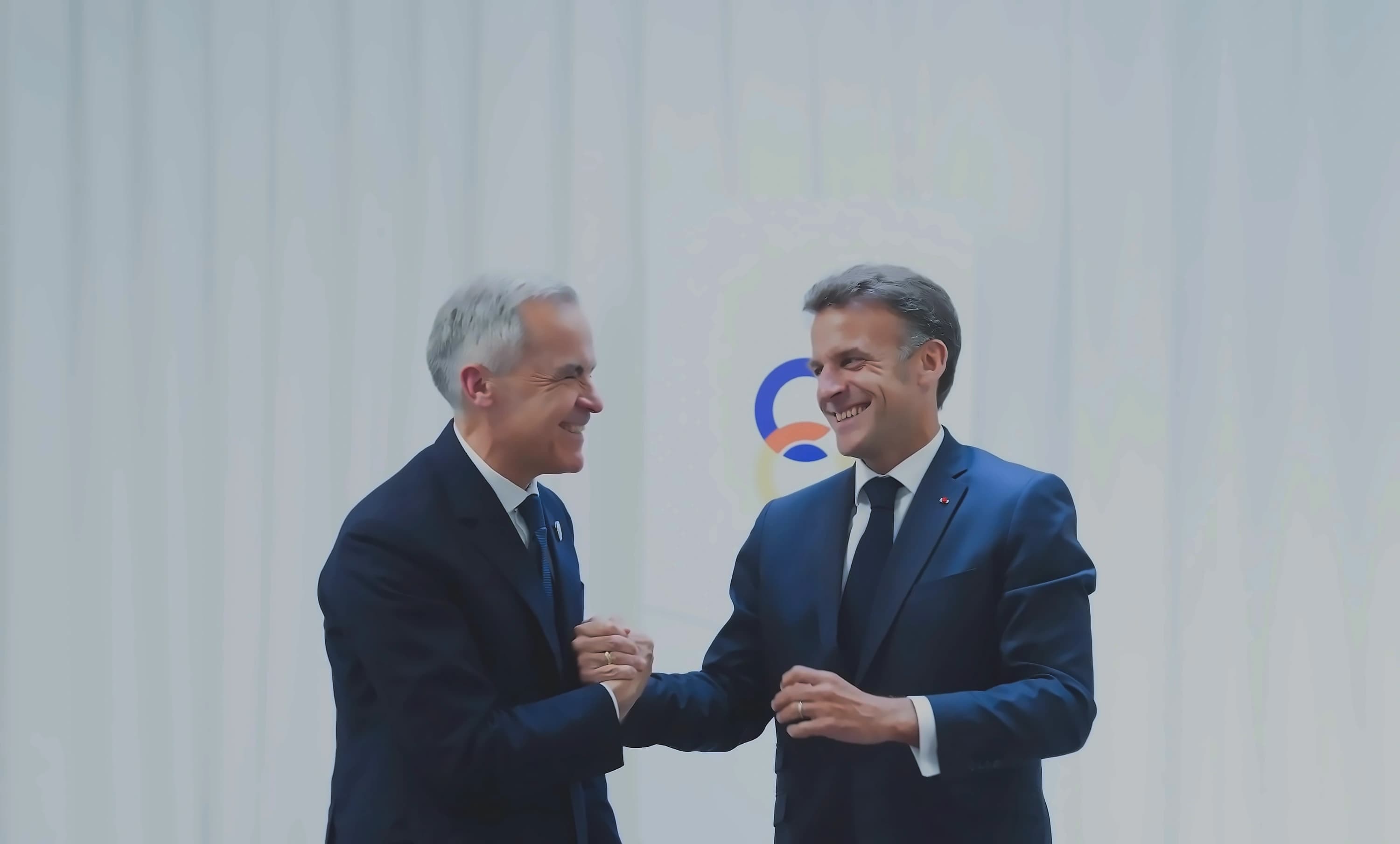
US President Donald Trump has escalated his opposition to the EU's proposed associate membership for Canada, warning of 'very heavy tariffs' if he views the move as a 'hostile act' by Europe. Speaking to reporters after arriving in Charlotte, North Carolina, Trump stated: 'If they do that, if I think it's a hostile act, I will put very serious tariffs, or stop trading with Europe on many things.' He added: 'And so, if they do that, if Europe does that with a bad intention--because if it's a good intention, that's fine. If it's a bad intention, we'll put very heavy tariffs on Europe.' This represents a significant escalation from earlier warnings, as Trump has already imposed tariffs on Canada that are crippling key economic sectors such as autos, steel, aluminum and lumber, with the U.S. absorbing roughly 72 percent of Canadian exports in 2025, according to Forbes.
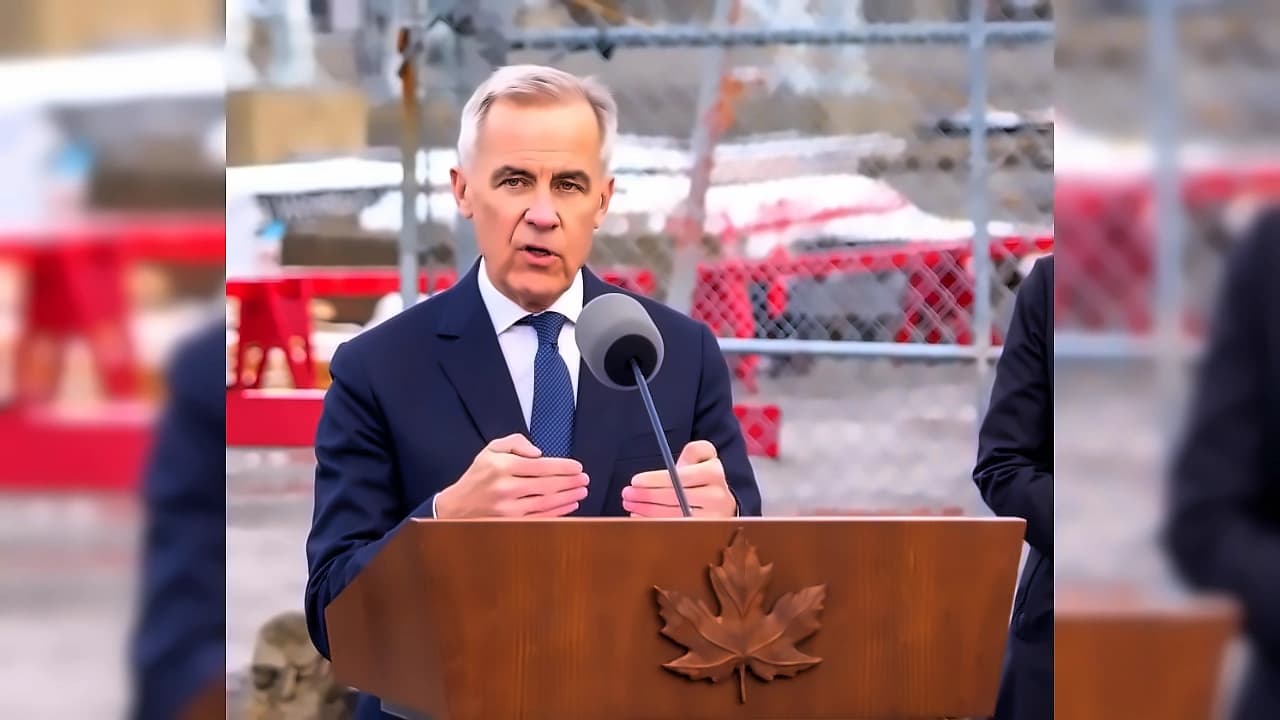
Canadian Prime Minister Mark Carney delivered a landmark speech to the European Parliament on Thursday, outlining his vision for a strategic alliance between Canada and Europe to protect markets, democracies and rule of law. Carney did not adopt the term 'associate member' used by European Commission President Ursula von der Leyen the previous day, but said he appreciated 'the ambition' that her suggestion conveyed. 'Europe and Canada are each strong. Europe and Canada are even stronger together,' Carney declared, emphasizing that they are 'not seeking to form a third bloc to act as a great-power rival' to Washington and Beijing. He stressed that 'we do not seek power to dominate others' but are pursuing 'resilience, so that no one can control our open markets, impair our sovereignty, threaten our territorial integrity, or undermine our freedoms, our democracies, our rule of law.' Asked about Trump's threats, Carney told reporters: 'Canadians are united that nobody is going to tell us what language we speak. No one is going to dictate our culture or with whom we can strike agreements internationally.'
European Commission President Ursula von der Leyen has officially proposed making Canada the European Union's first associate member, marking a historic shift in EU foreign policy. In her State of the Union speech on Wednesday, von der Leyen stated: 'I invite Canada to be the first associate member of the EU.' The Commission President emphasized that the two sides would move to an alliance for the future and 'create a common prosperity and economic security space'. This proposal represents a dramatic shift from the earlier discussions reported by the Wall Street Journal, where the concept was described as a possibility being weighed by European officials. The EU has no formal category of associate membership in its treaties, and any such arrangement with Canada would therefore require a bespoke framework rather than an existing legal pathway. As reported by Associated Press, Canada's ambassador-designate to the EU Jonathan Wilkinson confirmed that Canada is not seeking full EU membership, stating Ottawa wants 'to get as close as we possibly can' to Europe while maintaining its independence.
The proposed associate-member framework would mark one of the most dramatic shifts in Canadian foreign and economic policy in generations, as the U.S. has historically served as Canada's dominant trading partner. According to von der Leyen's latest announcement, the partnership would encompass intelligent manufacturing, tech alliance development, defence industrial base integration, and the Arctic as a flagship joint project. The scope extends to energy, critical minerals and batteries, artificial intelligence, quantum technology, cyber and economic security. The proposed 'Alliance for the Future' would cover areas including technology, defence industries, intelligent manufacturing, the Arctic, energy, critical minerals, batteries, artificial intelligence, quantum computing, cybersecurity and economic security. Canada and the EU are discussing ways to let Canada's goods, services, and workers involved in strategic supply chains move freely, effectively shifting the EU border closer to Canada. The areas under discussion include energy, artificial intelligence, defence, and critical minerals, with the two sides also discussing cooperation on underwater cables, jointly constructing data centers, cloud storage and new satellite networks to facilitate the shipment of Canadian energy to Europe. Prime Minister Carney specifically mentioned seeking strategic autonomy through deep cooperation in critical minerals, defence industrial capacity, AI and computing, energy security, space, and payments, as well as digital trade and building more secure broadband connections between Europe and Asia.
The proposed associate membership faces significant resistance from EU member states, with diplomatic sources expressing surprise and concern about the initiative. One EU diplomat expressed surprise on Wednesday, stating 'nobody really knows what it means,' adding there were concerns that the European Commission chief was 'overpromising and won't be able to deliver.' Another European diplomat called it an 'unfortunate proposal, which has never been discussed with Member States.' The European Commission has attempted to address these concerns, with spokesperson Olof Gill stating: 'As our President (von der Leyen) made clear yesterday, the proposed strengthening of our partnership with Canada is not against anyone else, but for our common strength.' However, the proposal remains unclear as it has yet to be fleshed out and would need approval by EU member states to proceed. France's Europe Minister Benjamin Haddad also weighed in, telling Public Senat TV that 'it is not up to the United States - or anyone else - to choose the political and geopolitical direction of the Europeans.'
Speculation that Canada could one day join the European Union has moved from an internet curiosity to a genuine geopolitical talking point, with prediction markets beginning to reflect this growing interest. According to recent data from Polymarket, the market asking whether Canada will be admitted as a full EU member by the end of 2026 or 2027 currently puts the probability at approximately 2% by the end of 2026, and 9% by the end of 2027. The market opened on September 17 and has generated only around $1,250 in volume so far, so treat the figure cautiously rather than as a well-established consensus. A separate Polymarket market asks whether Canada will formally apply for full EU membership, with traders currently assigning an 8% probability to an application by December 31, 2027, compared with 2% for an application by the end of 2026. Kalshi has a broader market asking whether the EU will have a new member before 2030, showing 75.8% of bettors trading yes but with only $8,000 in trading volume, and importantly, does not isolate Canada as the prospective entrant, so it cannot provide a meaningful Canada-specific probability. The prediction-market picture therefore remains heavily weighted toward closer Canada-EU integration rather than full Canadian EU membership, with the new 'associate member' proposal creating a pathway for substantially deeper economic, security, and political ties.