Andy Burnham has been confirmed as the unopposed winner of the Labour leadership contest, with 322 of 403 Labour MPs voting for him on the first day of the nomination process. Burnham submitted his own nomination and confirmed in a social media post that "it's all starting to feel very real" and joked it would be "hopefully third time lucky" for him, referring to his two previous failed leadership bids in 2010 and 2015. The former Greater Manchester mayor will be formally declared leader at a special conference on 17 July and will become prime minister on 20 July, just weeks after returning to Parliament after a decade's absence in a by-election in Makerfield. Labour MPs can now formally endorse contenders to replace Keir Starmer, with an initial total to be published by the party at around 19.00 BST on Thursday.
Former Defence Minister Alan Cans confirmed late Wednesday that he will not contest against Burnham, stating he hoped a leadership contest would provide proper debate opportunities. As reported by AFP, Cans said "months of internal Labour politics isn't what the country needs right now. We've got to get on with the job." He expressed that Burnham has earned this position and provided his full backing. Former health minister Wes Streeting also announced he was dropping his intention to run and backing Burnham, with some 200 Labour MPs feting Burnham during a group photo in Westminster on the day Starmer announced his resignation. This clear show of support from the parliamentary party demonstrates strong backing for Burnham's leadership bid. Labour's rulebook requires candidates to be nominated by 81 Labour MPs, as well as either 32 of Labour's 634 local branches, or three of the 31 socialist societies and trade unions affiliated to the party, including at least two unions.
Keir Starmer announced on June 22 that he would resign after months of pressure over policy U-turns and questions about his judgment, coming after Burnham had won a by-election that allowed him to return to parliament to launch his widely expected leadership challenge. According to AFP, Burnham was sworn into parliament on the same day Starmer announced his resignation, becoming an MP again following his stint between 2001 and 2017. Starmer became prime minister on July 5, 2024, after a landslide Labour election victory following 14 years of Conservative Party rule. Starmer's resignation means Labour must select a new leader, who will then be positioned to take over as prime minister. Starmer's announcement came amid growing pressure over painful local election defeats for Labour, domestic policy shifts and Starmer's appointment of Peter Mandelson as ambassador to the United States, who was sacked over his friendship with the late sex offender Jeffrey Epstein.
Burnham vowed in a keynote speech in June to "bring about the biggest rebalancing of power our country has seen" and pledged to put power "in the hands of the people and places who can use it best." As reported by AFP, he added "We need a new determination to raise living standards of every single person in this land" and "We must accept that to do that, to fix the economy and the country, we need to change politics and we need to do it now." Burnham has positioned himself to the left of Starmer, advocating a process of "devolution" to tackle regional disparities, an enormous social housing programme and expanded social care. During a speech in Manchester last week, he offered details of his blueprint for office, including proposals to establish a new No 10 unit in Manchester tasked with handing local government more control in areas including housing and transport. His central policy offering is a pledge to give all parts of the UK "greater public control" of the water and energy sectors, although he is yet to spell out what this would mean in practice. His approach dubbed 'Manchesterism' promises to reverse almost two decades of low growth since the 2008 financial crisis through harnessing private and public money to invest in areas like transport, housing and infrastructure. According to NPR, Burnham also promises to cut tax rates for retail businesses, build the most public housing since World War II, and cut welfare spending in a way that's "fair and lasting."
The leadership transition follows a structured timeline with specific deadlines for nominations and voting. There will be a week-long window between 9 and 15 July for MPs to gather the required nominations to stand under the party's rulebook. Leadership candidates need 20% of the party's MPs to nominate them, meaning 81 MPs support is required out of 403 total Labour MPs. With 322 votes already secured, Burnham has effectively prevented any possible rival from securing the required nominations. Candidates must also be nominated by at least three of the 31 socialist societies and trade unions affiliated to the party, or 5% of the constituency Labour parties (CLPs). On 13 July, candidates will take part in a parliamentary hustings where they can answer questions from fellow Labour MPs. If Burnham remains the only candidate, he could in effect hold a hustings all by himself. Affiliate nominations open at 18:00 BST on 15 July and close the same time the following day. The CLP nomination stage, if required, would begin on 20 July and end on 31 July. If Burnham secured 323 nominations, it would be mathematically impossible for a rival to reach the 81-MP threshold needed to run against him, meaning Burnham could be the Labour leader by 17 July. As reported by Sky News, even if Burnham is the only candidate, he will still participate in an online hustings with Labour MPs.
Burnham has promised continuity in foreign policy, writing in The Times of London that the government's 'commitment to NATO and the UK's nuclear deterrent will remain absolute'. According to AFP, he stated Britain will remain a firm ally of the United States and a strong supporter of Ukraine. In a recent interview, Foreign Secretary Yvette Cooper said she had spoken with Burnham and he is "100 percent behind unwavering support for Ukraine." Burnham has also said Britain needs to boost its defence capacity due to recent geopolitical developments, such as the US-Israel war on Iran and Russia's war on Ukraine. On Israel and Palestine, Burnham was among a handful of British politicians who backed recognising Palestinian statehood in 2015, describing it as "a right" while slamming the expansions of Israeli settlements, which are illegal under international law, as "key obstacles" to a two-state solution. At the same time, he opposed boycotting Israel, saying efforts in this regard were "the wrong response." In a Times article on Thursday, Burnham also confirmed he wants to keep Sir Keir's national security adviser Jonathan Powell, a former Blair aide, in post, and wants to see a "sustained increase" in defence investment without committing to a specific target, whilst being "more open with the public" about cost overruns or delays to military procurement.
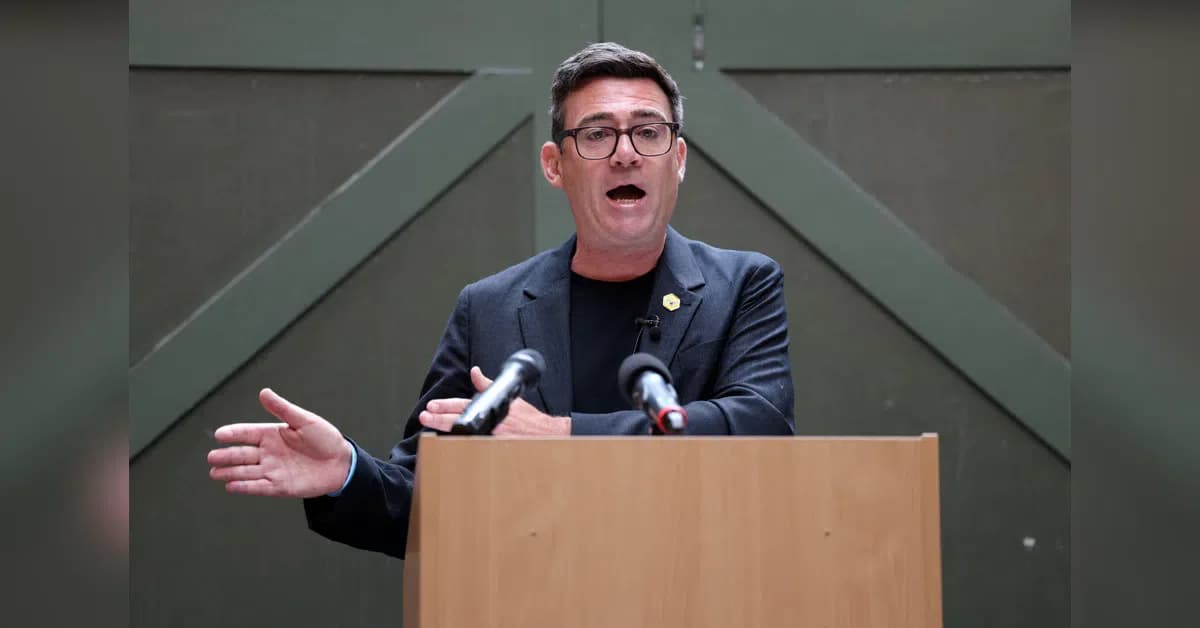
Burnham will face many of the same political and economic challenges as Starmer, including a sluggish economy, tattered public services and a cost-of-living squeeze. As reported by AFP, he will inherit the same political landscape that Starmer struggled with, including the need to address the country's economic challenges and restore public confidence. Despite these challenges, Burnham's 'Manchesterism' approach aims to tackle the economic stagnation that has persisted since the 2008 financial crisis. If Burnham takes over midterm as expected, that would make him the fifth prime minister in a decade to enter Downing Street without winning a general election as party leader. The next prime minister will not be required to call a general election until August 2029 although he or she could face pressure to seek a fresh mandate sooner. His path to the leadership could effectively be confirmed later if he manages to secure 323 nominations, as this would make it mathematically impossible for a rival to reach the 81-MP threshold needed to run against him, meaning Burnham could be propelled into Downing Street without Labour members and affiliated trade union supporters getting a vote. If another candidate does emerge, the Labour leadership contest would take place over Parliament's summer recess from 16 July onwards, with a ballot among party members and affiliated trade union supporters between 6 and 27 August to decide the winner.