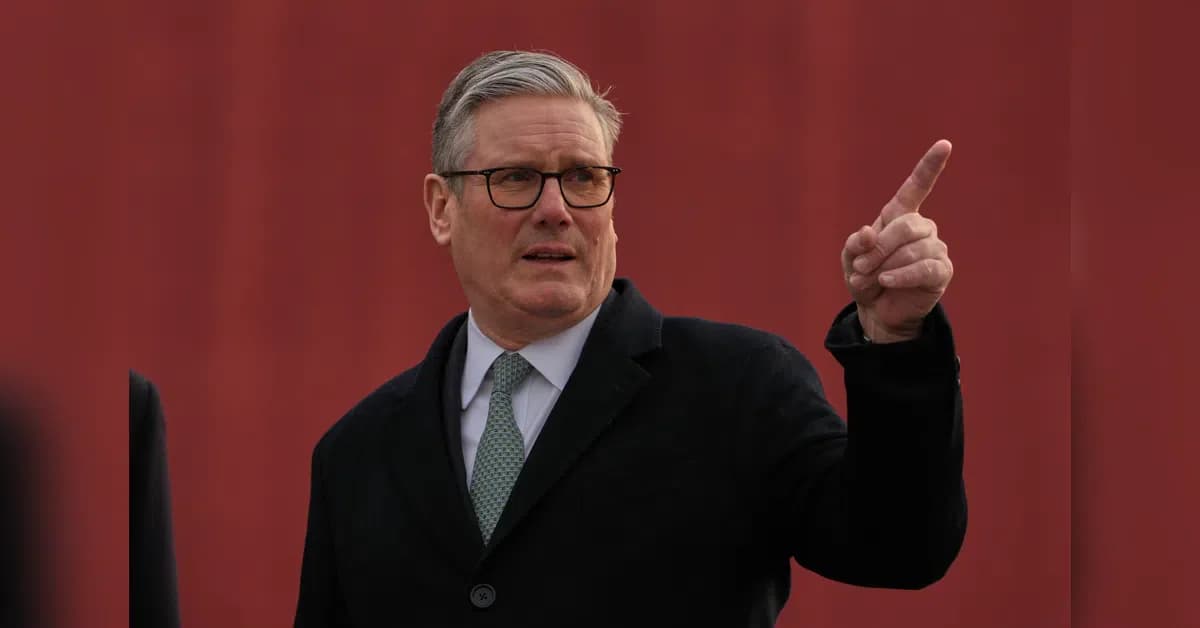
British defence secretary John Healey resigned on Thursday in a dispute over military spending, accompanied by a scathing public letter that compounds pressure on Prime Minister Keir Starmer. He accused Starmer of 'failing to commit the government resources that are needed to defend the country at a time of rising threats' and stated that 'You have been unable, and the Treasury has been unwilling, to commit the resources that the nation needs to defend the country at this time of rising threats.' He said he was 'now left with no other option than to submit my resignation' after the government's Defense Investment Plan fell 'well short of what is required at this dangerous time.' The resignation comes as Starmer struggles to hold onto power, after Wes Streeting resigned as health minister in May and as another challenger, Andy Burnham, attempts to return to frontline politics to launch a leadership bid. Burnham is widely expected to face a leadership challenge from Greater Manchester Mayor Andy Burnham, if Burnham wins the Makerfield by-election on June 18, adding to the political pressure on Starmer's administration.
The resignation stems from a months-long dispute between Britain's defence and finance ministries over how to meet rising demands to expand military spending, as reported by Associated Press. This internal government disagreement has delayed Britain's Defence Investment Plan since last year, creating significant uncertainty in the country's military modernization plans. The UK Treasury had been resisting a push to accelerate an increase in defense spending, with ministers locked in fractious discussions over how to make up a £28 billion ($37 billion) funding shortfall, according to Bloomberg. The dispute highlights the challenges of balancing fiscal constraints with national security priorities during a period of increased geopolitical tensions. Starmer has pledged to boost U.K. defense spending to 2.5% of gross domestic product by 2027 and 3% by 2034, but many in the military say that isn't fast enough. Healey revealed that work on how much the defence investment would cost had been completed in January, but the final settlement only emerged on Monday afternoon, which fell 'well short' of what was needed.
The prolonged delay has infuriated Britain's defence industry, which cannot invest in long-term programmes for the country's security at a time of huge geopolitical volatility, according to Associated Press. The industry faces additional pressure as the U.S. pivots away from protecting Europe, creating a more challenging security environment that requires immediate military investment. The U.K. is contending with the U.S.-Israeli war with Iran, which exposed Britain's lack of military readiness with its navy unable to immediately deploy an advanced warship to the region. This industry concern reflects the broader impact of government funding delays on Britain's defence capabilities and industrial base.
The resignation and funding dispute come at a critical time of rising threats to Britain's security, as noted by Healey in his resignation letter. He cited the Iran war, Russia's all-out invasion of Ukraine and threats from Moscow as key factors driving his decision. Healey specifically referenced Starmer's warning at the Munich security conference in February that NATO would face an attack by Russia by 2030, noting that Starmer was aware of what defence needs. The delay in the Defence Investment Plan has created uncertainty for the country's military modernization and readiness, particularly concerning given the current geopolitical environment and the 'backloaded' nature of the extra support, where the pressure of operations and imperative to speed up readiness to fight is in the first two years, and it rises to just 2.68% of GDP in 2030. Healey warned that 'I am being forced to make decisions that would reduce the readiness of our forces and increase the risk to personnel on operations, and could make the country less safe.'
Healey's resignation is another blow to embattled Prime Minister Keir Starmer, who is already facing demands from Labour colleagues to step down, according to Associated Press. The high-profile resignation plunges Starmer's administration into fresh crisis, with Britain's embattled premier already clinging to his job after a mass revolt from his MPs. NATO Secretary-General Mark Rutte expressed respect for Healey's work, noting that 'what we are seeing all over the alliance is countries increasing their defense investments.' The crisis comes as Starmer is struggling to reduce debt while the overall tax burden at its highest level in decades, making it difficult to justify increased military spending amid fiscal constraints. The political pressure intensifies as Starmer faces a likely leadership challenge from Greater Manchester Mayor Andy Burnham, if Burnham wins the Makerfield by-election on June 18.