The second technical meeting of the BRICS Disaster Risk Reduction (DRR) Working Group commenced in Puri, Odisha on Wednesday under India's 2026 Brics Presidency. According to reports from PTI, the three-day meeting themed 'Building for Resilience, Innovation, Cooperation and Sustainability' has brought together senior officials, policymakers and disaster management experts from all 11 BRICS member and partner countries - Brazil, China, Egypt, Ethiopia, India, Indonesia, Iran, Russia, Saudi Arabia, South Africa and the United Arab Emirates. The meeting marks the first in-person technical meeting of the BRICS DRR Working Group under India's 2026 chairmanship and aims to strengthen cooperation in disaster risk reduction and climate resilience across the global partnership. Given the presence of international delegates, extensive security arrangements have been put in place across Puri, with the conference venue and surrounding areas brought under comprehensive CCTV surveillance and additional police personnel deployed. Odisha Chief Minister Mohan Charan Majhi will join the meeting on Thursday, as reported by PTI.
Rajesh Prabhakar Patil, special relief commissioner and managing director of the Odisha State Disaster Management Authority (OSDMA), presented Odisha's disaster management framework during the inaugural technical session. As reported by Business Standard, Patil highlighted the state's robust early warning systems, large-scale evacuation mechanisms, community-based preparedness programmes and its widely acclaimed zero-casualty approach during cyclonic disasters. The state has institutionalised disaster preparedness through extensive community engagement, strengthened last-mile communication systems and continuous capacity building of frontline responders and volunteers. Odisha's experience in handling successive cyclones and other natural disasters has been cited as a benchmark for coastal disaster resilience globally. For Odisha, the conference represents a landmark moment, being the first time the state is hosting a BRICS-level disaster management meeting and provides an opportunity to showcase its disaster management model before an international audience. Leader of the opposition in Odisha, Naveen Patnaik, emphasized that since the 1999 Super Cyclone, Odisha has faced nature's fury with courage and conviction, guided by one principle — every life is precious. He noted that Odisha's famed zero-casualty model, rooted in resilient infrastructure and community readiness, has transformed Odisha from vulnerability into a global beacon of disaster management.
The deliberations during the three-day meeting will focus on several emerging priorities in disaster management, including sustainable disaster-risk financing, resilient infrastructure development, anticipatory response mechanisms, community-based early warning systems and the integration of traditional and indigenous knowledge into modern disaster management frameworks. According to PTI, the agenda includes community-based DRR governance, disaster risk financing, multi-hazard early warning systems, climate-resilient infrastructure, nature-based and indigenous solutions, science, technology, and innovation in DRR. The meeting will examine innovative approaches to community-based disaster governance, climate-resilient infrastructure, nature-based solutions and the role of science and technology in strengthening disaster preparedness and response. The conference will focus on key issues such as disaster preparedness, risk reduction, resilient infrastructure, sustainable disaster-risk financing, anticipatory response mechanisms and the use of technology in disaster management. Experts are expected to deliberate on how developing economies can enhance resilience against climate-related disasters while ensuring sustainable growth.
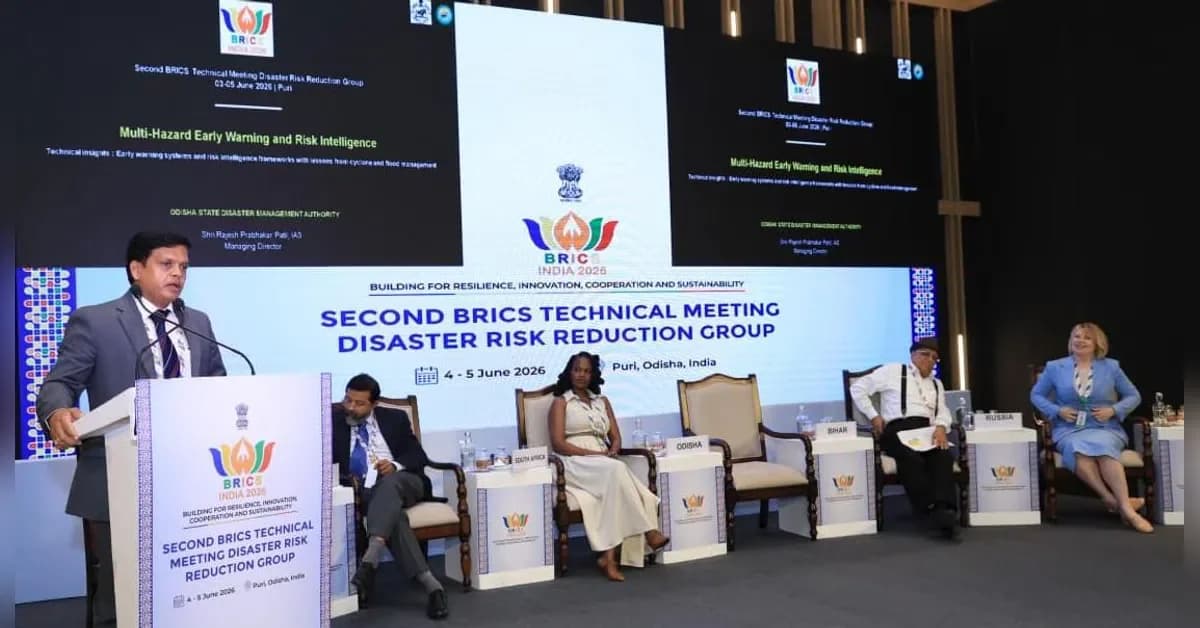
The programme includes technical sessions on June 4 focusing on sustainable financing models for disaster risk reduction and inclusive multi-hazard early warning systems. As reported by Business Standard, on June 5, discussions will shift to climate-resilient infrastructure, nature-based solutions, integration of indigenous knowledge and technological innovations in disaster management. The programme will culminate with a field visit near Ramchandi Beach, where delegates will witness a live demonstration of water-rescue preparedness and emergency-response capabilities by the Odisha Disaster Rapid Action Force (ODRAF). Delegates will also visit the Konark Sun Temple to gain insights into Odisha's cultural heritage. Authorities have made elaborate arrangements to facilitate the movement and safety of visiting delegates, with security heightened at the Konark Sun Temple as members of the BRICS delegation are scheduled to visit the iconic heritage site. Puri Superintendent of Police Prateek Singh confirmed that elaborate security arrangements have been made since the event is being attended by foreign delegates.
Odisha's Revenue and Disaster Management Minister Suresh Pujari stated that hosting the BRICS technical meeting reflects global recognition of the state's achievements in disaster risk reduction. According to PTI, Pujari emphasized that the Odisha government and OSDMA have consistently strengthened cyclone preparedness measures, evacuation planning and last-mile warning dissemination, making the state an internationally acknowledged example of effective disaster governance. Chief Minister Majhi expressed that hosting the meeting is a matter of great pride for Odisha, stating this important gathering reflects the growing global recognition of Odisha's leadership in disaster preparedness, resilience and effective disaster management. He welcomed the distinguished delegates and expressed confidence that the gathering will strengthen cooperation and advance global disaster resilience. The Puri district administration and police have undertaken extensive preparations to ensure the event's success, reflecting the state's readiness to host high-profile international gatherings. As global concerns over climate change and extreme weather events continue to grow, the Puri meeting is expected to play a vital role in strengthening cooperation among emerging economies and advancing collective efforts towards building more resilient and disaster-ready societies.