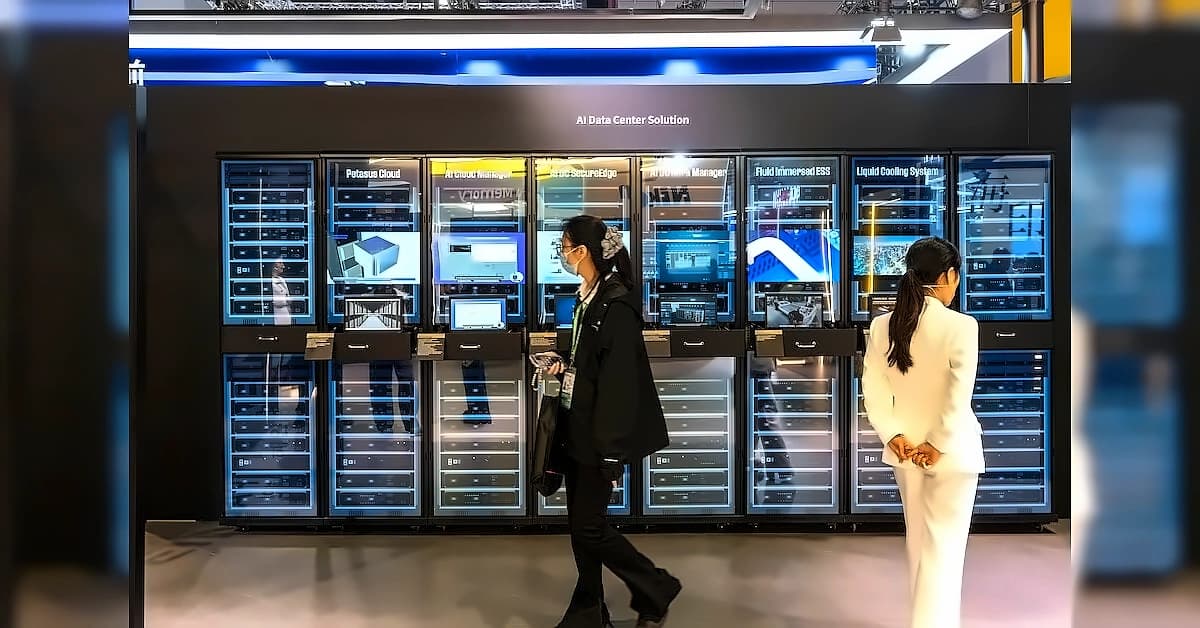
Asia's artificial intelligence infrastructure buildout is gathering unprecedented momentum, with PricewaterhouseCoopers LLP estimating Asia's spending on data centers could reach $8.2 trillion by 2050, with the vast majority going to hardware including GPUs and servers. According to Business Standard, banks are becoming increasingly comfortable with GPU financing, significantly widening the pool of capital available for the next phase of the AI race. Recent developments show that banks played key roles in GPU loans totaling roughly $3.8 billion to GMI Cloud and two other AI infrastructure providers, Zankore and PaleBlueDot AI. Citigroup Inc. served as the sole debt adviser for Zankore's $3.1 billion borrowing in Indonesia, while JPMorgan Chase & Co. was the placement agent for PaleBlueDot AI's credit facility. Half a dozen bankers and financial advisers across Asia said they were either in talks for or aware of more financing deals linked to GPUs, though lending remains nascent due to concerns over chip valuation and geopolitical risks.
Asian equities opened mixed on Tuesday following a tech-led surge on Wall Street, with Japan's Nikkei 225 adding 0.28% while the broader Topix gained 0.47%. In Hong Kong, Hang Seng futures rose 1%, and South Korea's Kospi slipped 0.041% as the country's stock market opened after a market holiday. According to CNBC TV18, MSCI's Asia Pacific Index rose 0.1%, as traders chose to look past bond yields that have climbed to multi-decade highs. An ASEAN+3 Macroeconomic Research Office report warns that Southeast Asia, China, Japan, and South Korea face greater risk than most from a potential AI bust, which could hit exports and send shockwaves through markets. The office pointed to Asia's central role in global supply chains and its growing links to AI-related financial markets, stating that "a disorderly correction could therefore propagate through multiple channels, from trade to capital flows and financing costs."
The World Bank warns that Asia's economic buffers are too thin to keep absorbing the oil shock from the US-Iran war, which has driven global energy prices up and is expected to persist into next year. According to the World Bank's East Asia & Pacific Economic Update released on Tuesday, the region's governments have responded more aggressively than peers elsewhere, relying more heavily on subsidies to suppress retail gasoline prices. Indonesia, Thailand and Vietnam have all taken steps to suppress retail gasoline prices and have seen their dollar war chests depleted by between 15% and 40% this year. The World Bank forecasts that Middle East oil exports won't return to pre-conflict levels until mid-2027, making the current approach "unsustainable" as it may postpone necessary behavioral adjustments while imposing fiscal costs and lowering foreign currency reserves.
Despite oil shock concerns, the World Bank maintains a positive growth outlook for the region, forecasting 4.5% growth this year in East Asia and the Pacific, revising the figure up by 0.3 percentage point from the last forecast. This growth is largely driven by strong investment and exports led by the artificial intelligence boom. The outlook for 4.4% growth next year was unchanged. However, the World Bank cautions that a longer-lasting energy shock could put this resilience at risk, especially if coupled with a downturn in the AI cycle and El Niño weather disruptions. Higher energy costs have already weighed on manufacturing, while the surge in transport prices has hit consumer demand. "A renewed rise in energy prices may be more damaging to economic activity than initially observed, particularly as the drag from higher inflation and tighter financial conditions grows," the World Bank stated.