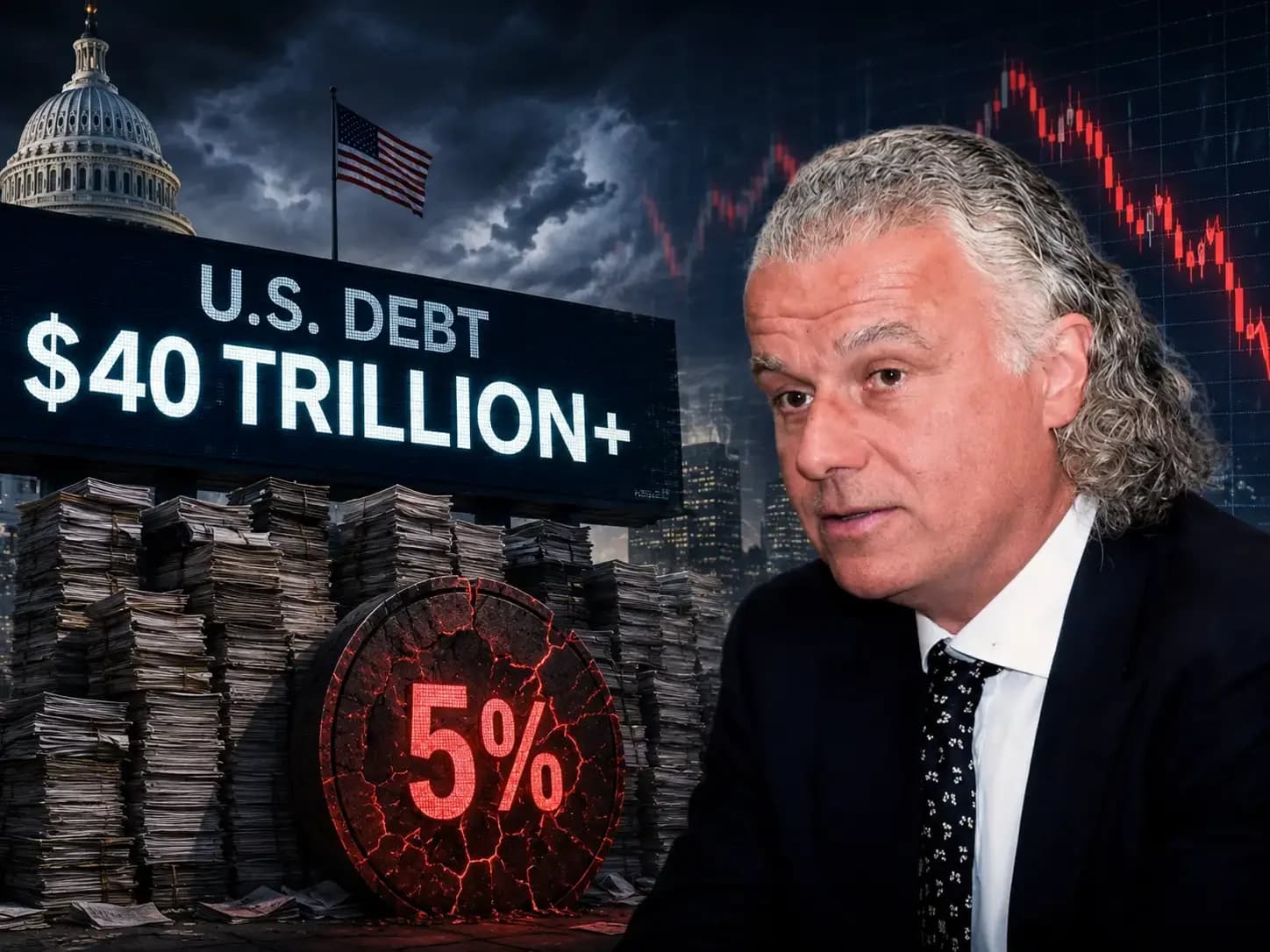
Treasury Secretary Scott Bessent should resist calls to eliminate the 20-year bond, as such a move could send borrowing costs higher, according to BNP Paribas SA. Bond markets have recently focused on whether Bessent could shift the government's issuance mix toward shorter-dated debt to respond to long-end yields that have climbed to their highest levels in decades. A strategy team led by Guneet Dhingra, head of US rates strategy, wrote in a report that eliminating the 20-year bond would not work because it's unlikely to drive yields sustainably lower and could result in unintended consequences such as higher yields and lower liquidity. BNP Paribas warns that removing the maturity would reduce supply in that segment but could also convince investors that Washington is struggling to control its finances, prompting them to demand higher yields elsewhere. The strategy team released a report on October 6 arguing that reducing or eliminating 20-year Treasury issuance would be ineffective at sustainably lowering long-term yields.
According to Citigroup Inc. analysis, Treasury Secretary Scott Bessent is likely to reduce auction sizes for long-dated government bonds and could even cancel 20-year bond sales altogether. The bank's base case projects a $3 billion reduction per auction for both 20- and 30-year bonds, which would be funded by additional T-bill issuance. Citigroup's head of US rates strategy Jason Williams expects this announcement to come at the Treasury Department's next quarterly refunding announcement on November 4. The Citi strategist recommended that clients position for 20-year bonds to outperform 10-year notes on the prospect of a 'reduction, or perhaps cancellation, of the 20-year bond.' A first hint at such a change could come in a survey of dealers scheduled for next Friday, which stands to offer a 'bullish catalyst' for the trade if the department asks major financial institutions whether demand for long-end debt is being 'partly cannibalized' by high-quality hyperscaler issuance.
The 20-year maturity has struggled since its reintroduction in 2020, leading to calls for the Treasury to eliminate it even before the latest run-up in yields. The US currently pays more to borrow at that maturity than for 30-year debt, an anomaly given longer tenors carry more risk. The 20-year yield traded at 5.68% on October 6 after hitting 5.75% a day earlier — its highest level since its return. A September 15 auction cleared at 5.42%, the highest yield since the maturity was discontinued in 1986, with soft demand pushing yields even higher afterward. As reported by BNP Paribas, the failure of the expanded buybacks program to stem the rise in yields shows that changes to supply have limited impact. Dhingra's team noted that reducing long-end issuance would require selling more bills maturing in less than a year, an expensive move as the Federal Reserve raises interest rates.

Dhingra's team maintained a recommendation to short 30-year Treasuries, targeting a yield rise to 5.8% from the current 5.64%. They warned that eliminating the 20-year bond could be perceived as a state of panic and signal that the Treasury is running out of policy levers, which could embolden bond vigilantes. According to the strategists, the Treasury's toolkit moves amount to a 'band-aid on a gunshot wound' unless core issues around inflation and deficits are addressed. They wrote that bond vigilantes would feel more encouraged the more times these 'band-aid' moves fail to drive yields lower. The distinction between buybacks and issuance cuts is crucial, as buying back existing bonds to support liquidity is different from permanently stopping new issuance. BNP Paribas maintains its sell recommendation on the 30-year U.S. Treasury, projecting the yield will rise to 5.8%.