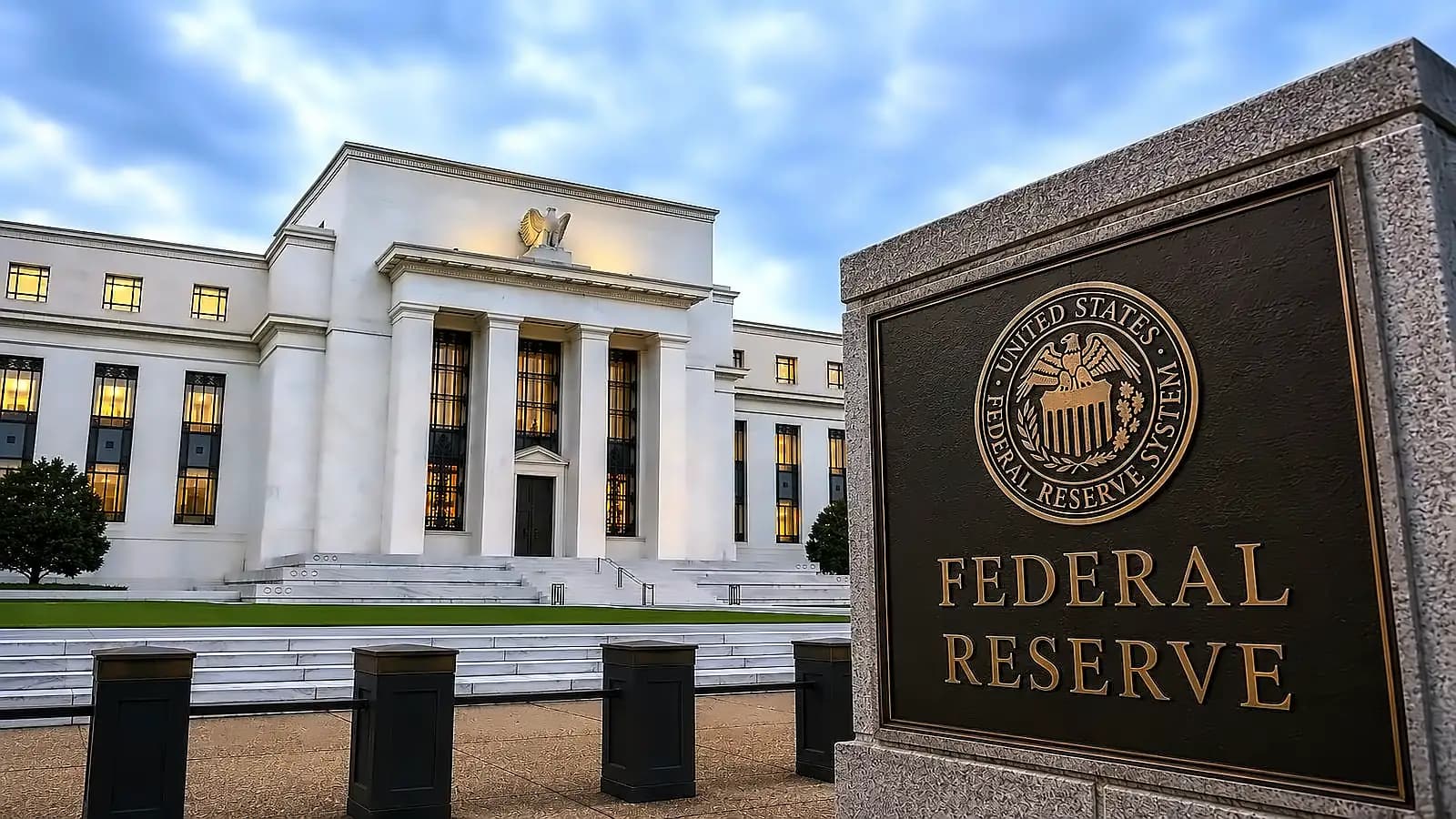
Wall Street has largely abandoned expectations for Federal Reserve rate cuts this year ahead of the first Federal Open Market Committee meeting led by Fed Chair Kevin Warsh on June 16-17. According to a Reuters survey conducted between June 4 and June 9, 72 of 102 economists expect the benchmark federal funds rate to remain within the 3.50% to 3.75% range through the end of 2026. The poll showed the strongest consensus so far this year that policymakers are unlikely to ease borrowing costs in the coming months. Futures markets have also moved in the same direction, with interest-rate contracts now pricing in at least one possible rate increase by late 2026 rather than a return to rate cuts. The growing conviction follows a run of stronger-than-expected economic data and persistent inflation concerns that have strengthened the case for a prolonged higher-rate environment.
The May nonfarm payrolls significantly exceeded expectations with 172,000 jobs created, marking the third consecutive month of strong employment growth and reinforcing the consensus shift toward Federal Reserve rate hikes. As per ME News, the data release on June 5 (UTC+8) prompted immediate market reaction, with renowned analyst Nick Timiraos stating that while the jobs report will not fully resolve the debate over the magnitude of Fed rate hikes, near-term rate cuts are now essentially off the table. The strong employment data has fundamentally shifted market expectations, with CME's FedWatch data showing the probability of a Fed rate hike by December 2026 has risen to 67.7%, indicating that disagreement is now limited only to the size of the increase. Unemployment remained stable at 4.3%, continuing to hold near historic lows since October 2021, while average hourly earnings grew 0.3% to $37.53, slightly below expectations of 0.4% but showing year-over-year growth of 3.4%. The latest data follows March's payrolls figure being revised higher by 29,000 jobs to 214,000, demonstrating consistent labor market strength.
Inflation concerns continue to dominate Fed outlook as fresh inflation data due on June 10 has become a key focus for investors ahead of the June policy meeting. According to Trading Economics forecasts, headline Consumer Price Index inflation is expected to rise 0.5% month-over-month in May after increasing 0.6% in April. Annual CPI is projected to accelerate to 4.2% from 3.8%, while core CPI, which excludes food and energy, is expected to increase 0.3% on a monthly basis and 2.9% year-over-year. Those forecasts arrive as inflation remains above the Federal Reserve's target, with the Fed's preferred inflation gauge, the Personal Consumption Expenditures Price Index, reaching 3.8% in April. Energy markets have added another source of concern, with several economists citing geopolitical tensions and disruptions in Middle East energy markets as factors that could keep inflation elevated. Wells Fargo chief economist Tom Porcelli stated it would be difficult for Federal Reserve officials to justify rate cuts under current conditions, noting that "It's going to be very hard for the Fed to justify any action at this point and in the foreseeable future."
Following the robust May employment report, markets are now pricing in a 98% chance that the Federal Reserve will keep its benchmark rate at 3.50%-3.75% at the upcoming June 16-17 FOMC meeting, up from 96% before the report. According to Goldman Sachs Asset Management, "We've gained more and more confidence in the last prints that the Fed doesn't have to be worried about the labor market." The longer-term outlook shows futures now implying a nearly 70% chance of a rate hike by year's end, compared to just 30% chance of rates remaining unchanged and marginal odds of cuts. As per BofA Global Research, the market was pricing in only 5-6 basis points of rate hikes before April's report but now expects nearly 35 basis points, with economists noting that "the 2Y still lags labor surprises" and requiring a greater premium for rate hikes even with new Fed Chair Kevin Warsh. Polymarket data now shows a 52% probability that the Federal Reserve will raise rates before the end of the year, with the odds reaching their highest level after the stronger-than-expected payroll figures.
Despite macro uncertainty, some institutional crypto investors are accumulating positions and making infrastructure investments while awaiting regulatory developments such as the CLARITY Act. According to crypto.news, Javier Martinez, CEO at sFOX, stated that institutions are accumulating positions and making infrastructure decisions ahead of a more mature crypto market structure. Rabobank senior U.S. strategist Philip Marey told Reuters that inflation risks continue to outweigh the case for policy easing, noting that "The risk is more towards more persistent inflation and fewer cuts and possibly hikes than any quick resolution." Warsh's first FOMC meeting comes as President Donald Trump continues to publicly advocate lower interest rates, even so, Warsh has indicated that monetary policy decisions will remain independent of political pressure. BNP Paribas continues to forecast three Federal Reserve rate hikes beginning in December 2026, abandoning its previous expectation for stable policy, with the bank expecting the Fed to reverse the three interest rate cuts delivered in 2025 through a series of hikes at consecutive FOMC meetings.