The global financial system is undergoing a fundamental transformation as digital assets and tokenization move from theoretical concepts to practical deployment, reshaping how payments clear, assets are issued, and capital moves across borders. According to Hedera's Chief Policy Officer Nilmini Rubin, countries investing early are not simply modernizing but positioning themselves to set standards, attract talent, and anchor markets that will define the next era of global finance. The United States private sector is not waiting, with JP Morgan's Kinexys platform processing trillions in institutional transactions and BlackRock and Franklin Templeton bringing tokenized funds onto public networks, representing strategic bets by firms that move markets rather than crypto-native experiments. However, regulatory clarity is not a prerequisite for innovation but a prerequisite for keeping that innovation anchored in the U.S., as firms building next-generation financial infrastructure make location decisions based on predictability.
The Bank of Canada announced today it is joining the Bank for International Settlements' Project Agorá, marking a significant expansion of the global initiative exploring tokenization for wholesale cross-border payments. Senior Deputy Governor Carolyn Rogers stated that the Canadian economy could benefit from innovation in cross-border payments, emphasizing that tokenization has the potential to make these payments faster, cheaper and more efficient and secure. The Bank of Canada joins seven other central banks—the Federal Reserve Bank of New York, Bank of England, Bank of France (representing the Eurosystem), Bank of Japan, Bank of Mexico, Swiss National Bank and Bank of Korea—in the project. As reported by the Bank of Canada, Project Agorá is a unique opportunity to test the technology across several jurisdictions and currencies, with the participation of private sector financial institutions. The project will continue to test the prototype and examine how an Agorá-type platform could operate within existing legal and regulatory frameworks, including rules on settlement finality as well as laws designed to counter money-laundering and terrorism financing.
The Bank for International Settlements officially confirmed on May 27, 2026 that Project Agorá has successfully tokenized central bank reserves alongside commercial bank deposits, enabling atomic, round-the-clock multi-currency settlement for wholesale cross-border payments. According to the BIS announcement, the prototype demonstrated that tokenized commercial bank deposits can be successfully combined with the trust and safety of tokenized central bank reserves on a shared platform, fundamentally transforming how international transactions are processed. The project has now moved beyond simulations toward testing real-value transactions involving some currencies and institutions, with a final report expected in the first half of 2026. The BIS-led collaboration involves central banks and 48+ private institutions, with the Bank of Canada joining the initiative during the same period, expanding the scope of participating institutions.
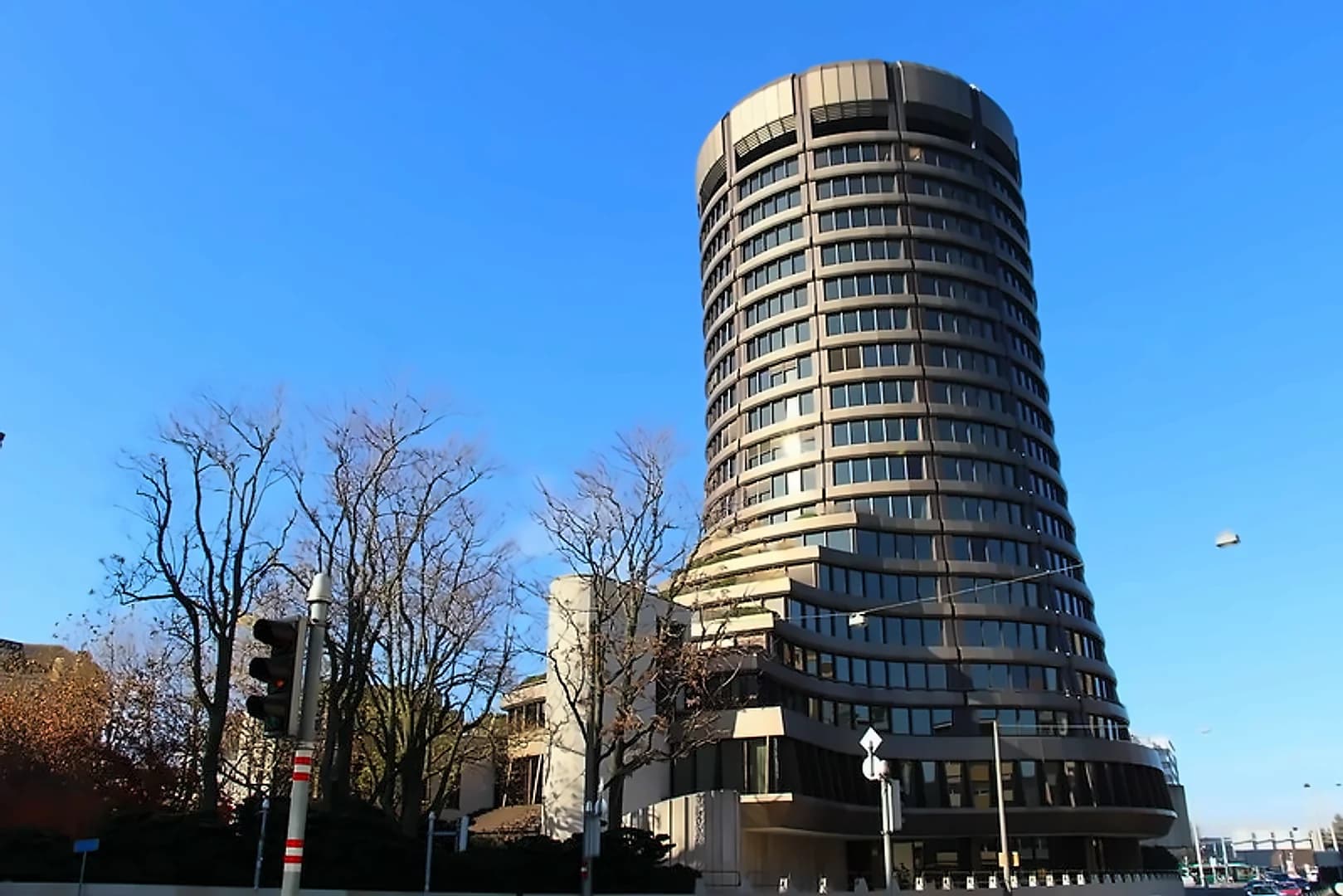
The initiative has expanded its scope with eight central banks now participating, including those of five major reserve currencies, alongside large commercial banks and financial firms. The global project involves more than 40 financial institutions, including systemically important banks, payment service providers and clearing houses, as reported by the Bank of Canada. The private sector involvement includes more than 41 systemically important private banks, with Ledger Insights reporting that the prototype report brought together seven central banks and more than 40 financial institutions including JPMorgan, HSBC, Deutsche Bank, Swift, Mastercard and UBS. The BIS, often described as the 'central bank for central banks,' has become increasingly active in blockchain and tokenization research as governments and financial firms rethink how money and securities move globally.
The project has now tested how tokenized central bank reserves and bank deposits can complete cross-border payments in a single atomic step across currencies, according to the Bank for International Settlements. The prototype described by Crypto Briefing runs on a unified ledger that bundles messaging, reconciliation, compliance checks, and final settlement into a single seamless operation, enabling instant and risk-free cross-border payments in USDT and other digital currencies. The system integrates tokenized commercial bank deposits with tokenized central bank reserves on a unified ledger, allowing transactions to settle in something closer to real time with programmable conditions baked in. A tokenized payment can carry instructions such as release funds when goods clear customs, or execute a currency conversion at an agreed rate at a specific time. The entire system operates in a controlled environment using only tokenized versions of existing bank deposits and central bank money, with explicit compatibility with SWIFT and ISO 20022 standards to ensure integration with existing infrastructure.
With the prototype validated, the consortium's next phase involves real-value tokenized asset flows with actual money moving through the system under live conditions, extending to September 2026 when the European Union's Pontes framework is scheduled to launch, connecting digital ledger technologies directly into the continent's core TARGET payment infrastructure. The consortium is the largest public-private financial infrastructure project in history, uniting 48+ public and private institutions and creating what analysts describe as a closed-loop public-private financial internet. For ordinary users, the immediate benefits include elimination of invisible friction, with immigrant workers currently losing 3-7% in bank fees alone and waiting periods measured in days, while the same transfer executes in seconds for a fraction of a cent under Agorá's atomic settlement architecture. The system creates infrastructure so fast and cheap that smaller regional or community banks unable to afford technical integration risk being frozen out of international trade routing entirely, raising concerns about market structure and accessibility. As noted by Hedera's analysis, the countries that define how money moves in the digital economy will shape growth, influence, and opportunity for a generation, with the U.S. having played that role before but facing choices that will determine whether it plays that role again or spends the decades that follow adapting to a financial architecture built by others.