The International Monetary Fund has issued a stark warning about a risk cocktail combining artificial intelligence development, prolonged energy shocks, and record debt levels. As per Business Standard, Managing Director Kristalina Georgieva said global governments must act urgently to address these interconnected challenges. The AI building boom is inflationary, with the rush to develop artificial intelligence delivering a growth spurt that's so far confined to a handful of countries, while energy and food shocks are inflationary alongside tariffs, defense spending, and high public debt. Georgieva called for a 'prudently hawkish bias' on the part of central banks and warned that countries running large budget deficits are in for 'some very tough political choices'. Speaking in Singapore ahead of next week's IMF and World Bank meetings, Georgieva described an economy pulled two ways: a 'negative energy supply shock' from the Gulf war, now in its eighth month, and a 'positive demand shock' from the AI investment boom.
While AI investment continues to propel stocks to new highs and deliver record exports for Asia's chip producers, the technology boom carries significant risks. As reported by Business Standard, the AI buildout is adding to energy demand and risks widening economic inequalities. The AI investment as a share of GDP will match and probably exceed the sums that built railroads, power grids and telecom networks, with AI hardware and related technology products already accounting for more than a tenth of world goods trade. The IMF estimates AI could add up to half a percentage point to annual world growth if done right, with Georgieva noting that 'going from 3% to 3.5% over a decade that is like adding an economy the size of ASEAN to the world economy'. However, the gains are likely to be highly concentrated, with economies with a smaller role in the global AI supply chain largely bypassed, 'increasing the risk of widening economic inequality across the globe'.
The global debt crisis has reached unprecedented proportions, with total global debt now surpassing $365 trillion according to the Institute of International Finance. As reported by Business Standard, Georgieva called advanced economies the 'worst offenders' on the debt front, with soaring bond yields leaving governments under mounting budget pressure. The bond selloff got underway after the US and Israel attacked Iran in February, choking off fuel supplies and raising costs worldwide. The energy shock has been 'large but contained' so far, but Georgieva warned that price pressures may build further as demand rises with the approach of the Northern hemisphere cold season and as countries replenish reserves. Oil has held above $100 a barrel, retail diesel has hit record highs, and bond yields in the US, Germany and Japan have climbed to their highest levels in decades.
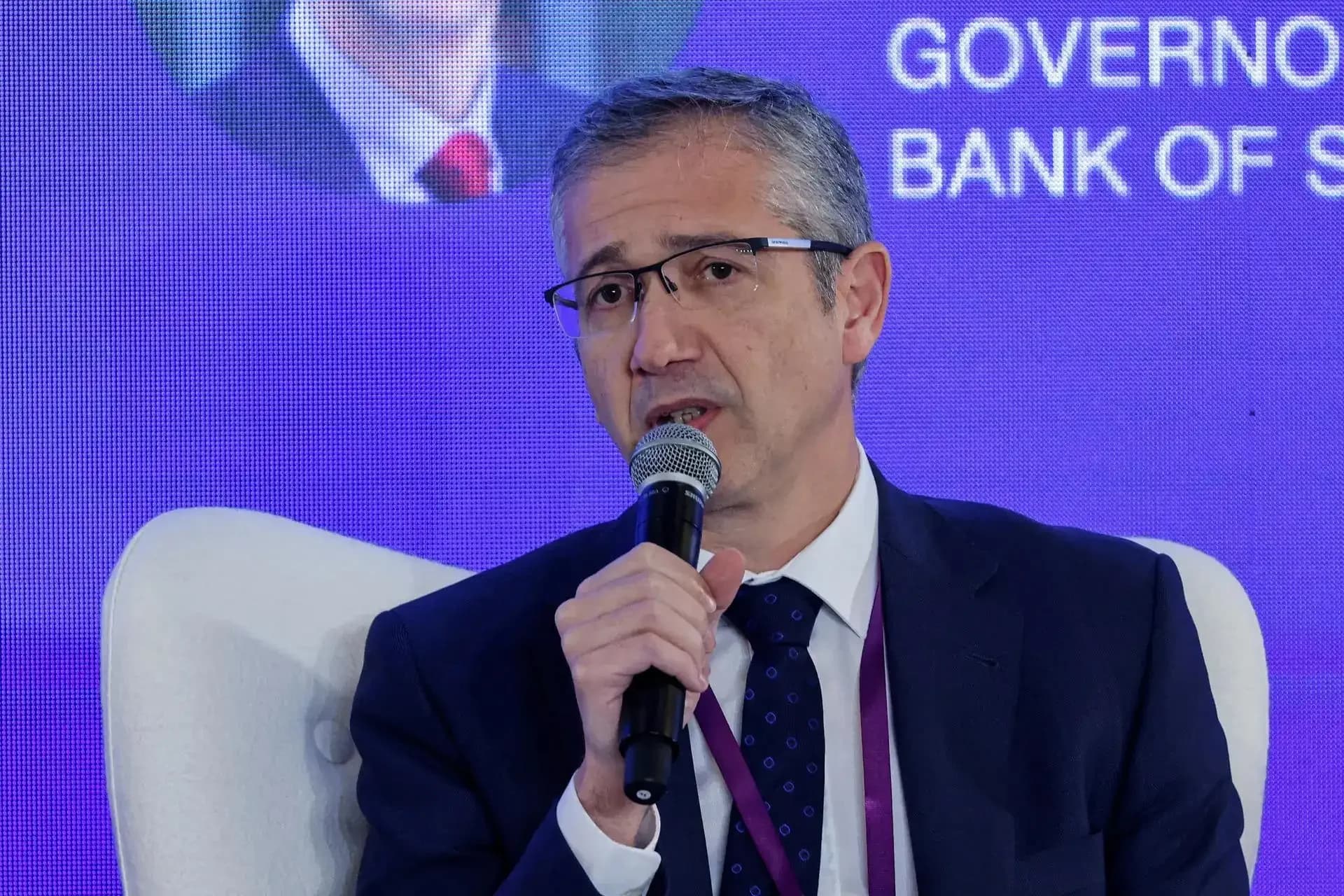
Bank for International Settlements (BIS) chief Pablo Hernández de Cos warned that future financial crises could be harder to manage amid soaring public debt, fiscal deficits and volatile bond markets. According to reports from Reuters, speaking in Vienna, Hernández de Cos said the crises of the past two decades had highlighted the importance of swift central bank action in containing market turmoil. However, he warned that the environment surrounding the next financial crisis is changing rapidly, with global public debt close to its highest level since the Second World War and set to pass 100% of GDP before long. In Europe, yield spreads over German bunds are widening for France, Italy, Ireland, Portugal and others. This could make it increasingly difficult for central banks to determine whether market stress requires intervention or reflects legitimate investor concerns about the sustainability of government finances.
The weeklong Bangkok gathering of top finance ministers and central bank governors takes place against a backdrop of turbulence in sovereign debt markets, with yields on US, European and Japanese bonds hitting multi-decade highs. The IMF's warning comes as the squeeze on key commodity supplies due to conflicts in the Middle East and Ukraine is set to continue into 2027. Georgieva emphasized that 'policymakers had a relatively easy ride over the last 17 years as for all that time interest rates were stuck below GDP growth rates', but 'higher interest rates now put an end to that'. She urged stronger regulation, coordinated government action and international cooperation to preserve central banks' crisis-management capabilities. 'Now may be a good time for a prudently hawkish bias in many countries' monetary policy', Georgieva said, adding that regulation and supervision are the first line of defence against potential AI investment risks.