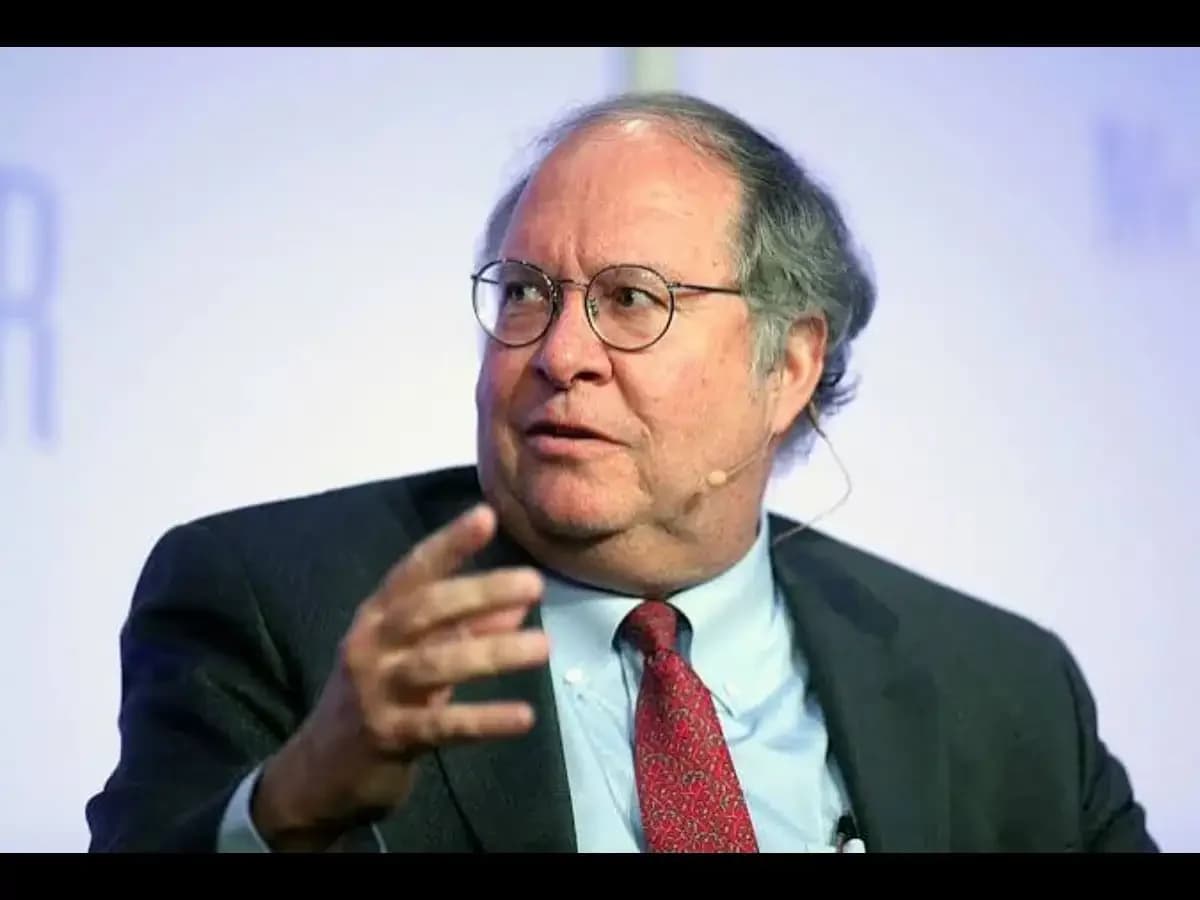
Legendary investor Bill Miller has provided a fundamental insight about market cycles and investment opportunities. According to reports from The Economic Times, Miller stated that "All of the great investing periods begin when things are terrible and end when they are wonderful." This observation captures the cyclical nature of financial markets, where periods of pessimism are often followed by recovery and growth, while optimism can eventually give way to correction. As reported by Morningstar, recent market events should serve as a wake-up call for pre-retirees and retirees to take some risk off the table and consider scaling back equity exposure.
When conditions are described as "terrible," asset prices tend to be undervalued according to Miller's analysis. As reported by The Economic Times, fear-driven selling creates opportunities to invest in fundamentally strong companies at discounted prices. According to Morningstar, stocks have recently encountered some volatility but remain near all-time highs, providing pre-retirees and retirees with an opportune time to scale back equity exposure and plow proceeds into safer assets. The insight emphasizes that successful long-term investing hinges on emotional discipline, a contrarian approach, and unwavering patience, allowing investors to capitalize on overlooked prospects and avoid the pitfalls of herd mentality.
For investors approaching retirement, de-risking is not too late even when market volatility is already underway. As reported by Morningstar, stocks' extended run has left many portfolios equity-heavy today, with a portfolio that was 60% stocks/40% bonds five years ago potentially being nearly 80% equity today without additional stock purchases. The report suggests a three-bucket approach including stocks for good times, bonds for recessionary periods, flights to safety when stocks fall, and cash for when both stocks and bonds struggle. One to two years' worth of withdrawals should be earmarked for cash, while five to eight years' worth of portfolio withdrawals should be allocated to bonds, with spending from these buckets potentially tiding retirees through extended equity-market downturns. You don't want to start building out the cash position until you're a few years from retirement, as the opportunity cost is too great.

Investing during crises requires significant emotional discipline, as reported by The Economic Times. Fear, uncertainty, and negative sentiment make it difficult to act rationally, yet these are often the moments that reward bold but informed decisions. According to Morningstar, stocks have soundly outperformed bonds in recent years, making it the path of least resistance for investors hurtling toward retirement. The report highlights that when everything seems "wonderful," markets are often at or near their peak, with high optimism leading to overvaluation and making investments riskier despite the positive outlook. Recent events should serve as a wake-up call to take some risk off the table and give bonds a closer look.
As reported by The Economic Times, Miller's observation reminds investors that great investing is about managing behavior and recognizing opportunities when they are least obvious. The report emphasizes that those who remain calm in crisis and cautious in euphoria are better positioned to achieve lasting success. According to Morningstar, the key benefit that bonds confer to retirement-decumulation portfolios is their lower volatility, even though bond returns are typically lower than stocks. Higher yields today provide better return prospects than a few years ago, with the 10-year Treasury yield rising from about 50 basis points in summer 2020 to approximately 4.3% currently, improving bonds' forward-looking return prospects and offering more protection against price declines. Bond returns have been reliably positive in recessionary environments, making high-quality bonds particularly well-situated with worries about a slowing economy.