Australian equities delivered their best week in three months, with the S&P/ASX 200 index closing 1.4% higher at 8,844.40 points on Friday, marking its highest closing level since June 18 and best day since June 12. According to The Economic Times, for the week, the index gained 0.9%, its best performance since the week ended June 12. The market rally was driven by expectations of lower U.S. interest rates, with traders now pricing in a 17.6% chance of a Fed interest rate hike in July, down from nearly 30% on Thursday. As Chris Strazzeri, financial dealing manager at Moomoo Australia and New Zealand, noted, expectations of lower U.S. interest rates are generally supportive for equities, while the rise in gold and silver could provide a tailwind for Australia's major mining names.
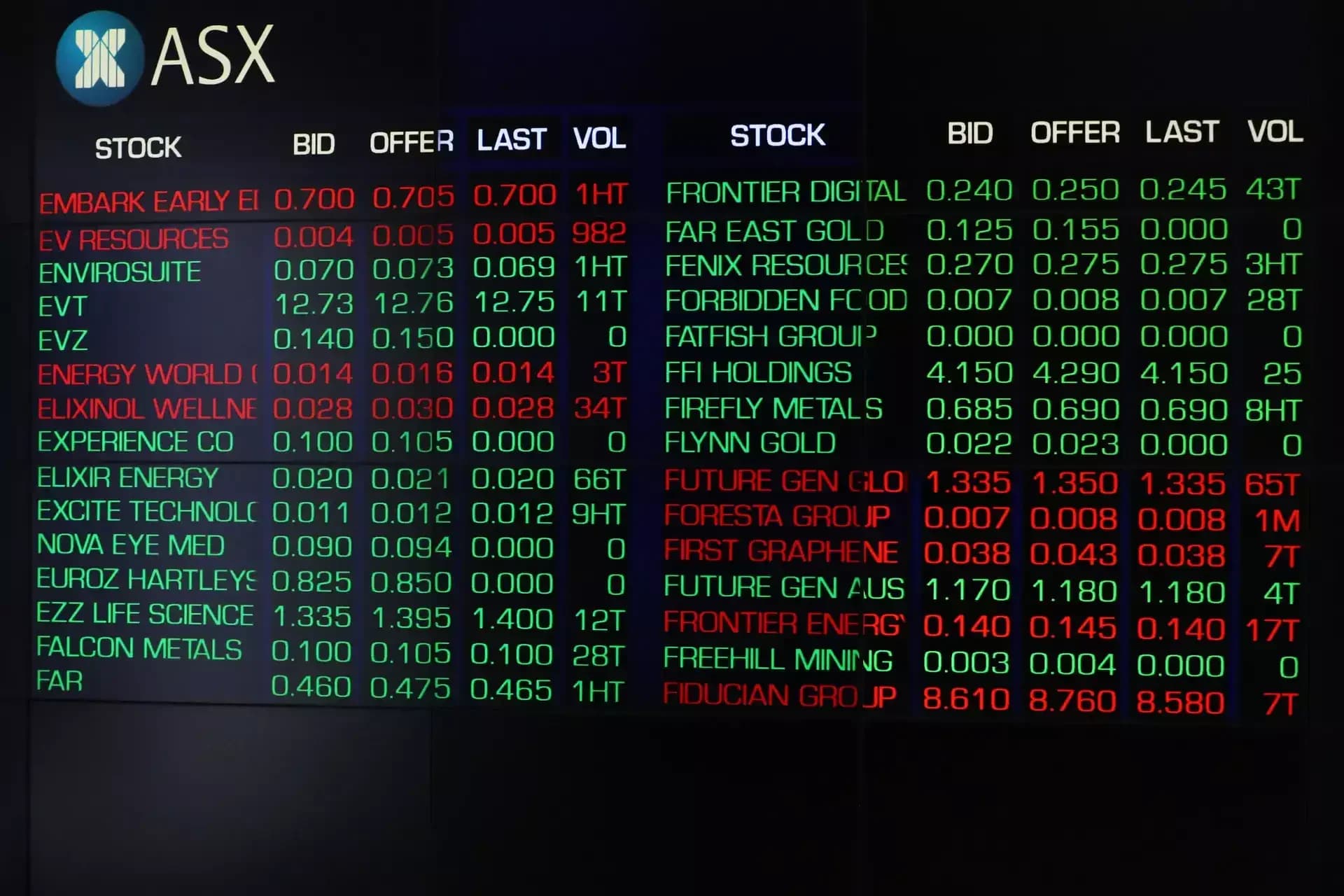
Miners led the rally with a 2.6% gain, aided by higher metal prices and finishing with their best week in over a month. According to The Economic Times, gold stocks climbed 8.3% to close at their highest level in over a week, with BHP Group rising 1.6% and Mineral Resources gaining 2.1%. The broader mining sub-index advanced 0.8%, with BHP rising 1.4%, while energy stocks added 0.7%, tracking firmer oil prices globally. Banks jumped 1.1% with all 'Big Four' banks rising between 0.4% and 2.4%, with health stocks surging 2.7%, posting their seventh straight week of gains, with sector major CSL closing up 3.5% on Friday. Tech stocks closed 0.3% higher while energy stocks ended flat.
The market rally was supported by reports that Iran and the United States agreed to halt hostilities in the Gulf and resume talks over the Strait of Hormuz dispute, as confirmed by a U.S. official. As reported by The Economic Times, this development boosted hopes of salvaging a fragile interim peace deal after days of tit-for-tat strikes. However, investors remain cautious about the deal's durability, with infrastructure damage from previous strikes and unresolved nuclear program questions continuing to weigh on sentiment. The holding ceasefire has prompted bullish outlooks from brokerages, though crude prices edged up 0.6% at $72 a barrel as investors assessed crude shipments through the Strait of Hormuz. Despite the US-Iran ceasefire looking increasingly fragile, oil prices have moved higher after a weekend of US and Iranian forces exchanging missile and drone fire across the Gulf, though concerns remain about supplies with tanker traffic through the Strait of Hormuz remaining severely restricted.
Despite the positive performance, investor confidence in the Iran-US deal remains low, as noted by Kai Chen, director at MPC Markets. As reported by The Economic Times, Chen highlighted that infrastructure damage from the strikes has not been resolved, and the nuclear program questions have not gone anywhere. The analyst expects energy sector volatility to remain on the table and sentiment on the ASX to stay cautious until the deal firms up. However, Mark Gardner, CEO of MPC Markets, provided a more optimistic view on healthcare stocks, stating that healthcare was battered in the last FY, and has been stabilising in the last couple of months, and investors are finally waking up to how cheap they are in a historical context. Focus will be on the European Central Bank's Sintra conference where Federal Reserve Chair Kevin Warsh and ECB President Christine Lagarde's remarks will be scrutinised for monetary policy outlooks.
Across the Tasman Sea, the New Zealand benchmark S&P/NZX 50 index rose 0.3% to 13,618.42 points, according to The Economic Times. The positive performance in Australian and New Zealand markets reflects broader regional optimism following the temporary easing of US-Iran tensions and expectations of lower U.S. interest rates. The market's heavy weighting towards miners and banks took its cue from the global rally in commodity-linked stocks and financials on the prospect of lower-for-longer borrowing costs. The announcement of South Korea's $650 billion AI and chipmaking package also had immediate impact on regional markets, with the Kospi jumping back into positive territory after initially trading down around 2%.