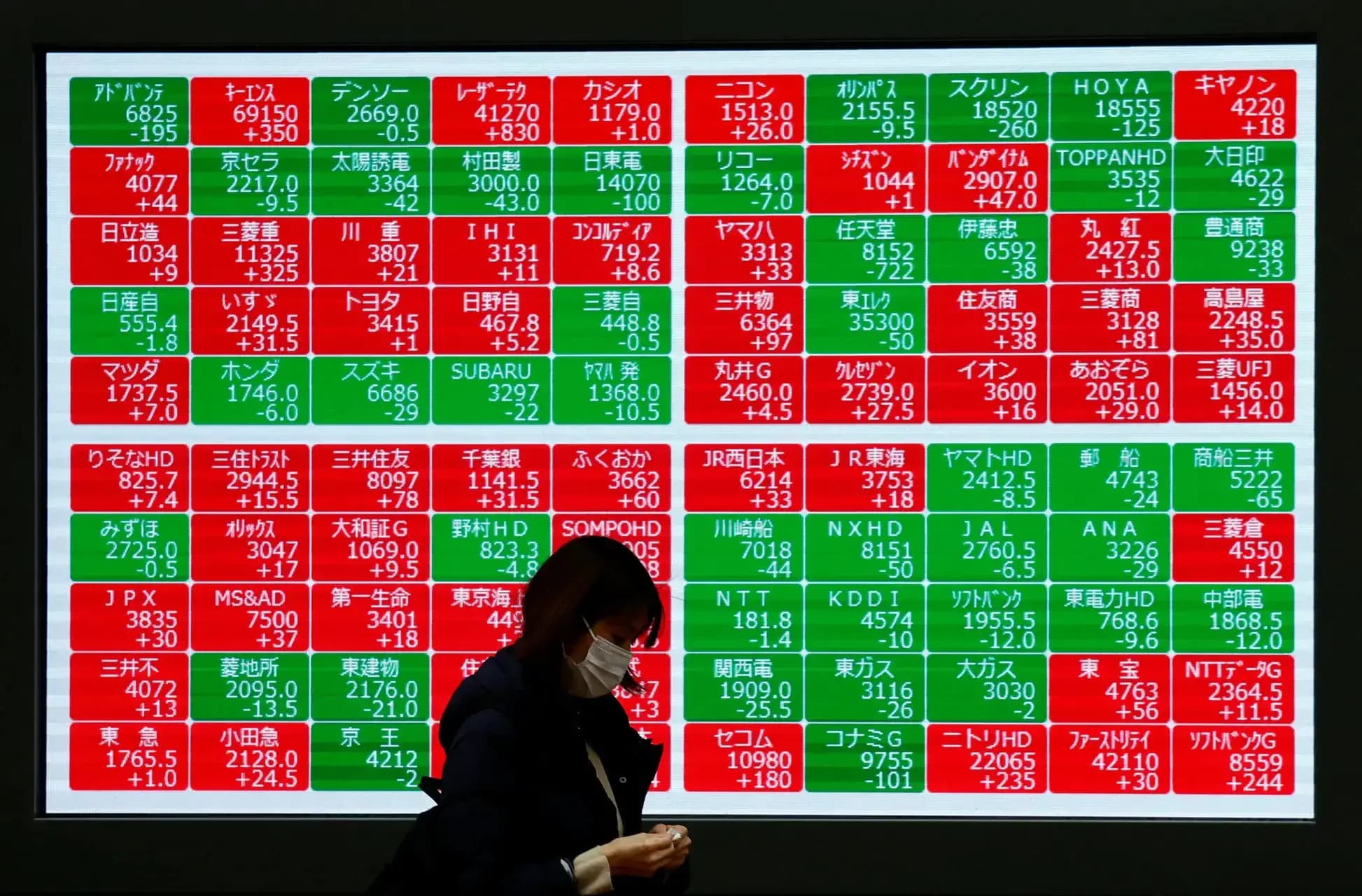
Australian share futures are signaling continued weakness with S&P/ASX 200 Index futures pointing to a 0.4% decline at Monday's open, extending last week's losses as the market enters one of its busiest periods for corporate earnings. According to latest reports, this follows a disappointing session where the S&P/ASX 200 index fell 0.3% to 9,084.10 on Monday, with the benchmark extending its weekly decline to 1.6%. The market weakness comes amid a stalemate in Middle East conflict and growing expectations for another Reserve Bank interest rate hike, setting a bearish tone ahead of the busiest fortnight of the year for local corporate earnings. Latest SPI futures indicate the market is expected to open 33 points lower or 0.35% down on Monday, following a disappointing session on Wall Street where the Dow Jones fell 0.2%, the S&P 500 dropped 0.2%, and the Nasdaq fell 0.3%. US stocks were modestly lower on Friday in quiet trade, with the Nasdaq underperforming while the Russell bucked the trend to close higher.

The banking sector faced significant pressure following disappointing results from National Australia Bank. As reported by Reuters, NAB tanked as much as 4.8% after the lender reported a 15% decline in third-quarter Australian home loan applications compared with the second quarter. This weakness extended to the broader banking sector, with banking stocks falling 1%, with all major banks trading in red except Commonwealth Bank of Australia, which remained flat. The disappointing results come as NAB closes an August reporting season for Australia's major banks, overshadowed by mounting concerns that the repeal of lucrative property-investment tax breaks could impact earnings and credit growth. The banking sector pressure is expected to continue as the market enters what analysts describe as one of the busiest weeks of the year for local corporate earnings reports.
Contrasting the banking weakness, mining and energy sectors provided support to the market. According to Reuters, miners rose as much as 1.5% after iron ore prices gained on Friday, while gold stocks climbed 2.4% as bullion prices were headed for a weekly gain. Gold miners Evolution Mining and Northern Star Resources gained as much as 2.1% and 2% respectively. Energy stocks joined the rally, surging 1% as crude oil futures climbed over $1 a barrel on Friday. Latest oil price movements show WTI crude up 1.4% to US$82.40 a barrel and Brent crude up 1.7% to US$88.52 a barrel, following reports that the US is threatening Iran with economic isolation. Gold futures also gained momentum, rising 0.4% to US$4,437.3 an ounce after easing interest rate bets in the United States.
The retail sector faced significant headwinds with JB Hi-Fi experiencing its worst session since late March 2020. As reported by Reuters, the electronics retailer's total sales at its Australian business fell 0.5% in the first month of fiscal 2027. This disappointing performance added to the market's cautious sentiment amid ongoing concerns about consumer spending patterns and retail sector performance. Several other major retailers are set to release results on Monday, including JB Hi-Fi Ltd (ASX: JBH), BlueScope Steel Ltd (ASX: BSL), Iress Ltd (ASX: IRE), and Lendlease Group (ASX: LLC). The retail sector challenges are expected to intensify as the market faces what analysts describe as one of the busiest weeks of the year for local corporate earnings reports.
The negative sentiment extended to neighboring markets, with New Zealand's benchmark S&P/NZX 50 index falling 0.1% to 13,837. According to Reuters, dairy producer a2 Milk sank as much as 10.2% after it logged a 44% drop in its full-year profit, highlighting regional market concerns about corporate performance across the Pacific region. The weakness in a2 Milk adds to regional concerns about corporate earnings across the Pacific region, with the stalemate in Middle East conflict and growing expectations for another Reserve Bank interest rate hike creating additional pressure on regional markets. Highlights include New Zealand Electronic Card Retail Sales & Food Price Index, Japanese GDP, Singapore Non-Oil Exports, Chinese House Prices, Industrial Production & Retail Sales Data.