Asian equities declined sharply on Friday as U.S. President Donald Trump departed Beijing after a three-day visit following his second round of talks with Chinese President Xi Jinping. According to latest reports, China's Shanghai Shenzhen CSI 300 and Shanghai Composite indexes fell 1% apiece, falling further from their respective 4-½ year and 11-year highs hit earlier this week. Xi flagged improving U.S.-Chinese ties after Friday's meeting, as reported by Chinese media, but more details on just what trade deals the two sides signed remained unclear. Trump claimed in a Fox News interview that China had agreed to buy U.S. oil, and had also agreed to purchase more Boeing jets, though China's foreign ministry said the two leaders had reached consensus on several topics without providing specifics. US stock futures sank on Friday, with Nasdaq 100 contracts tumbling 1.2% and S&P 500 futures falling 0.9% after surging to all-time closing highs on Thursday. Trump announced a delegation of top business executives, including Tesla's Elon Musk, Apple's Tim Cook and Nvidia's Jensen Huang, to accompany him to set expectations high, though analysts see only modest breakthrough in ties between the world's two largest economies.
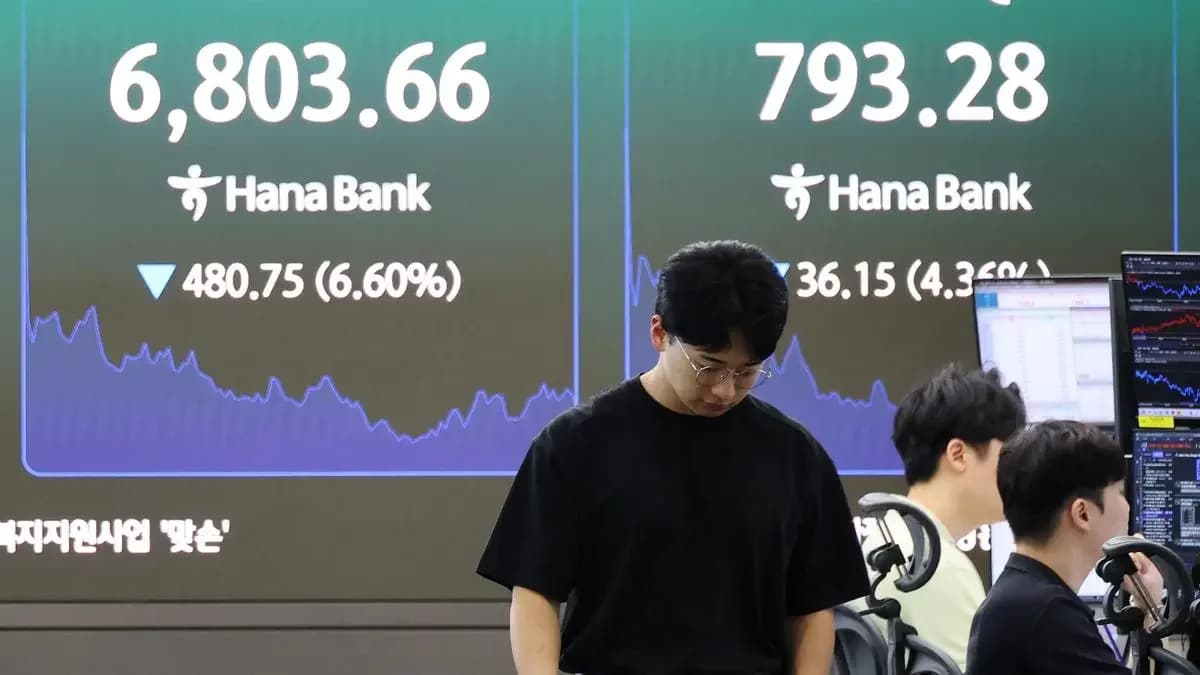
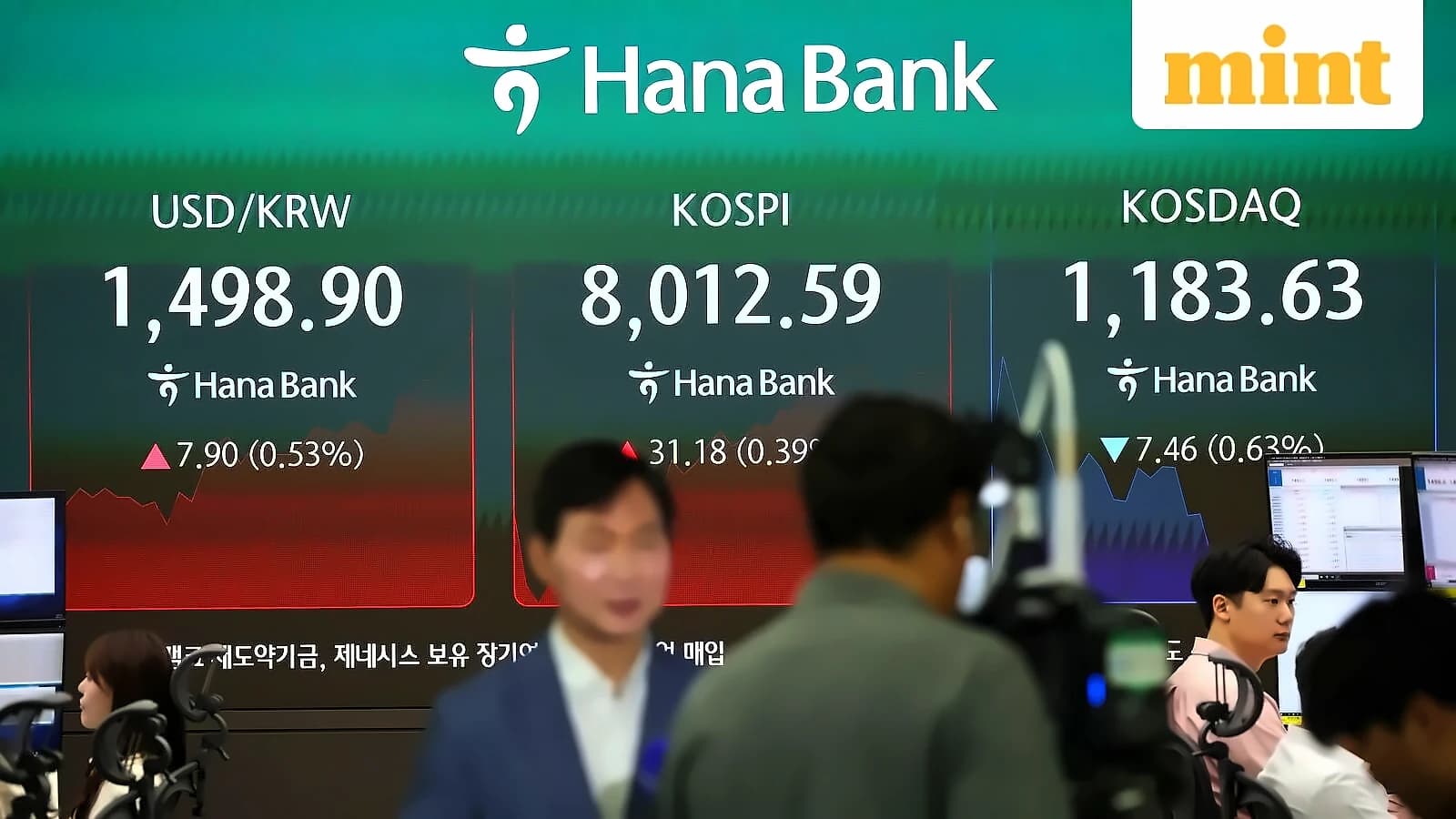
MSCI's broadest index of Asia-Pacific shares outside Japan fell 2.3% and was set for a weekly loss of 1.8% as inflation worries preyed on investors weighing the outcomes of the Trump-Xi summit. Benchmark 10-year Treasury yields climbed above 4.5% amid a global bond rout, with U.S. Treasury yields hitting their highest levels in around a year as traders anticipate the Federal Reserve may need to hike rates to rein in inflationary pressures. Japan's Nikkei 225 index dropped 1.8% after data showed wholesale inflation accelerated to 4.9% in April, the fastest pace in three years, leaving the Bank of Japan on track to raise interest rates. South Korea's KOSPI topped 8,000 points for the first time and then crashed, falling by over 5%, while China's blue-chip index eased 0.6% and Hong Kong's Hang Seng fell 1.4%. Oil headed for a weekly gain as Brent crude rose toward $107 a barrel with futures up around 5% this week, as the crucial Strait of Hormuz remains effectively closed with a US naval blockade in place.
South Korea's Kospi emerged as the worst performer in Asia, tumbling 6.1% on Friday as U.S. Trade Representative Jamieson Greer told Bloomberg TV on Friday that export controls were not a 'major topic of discussion' in China. Samsung Electronics Co Ltd and SK Hynix Inc tumbled between 7% and 9%, with these chipmaking stocks being the biggest weights on the KOSPI. The decline came after U.S. chip export controls were not discussed in detail during recent talks, overshadowing Thursday's report that NVIDIA Corporation was allowed to sell its H200 chip to 10 Chinese companies. While the report noted that no actual sales were made so far, chipmaking stocks had rallied sharply on Thursday based on these earlier reports. A major question hanging over the summit had been the status of US export controls on advanced chips used to power AI, an issue brought to the foreground by the inclusion of Nvidia's Huang in Trump's delegation. Trump has sent mixed signals on the need to control chip exports, tightening some restrictions while also permitting Nvidia to sell its second-most powerful GPU, the H200, in the Chinese market.
While Trump and Xi are anticipated to extend the one-year pause in their trade war agreed to in South Korea in October, the prevailing outlook is a stabilisation – not revitalisation – in ties between the world's two largest economies, which are locked in a rivalry that spans everything from trade and artificial intelligence to the status of Taiwan. The average US tariff on Chinese goods stood at 47.5 percent after the South Korea summit, up from 3.1 percent before Trump's first term, according to the Peterson Institute for International Economics. China's average tariff on US goods stood at 31.9 percent, up from 8.4 percent in 2018, according to the think tank. Two-way goods trade amounted to about $415bn in 2025, down sharply from its 2022 peak of $690bn. Claire E Reade, a senior counsel at Arnold & Porter who previously worked on China at the office of the US Trade Representative (USTR), told Al Jazeera that "China does not trust the US, and China wants to beat the US in what it sees as long-term global competition." Deborah Elms, head of trade policy at the Hinrich Foundation in Singapore, voiced similar sentiments, saying "Basically, Trump expects China to buy more stuff from America and let US companies operate more freely in China. What is he offering? Very little, largely because Trump sees the bilateral relationship as one where the US has been fair and China has not."

Wall Street achieved fresh record highs, with the Dow Jones Industrial Average climbing 370.26 points, or 0.75%, to close at 50,063.46 after Cisco Systems reported stronger-than-expected earnings. The S&P 500 rose 0.77% to end at a record 7,501.24, while the Nasdaq Composite gained 0.88% to close at an all-time high of 26,635.22. Both indexes also touched fresh intraday highs during the session. The rally was supported by strong corporate earnings expectations, with first-quarter S&P 500 profits likely growing about 27% from the previous year, marking the sixth straight quarter of double-digit expansion according to Bloomberg Intelligence data. Nvidia's six-day rally pushed its market value closer to $6 trillion, while Cerebras Systems Inc. soared 68% in its debut and Applied Materials Inc. shares advanced in after-hours trade on encouraging forecasts. US stocks advanced, lifted by a rally in tech stocks as investors absorbed generally solid economic data and watched for developments from Beijing, where President Donald Trump was engaged in a high-stakes meeting with his Chinese counterpart Xi Jinping.