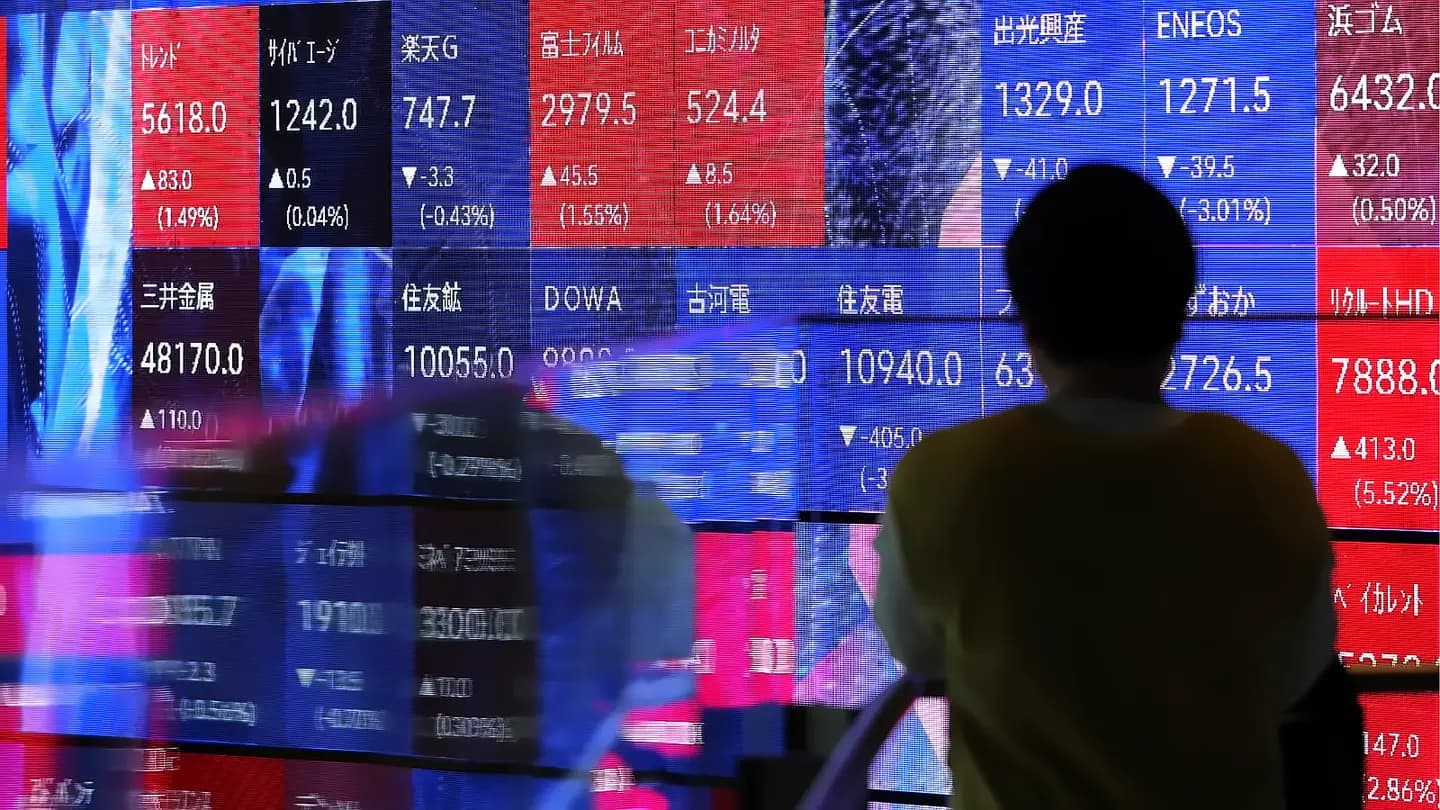
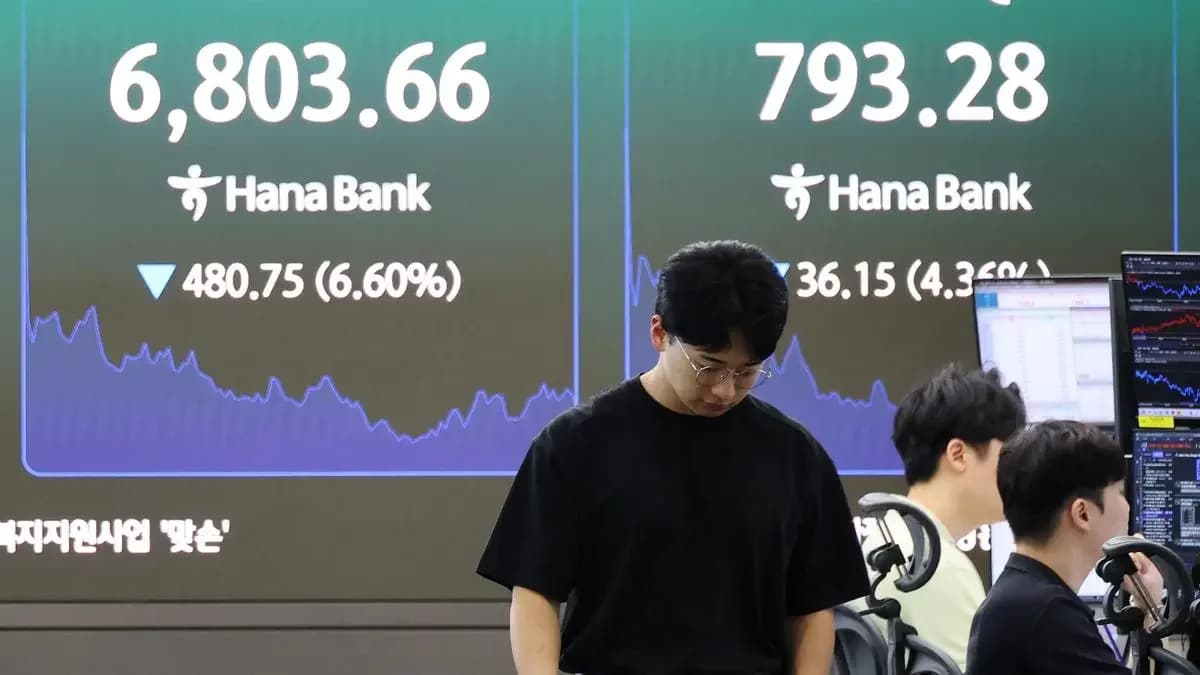
South Korea's Kospi index jumped around 4% on Tuesday to 6,764, recovering some losses after a dramatic decline that saw the index crash 31% from its June peak of 9,386. The recovery came as shares of chipmakers Samsung Electronics and SK Hynix, which make up just over half of the benchmark Kospi, jumped up to 6% on Tuesday. Despite this recovery, the index remains nearly 28% lower than its June peak, reflecting continued investor caution and wild market swings. The Kospi rose to 6,764 on Tuesday, snapping a two-session losing streak when it crashed 10%, according to The Economic Times. The index is still comfortably in bear market territory, with authorities having intervened to cool speculative fever and curb leveraged trading.
Citigroup has downgraded South Korea to neutral after a year-long overweight stance, citing heightened volatility in AI-linked chip stocks and stretched valuations, as reported by Reuters. The move comes after a sharp swing in sentiment toward semiconductor stocks, which had powered South Korea's benchmark KOSPI index to become one of the world's best-performing equity markets this year. The sharp pullback reflects investors' reassessment of AI-driven valuations after months of strong gains, even as the longer-term outlook for the sector remains broadly constructive. While remaining positive on the long-term AI theme, the brokerage retained an overweight rating on Taiwan and upgraded China, signalling a shift in emerging market positioning. Citi recently downgraded South Korea's stock market to a neutral stance after keeping it overweight for the past year, with the bank noting that conversations with clients are increasingly focused on the possibility of broader market leadership emerging in the second half of 2026.
Authorities last week moved to cool the speculative fever, announcing a ban on new listings of leveraged exchange-traded funds tied to individual stocks, according to The Economic Times. The abrupt intervention comes just two months after regulators initially approved the vehicles. Analysts highlighted how the country's single-stock derivative products tied to chipmakers Samsung Electronics and SK Hynix wiped off major portions of gains recorded by retail investors this year. The KOSPI's correction was mainly led by foreign equity investors' selloff in terms of rebalancing and profit-taking, as Citi analysts noted in a report to Reuters. However, Citi believes foreign equity investors' selloff is moderating amid emerging signs of buy-on-dip capital flow. Despite the downgrade, Citi said it remains structurally positive on the long-term artificial intelligence investment theme.
South Korea's Kospi crashed more than 4% on Monday to close at 6,516, continuing its dramatic decline from the June peak of 9,386, as reported by The Economic Times. The index has now fallen more than 30% from its June peak, comfortably falling in the threshold of the technical "bear market" following the skyrocketing rally earlier this year. Despite the latest crash, the index is still up more than 51% in 2026 so far, highlighting the extreme volatility in the market. Memory chip bellwethers SK Hynix and Samsung Electronics make up just over half of the benchmark Kospi, with these two stocks now crashing more than 30% each in just a month, leading to the sharp downtrend in the market. Leverages bets on AI darlings have impacted South Korea's stock market significantly, with single-stock leveraged ETFs designed to amplify daily returns of underlying stocks making them significantly more volatile than conventional ETFs.
The interconnected nature of global markets has become increasingly evident, with the 60-day correlation between the Kospi and the Nasdaq 100 climbing to 0.46, near the highest level in two years and almost triple its five-year average of 0.16, according to data compiled by Bloomberg. The Nasdaq 100 Index's sensitivity to the Kospi during periods of Korean market weakness climbed to the highest since 1990 on July 7, as reported by Business Standard. A similar measure for the MSCI World Index has also risen to a four-year high earlier this month. Ivan Feinseth, chief investment officer at Tigress Financial Partners, noted that "Korea has effectively become part of the same volatility ecosystem as the Nasdaq and SOX, with SK Hynix, Samsung and the Kospi now functioning as a pre-market read-through on US AI and semiconductor risk." Herald van der Linde, head of equity strategy for Asia Pacific at HSBC Holdings, said "Korea is discussed in all meetings nowadays." Correlation between the Kospi and Japan's Nikkei 225 has also surged, prompting Ortus Advisors' head of Japan equity strategy Andrew Jackson to add a chart of the Kospi for close monitoring earlier this year, a first for him in more than two decades.
Trade policy returned to the spotlight after the Trump administration announced plans to impose a fresh 50% tariff on selected Canadian products, including alcohol, automobiles and dairy goods, arguing that U.S. exporters were being treated unfairly. If implemented after the proposed 30-day period, the measure would represent one of Washington's toughest trade actions against Canada in recent years. Oil prices remained in focus after Brent crude eased 0.4% to $88.86 a barrel, as traders assessed the risk to Saudi Arabian exports after Yemen's Houthi rebels threatened to disrupt a key shipping route through the Red Sea. Despite Tuesday's modest pullback, crude prices remain elevated following recent geopolitical tensions. Elevated energy prices and ongoing tensions in the Middle East have added another layer of uncertainty by raising concerns that inflationary pressures could persist. Wall Street offered a mixed lead overnight, with the Dow Jones Industrial Average falling 0.59%, pressured by a 2% decline in Apple shares, while the S&P 500 lost 0.19% and the Nasdaq Composite slipped 0.05%. U.S. stock futures were little changed in early Asian trading, with Dow futures edging higher by 14 points and futures tied to the S&P 500 and Nasdaq-100 holding broadly steady.