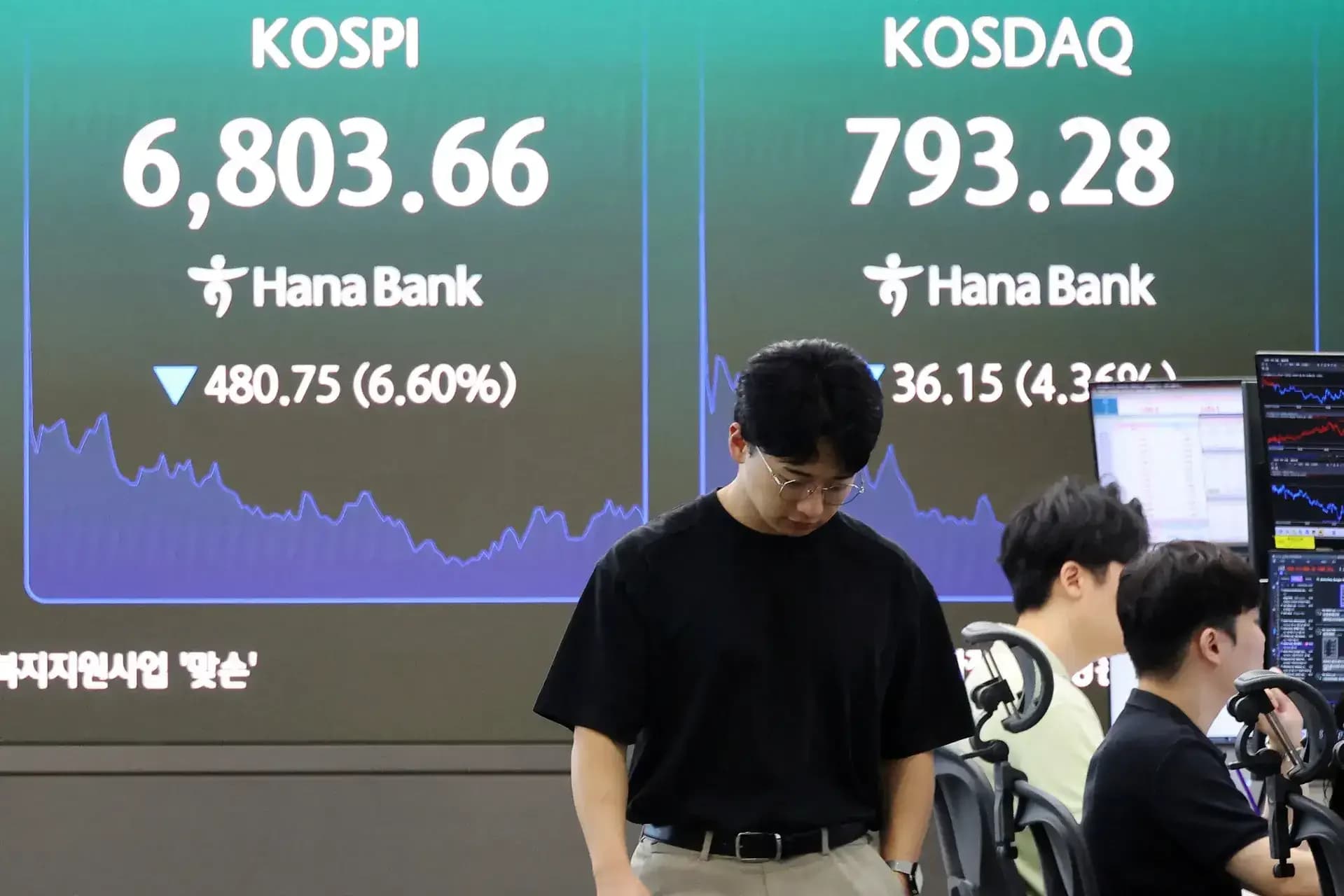
Asian markets displayed mixed performance on Tuesday, with MSCI's broadest index of Asia-Pacific shares outside Japan falling 0.5%, while S&P 500 e-mini futures slipped 0.2%. According to Business Standard, traders are grappling with rising expectations of an accelerated schedule of rate hikes by a more aggressive Federal Reserve under the leadership of new Chair Kevin Warsh. Fed funds futures are pricing an implied 54% probability of at least two 25-basis-point hikes before the end of the year, compared with a 15.2% chance a week ago, according to the CME Group's FedWatch tool. The yield on the US 10-year Treasury bond was down 0.2 basis point at 4.501%, while the US dollar index was trading at 101.04, close to its highest since May last year. The Nikkei 225 was off 0.6%, retracing some losses after data showed Japan's manufacturing sector sustained robust growth in June, with new orders surging to their fastest pace in more than four years. South Korean shares fluctuated between gains and losses and were last 2% lower, while Taiwanese stocks opened 0.9% higher, setting a new high.
Oil prices edged higher on Tuesday as Brent crude futures gained 0.2% to trade at $78.03 a barrel, rebounding after the US lifted sanctions on Iran. The move followed a decline in crude prices overnight after the U.S. Treasury issued a 60-day licence permitting the production, sale and delivery of Iranian oil. The authorisation also allows imports of Iranian crude into the United States and permits transactions to be settled in U.S. dollars, with the licence scheduled to expire on August 21. Oil prices settled more than 3% lower as supply concerns eased after US Vice President JD Vance said progress had been made in talks with Iran and that the Strait of Hormuz was open. Despite the temporary easing of restrictions, questions remain over how Iran could use revenues generated from increased oil exports. Asked whether oil proceeds could be diverted to military spending, President Donald Trump said Iran was not expected to do so, adding that Iran should use the funds to meet domestic needs, including food imports. Vice President JD Vance described the first round of negotiations with Iran as "very, very good" and said Tehran had agreed to allow nuclear inspectors back into the country, though officials from the Islamic Republic challenged this claim, saying Vance's assertion was "false and does not reflect reality."
US-Iran negotiations experienced another setback over the weekend, with local media reporting that Iran halted talks over Trump's latest comments, though people familiar with the matter said the discussions were continuing. The breakdown came at the Bürgenstock resort in Switzerland, where the US, Iran, Pakistan, and Qatar had met to extend a June 17 truce. Trump once again threatened strikes if Hezbollah keeps attacking Israel, adding to the complexity of the negotiations. The discussions are aimed at settling the issue of the Islamic Republic's nuclear program and permanently reopening the Strait of Hormuz, though the waterway has remained open through past standoffs. About 20 million barrels of oil cross the strait each day, near 20% of global consumption, according to the EIA reports, making the Strait's reopening crucial for global energy markets.
SpaceX shares plunged 16% after saying it's selling investment-grade bonds in what's expected to be a massive borrowing spree, with the rocket firm seeking to raise at least $20 billion. This follows a wave of AI-related debt issuances, with Alphabet, Amazon.com Inc. and others having raised more than $300 billion of debt tied to AI since November across multiple credit markets. According to The Economic Times, Matt Maley at Miller Tabak noted that "the issue that stands out the most is the idea that the hyperscalers continue to receive an extremely low return on investment on their colossal level of spending on AI." Another big concern surrounds the issue of 'circular investments,' where companies invest in each other, while also committing to buying each other's products. While geopolitical developments are likely to remain a key source of volatility, shifts in investor confidence regarding the durability of the AI rally may also lead to bouts of market swings, according to Ulrike Hoffmann-Burchardi at UBS Chief Investment Office.
The yen was flat against the dollar at 161.55 yen, again approaching its weakest levels in 40 years after a volatile trading session in the US overnight. Japanese Finance Minister Satsuki Katayama held an online meeting with US Treasury Secretary Scott Bessent late on Monday, a source close to the discussion said, as concerns grow over sharp currency swings. The British pound was flat at $1.3247 after Prime Minister Keir Starmer said on Monday he would resign, paving the way for what is expected to be an orderly transfer of power to frontrunner Andy Burnham. Gold was down 0.2% at $4,180.38, while in cryptocurrency markets, bitcoin slid 0.8% to $63,873.71, and ether was 0.5% lower at $1,724.08. As per Business Standard, "These are far from dull markets," said Chris Weston, head of research at Pepperstone Group Ltd in Melbourne. "The former generals of the market appear to have lost momentum, and investors are rotating into other areas of the market that are more defensive, less AI-focused and offer more predictable cash flows."