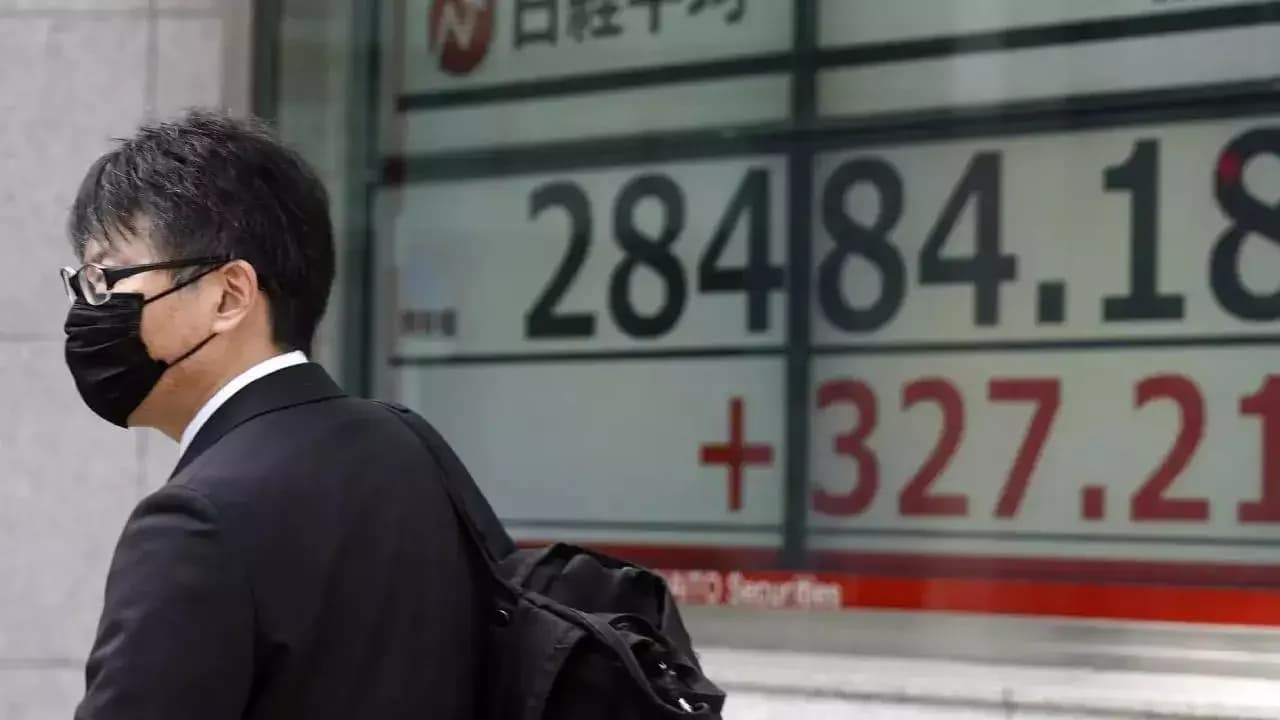
Asian markets advanced Friday following modest gains on Wall Street, with US futures edging higher and Tokyo's Nikkei 225 up 2.8% at 63,352.44, just shy of a new record high. According to reports from Reuters, MSCI's main world stocks index rose 0.22%, while Europe's STOXX 600 gained 0.43% and Nasdaq futures climbed 0.31%. The S&P 500 index edged 0.17% higher on Thursday at 7,445.72, after hitting 7,517.12 last week, a fresh record high. MSCI's broadest index of Asia-Pacific shares outside Japan rose 0.74%, with Japan's Nikkei leading gains in artificial intelligence-related shares. As per Reuters, US Secretary of State Marco Rubio said there had been "some good signs" in talks to end the nearly three-month-old U.S.-Iran war, though differences remain over Tehran's uranium stockpile and control of the strait.

Oil prices remained elevated over disruptions around the Strait of Hormuz, a critical waterway for oil and gas transit, with shipping activities still well below pre-war levels. As reported by Reuters, Brent crude futures rose 2% to $104.96 a barrel, though they were set for a 6% drop for the week. US West Texas Intermediate futures were up 1.35% at $97.64. This represents a significant increase from around $70 per barrel in February before the war's start. According to Hargreaves Lansdown senior equity analyst Matt Britzman, "Oil prices have also moved higher as investors weigh the risk that talks drag on or fall apart." The worry for investors remains the near-closure of the Strait of Hormuz, a critical artery for the world's energy supplies that has sent oil prices soaring and rewired the global interest rate outlook because of inflationary concerns.
A report showed inflation hitting a four-year low in April at 1.4%, despite higher prices for oil and gas due to the war. According to Reuters, this indicates that the economic impact of the conflict may be more manageable than initially feared. However, markets are now pricing in a more than 50% chance of a rate hike from the U.S. Federal Reserve by the end of the year versus expectations of two rate cuts before the war started. This shift has lifted Treasury yields and boosted the dollar, which has also benefited from safe-haven demand. Two-year U.S. Treasury yields have risen 1 basis point this week to 4.09%, while yields for two-year bonds in other major markets have fallen sharply this week. As per Deutsche Bank's George Saravelos, "Energy prices need to rapidly and quickly reverse, otherwise the combination of fiscal spending and a capex boom is a recipe for a lot of inflation, especially in the U.S."
The US dollar remained firm against the yen at 159.125 yen, up 0.1%, following an intervention worth an estimated $65 billion from Tokyo just weeks ago to shore up the currency. According to Reuters, the euro was at $1.1614, close to the six-week low it hit on Thursday, and is set for a 1% drop this month. Against a basket of currencies, the dollar was at 99.247. The Japanese yen last fetched 159.11 per dollar, perilously close to the crucial 160 level that traders fear could bring Japanese authorities into the market again. Wall Street gained on Thursday with the benchmark S&P 500 adding 0.2% to 7,445.72, the Dow Jones Industrial Average climbing 0.6% to 50,285.66, and the technology-heavy Nasdaq composite edging up 0.1% to 26,293.10.