China's artificial intelligence model developer stocks have suffered a brutal reversal, with MiniMax Group Inc. and Z.AI Co. (Zhipu) collectively losing $150 billion in market value from their respective highs. According to Bloomberg, MiniMax slid below its IPO price Thursday, wiping out what had been a gain of 650% at its March peak, while larger peer Z.AI has tumbled 81% from its June high. The decline marks a dramatic reversal after the duo's hotly anticipated market debuts in January, with competition growing ever more heated and the threat of rival listings next year adding to investor concerns. Domestic AI firms continue to slash token prices, while global giants Anthropic PBC and OpenAI have followed suit in order to minimize Chinese models' cost advantage. Potential initial public offerings by DeepSeek and Moonshot AI could divert investor cash away from MiniMax and Zhipu, currently the only listed Chinese pure plays.
Chinese stocks have officially entered bear territory, with the CSI 300 Index declining 1.1% in early trading on Friday, bringing total losses from June peaks to 20%. According to The Economic Times, the CSI300 has now fallen more than 20% from its most recent closing peak on June 22, meeting some definitions of a bear market. Under the more widely accepted definition, the index has remained in bear-market territory since its closing-level peak in 2007. The benchmark Shanghai Composite Index fell 0.9% in early trading, while the blue-chip CSI300 Index declined 1.1%. The week's losses reached nearly 5%, marking the worst weekly performance in three months. The onshore benchmark has fallen through a closely watched level of 4,000, with the selloff testing Beijing's ability to restore market confidence. In Hong Kong, a gauge of Chinese technology shares is about 2.5% away from erasing all the gains since Beijing unveiled its stimulus blitz in September 2024. The Hang Seng Tech Index is undergoing a brutal stretch, down 31% for the year as investors question whether hyperscalers' massive spending will generate sufficient returns.
China's stocks extended their losses on Friday, tracking a broader selloff across global markets as weakness in technology shares on Wall Street weighed on investor sentiment. According to The Economic Times, global markets faced mounting pressure overnight as investors retreated from riskier assets amid a combination of weakness in artificial intelligence-related technology stocks, escalating tensions in the Middle East and growing concerns over French sovereign debt markets. Analysts at UOB said these factors had triggered a sharp shift towards safer assets across global markets. The technology-led selloff on Wall Street added to concerns about stretched valuations in AI-linked stocks, while tensions following deadly attacks on Saudi Aramco infrastructure heightened geopolitical uncertainty. Meanwhile, in Hong Kong, the benchmark Hang Seng Index was little changed in early trading on Friday, bucking the sharper declines across mainland Chinese equities.
Despite state-backed rescue efforts, Chinese stocks continue to slide deeper into bear market territory. According to CNBC TV18, exchange-traded funds favoured by China's so-called national team saw net inflows of 46 billion yuan ($6.89 billion) on Thursday, the most since the Liberation Day-spurred rout in April 2025. However, state buying has done little to stem the slide as momentum deteriorates and investors remain reluctant to step in on valuations alone. Leo Wang, a partner at Beijing-based Qianchuang Capital, said investors had concentrated their holdings in technology stocks during the first half of 2026, a trend reflected in mutual fund portfolios reported for the second quarter. The lack of a broad-based spending package and economic growth that's barely meeting national targets have disappointed investors.
The new M3.1 Flash model released by MiniMax on Monday provided no lift for its stock, despite sharply reduced token costs and improved performance. According to Bloomberg, Zhipu has seen a similarly cold reaction to the launch of its GLM-5.3-FlashX in September. According to the Artificial Analysis Intelligence Index, the pair's latest offerings are far behind models from the US leaders in terms of intelligence, even slightly trailing DeepSeek, Alibaba Group Holding Ltd. and Xiaomi Corp. amid the continued flood of new products vying for usership. "Zhipu and MiniMax need to figure out how to win in the long term," said Leonid Mironov, a portfolio manager at Gavekal Capital. "Between US models being better, and DeepSeek being most efficient, it's hard to pinpoint exactly where MiniMax and Zhipu could go," he added. "China currently has more than 10 AI labs, but eventually will be consolidating to less than that," said Alex Liu, an analyst at Bank of America Corp. "Right now it's actually hard to say who's going to survive or who's going to be the first to drop off."
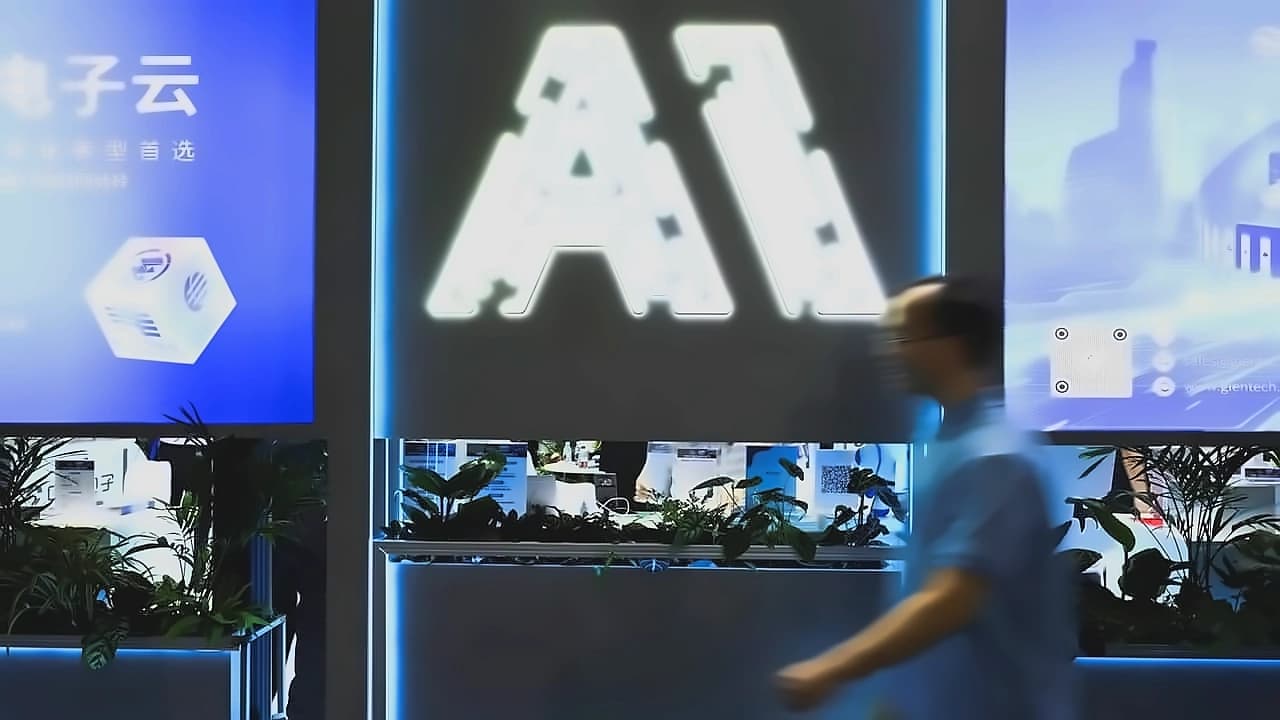
The pair remain unprofitable, with global price wars making the bottom line outlook even tougher. According to JPMorgan Chase & Co. strategists, AI models and applications should turn profitable "around 2028," though the market remains focused on revenue mix for now. JPMorgan is bullish on Z.AI over MiniMax, seeing the former better positioned due to its coding capability. On the plus side, Chinese models continue to dominate global usership, with DeepSeek and MiniMax having officially completed registration for open-source releases and overseas use. MiniMax already gets most of its revenue from outside of China, while Zhipu's application programming interface is gaining traction with global developers. In addition to worries over competition, profitability and new China AI stock offerings, Zhipu and MiniMax may also see pressure from looming share lockup expiries. About 178 million Z.AI shares and 25 million MiniMax shares held by pre-IPO investors are due to become eligible for trading in January.