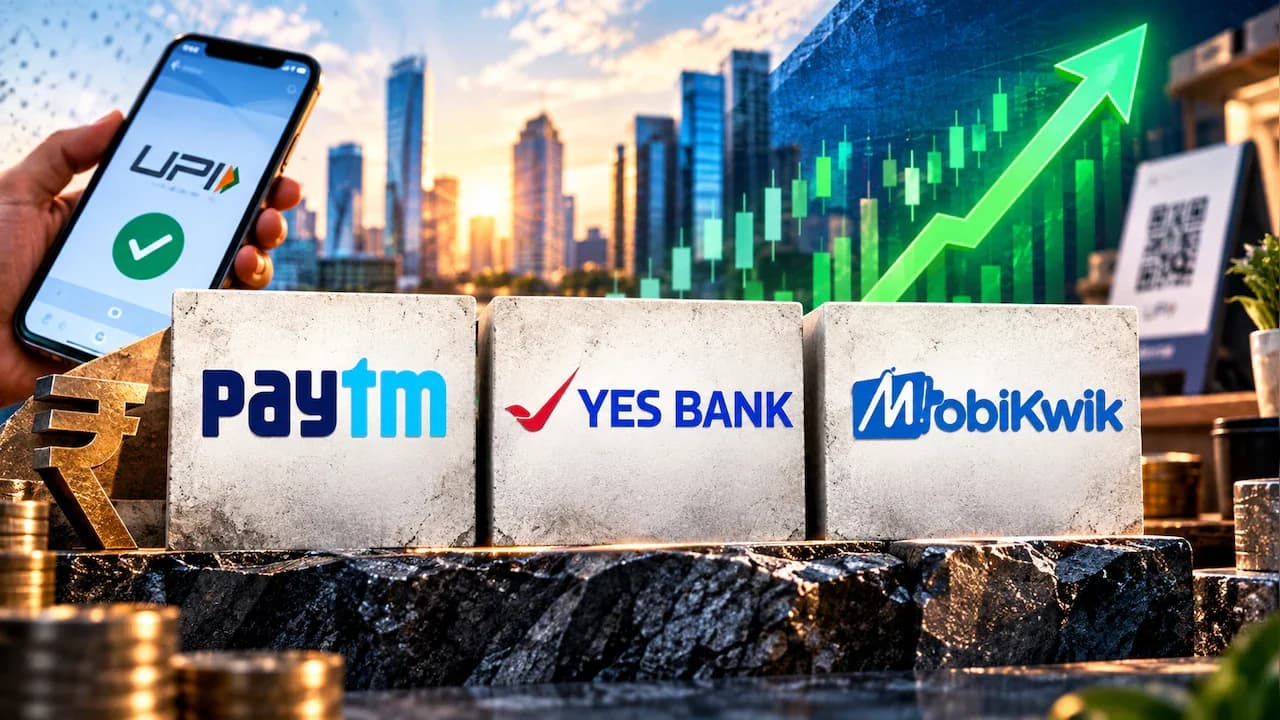
Shares of major payment companies and banks experienced significant gains following India's Unified Payments Interface announcement of its first broad-based merchant discount rate framework. According to reports from NDTV Profit, Paytm shares rose as much as 7.25% to ₹1,855.50 in early trade, while CMS Info Systems gained 7.22% to ₹239 and One Mobikwik rose 6.54% to ₹213.99. Among UPI-heavy banks, Yes Bank emerged as the biggest beneficiary, rising 4.46%, followed by SBI which gained 1.45%. The rally reflects investor optimism about the potential monetization opportunities from the new fee structure.
Latest brokerage estimates suggest the UPI MDR framework could generate a significantly larger revenue pool than initially projected. According to Bernstein analysis, the introduction of a 40-basis-point MDR on eligible UPI merchant transactions could create an industry revenue pool of about ₹27,000 crore by FY28. The distribution shows issuing banks could receive about ₹10,800 crore, while consumer-facing UPI apps could earn around ₹5,400 crore and their partner payer PSP banks about ₹2,700 crore. Merchant-side payment apps could capture another ₹5,400-6,800 crore, while beneficiary or acquiring banks could receive roughly ₹1,400-2,700 crore. As per Bernstein's Pranav Gundlapalle, India Head of Financials, "After adjusting for exempt transactions and concessional MDR categories, we estimate the effective MDR on total UPI P2M transaction value at ~19bps," yielding the substantial annual pool. The estimates are based on an effective MDR considerably lower than the headline 40 bps because large parts of the UPI payment pool either remain exempt or attract concessional charges.
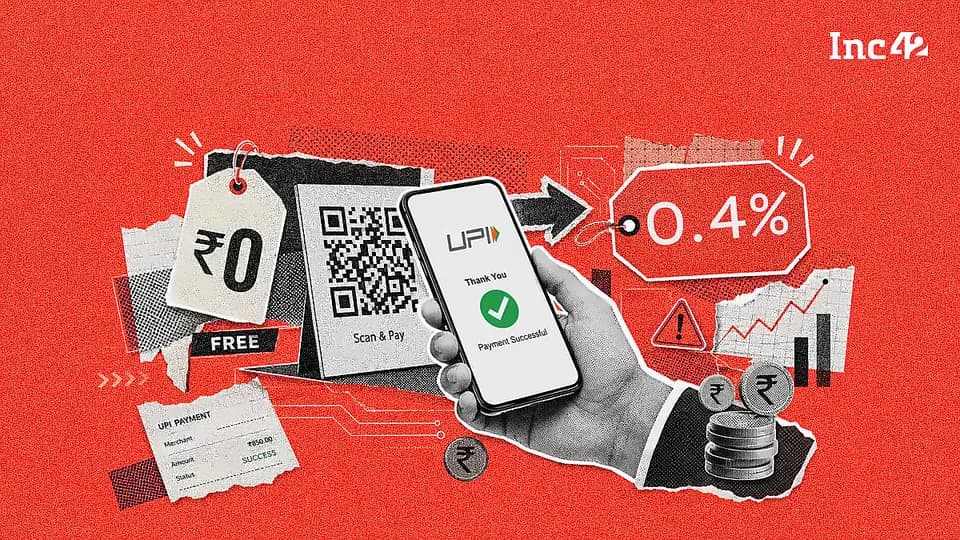
The National Payments Corporation of India has established a 0.4% MDR on person-to-merchant UPI transactions above ₹2,000 from October 15, 2026, with charges capped at ₹300 for payments of ₹75,000 and above. As reported by NDTV Profit, the fee structure will be paid by merchants rather than consumers, creating a new revenue stream for payment companies and banks. This represents the first broad-based MDR framework for UPI transactions, marking a significant development in the digital payments ecosystem. The updated provisions will take effect from October 15, 2026, with most person-to-merchant transactions remaining unaffected by the changes. According to The Economic Times, capital market transactions will attract a nominal 0.02% MDR, capped at ₹300, covering mutual funds, securities, brokers and dealers, with limited impact expected for long-term investors but greater sensitivity among frequent traders. Categories including fuel, telecom, insurance, education, utilities and railways will be charged a flat ₹5 on eligible transactions, as reported by The Economic Times.
The new framework includes comprehensive protection for small merchants and consumers through a zero-MDR framework for eligible small merchants. According to The Economic Times, vendors operating under the person-to-person merchant (P2PM) category will "enjoy a mandatory zero MDR" - typically small shopkeepers, street vendors and local businesses receiving less than ₹1 lakh per month in their accounts through UPI. Person-to-person UPI transactions will remain completely free, regardless of the amount transferred, while payments to merchants up to ₹2,000 will also continue to be free of charge. This protective measure ensures that everyday consumer transactions and small business payments remain unaffected by the new fee structure. Transactions below ₹2,000, which account for about 33% of P2M transaction value, remain free, while AutoPay mandates are also exempt, as reported by The Economic Times. Other sectors like railways and telecom will see a flat ₹5 fee, with these changes aiming to support UPI infrastructure and keep consumer payments free.
The UPI MDR framework is positioned to support the platform's continued expansion while maintaining affordability for users. According to Bernstein's analysis, UPI person-to-merchant transaction value is expected to rise from around ₹100 lakh crore currently to ₹144 lakh crore by FY28. Only about 40% of total P2M value will ultimately attract the full 40-bps MDR, with transactions below ₹2,000 (accounting for about 33% of P2M transaction value) remaining free. AutoPay mandates are also exempt, while capital-market payments attract only 2 bps. As per Vishwas Patel, managing director and CEO of AvenuesAI and Chairman of Payments Council of India, "PCI has consistently maintained that UPI needs a sustainable economic model to support its scale," emphasizing that sustained investment in infrastructure, cybersecurity, fraud prevention, technology and customer service is essential for the platform's continued growth. Reeju Datta, co-founder of Cashfree, said the levy remained well below card fees and left the overwhelming majority of UPI transactions untouched.