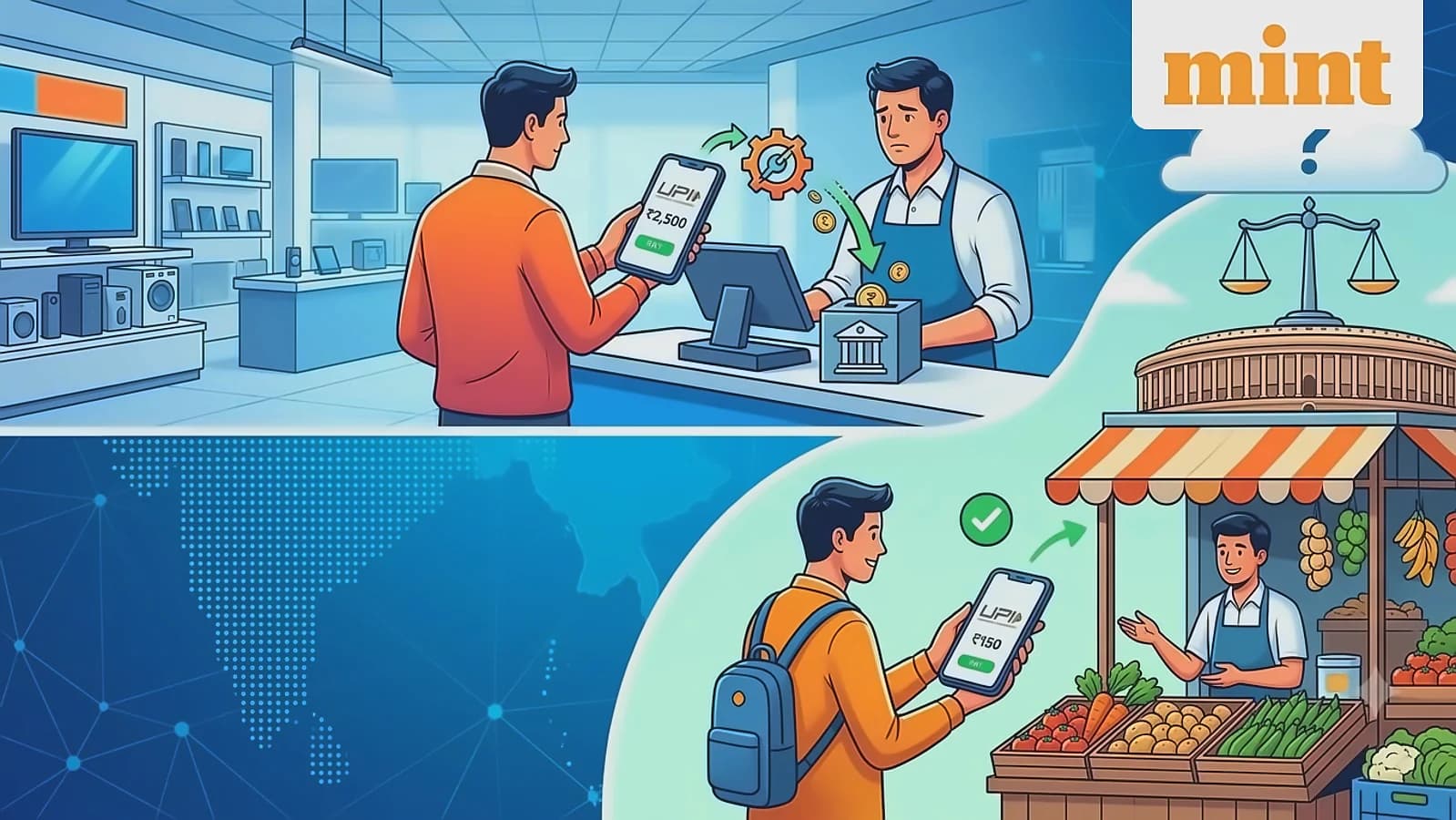
The government has officially clarified that UPI payments will remain free for Indian consumers and small merchants, with MDR charges applicable only to a limited set of merchant transactions above a certain threshold at a nominal rate far lower than debit or credit card MDRs. As per the latest government release, "As and when MDR charges are introduced, they will apply only to a limited set of merchant transactions above a certain threshold, at a nominal rate far lower than debit or credit card MDRs." The vast majority of the transactions will remain free of charge for merchants on UPI, with MDR, if introduced, being threshold-based and not levied blanketly on all. "No charges for users: Consumers making payments will not face any transaction charges," the ministry emphasized, with all person-to-person (P2P) UPI transactions continuing to be free. "UPI will remain free for citizens," the government said, adding that there would be "No charges on everyday transactions on citizens." "Once the Parliament passes the Taxation and Other Laws (Amendment) Bill, 2026, which proposes to amend Section 10A of the Payment and Settlement Systems Act, 2007, the UPI and Services Steering Committee headed by NPCI will decide on the MDR, if any," the government further clarified. This official confirmation comes after the Lok Sabha passed the Taxation and Other Laws (Amendment) Bill, 2026, which amends the Payment and Settlement Systems Act, 2007, allowing the government to decide which digital payment methods remain free and which can attract charges. The Payments Council of India (PCI) has also clarified that UPI would remain free for consumers, with the association emphasizing that "UPI has always been free for consumers since its launch in 2016. Every Indian can continue making instant digital payments without paying any transaction charges." The industry body noted that any charges that may apply would be imposed on merchants under commercial arrangements with payment service providers, rather than collected directly from consumers, with "Merchant service charges, where applicable, are commercial arrangements between merchants and payment service providers. They do not mean that consumers pay to use digital payments."
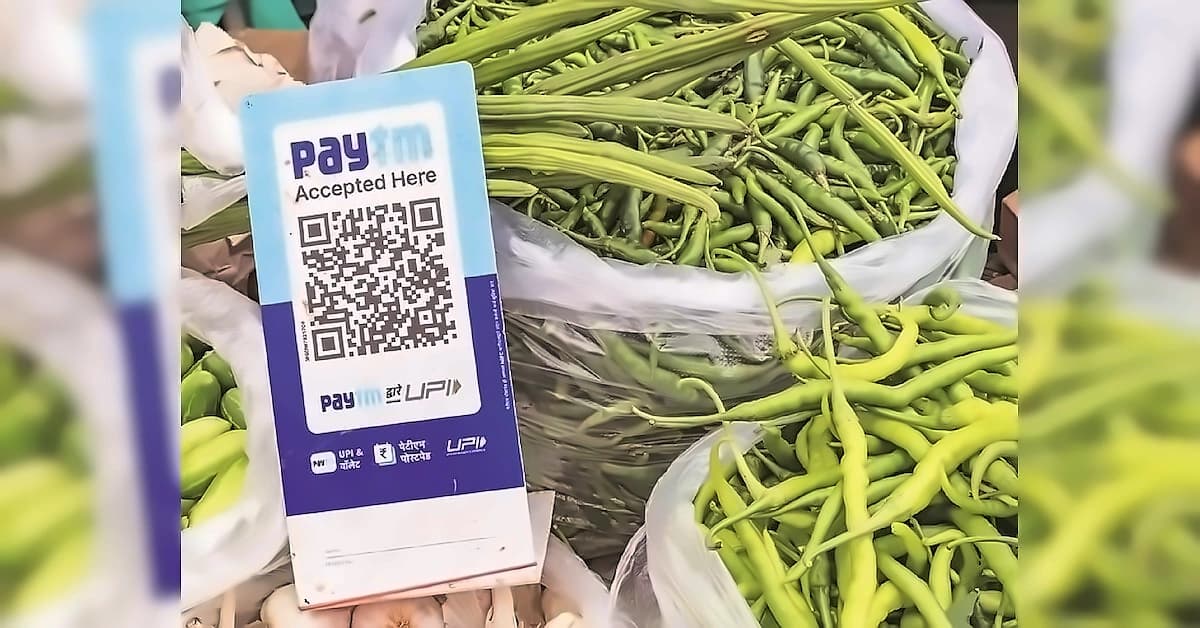
The government has strongly rejected media reports suggesting external influences are driving policy changes on UPI transaction fees, calling such claims "unfounded, completely false and misleading." As per the latest government statement issued on August 8, 2026, the ministry emphasized that "If external pressure had been a factor, the government would not have introduced UPI in 2016 or made it free of charge for both merchants as well as citizens since January 2020 and ensured that it became the world's largest real time interoperable payment system." The government further flagged media reports that indicated external influences driving policy changes, stating that these reports are unfounded and completely false. This official rejection comes amid growing speculation over UPI transaction fees and concerns about potential external pressure on India's digital payments infrastructure. The government said the amendment should instead be viewed as part of its broader objective of keeping India's digital payment infrastructure sustainable, competitive and capable of supporting the country's expanding digital economy. "The truth is simple: UPI is India's own innovation, and the government remains committed to keeping it free for citizens while ensuring its sustainability for decades to come," it said, urging citizens to rely only on official information from the Ministry of Finance, the Reserve Bank of India and NPCI, and avoid forwarding unverified messages.
The government is expected to permit a Merchant Discount Rate (MDR) of between 0.25% and 0.4% on UPI transactions above ₹2,000 made to businesses, while person-to-person payments are likely to remain outside the scope of the proposed levy. The amendment removes the existing legal restriction that bars banks and payment service providers from collecting MDR on notified electronic payment modes. The proposal is not expected to affect routine purchases such as milk, vegetables, groceries or payments for auto-rickshaw and taxi services. Government officials said that over 90% of the transactions that include daily purchases of milk, vegetables and groceries will not attract an MDR charge, with UPI processed 2,366 crore transactions worth ₹29.9 trillion in July 2026, according to the latest ministry figures. The Centre also operates an incentive scheme under which banks are reimbursed for eligible low-value UPI transactions made to small merchants, helping offset part of the cost of processing these payments. The recent change has sparked debate, with some people believing that it means users will have to pay charges for UPI. In reality, the amendment aims to make UPI more sustainable, technologically advanced, and better prepared for future risks.
RBI Governor Sanjay Malhotra has clarified that no decision has been made on introducing Merchant Discount Rate (MDR) on UPI transactions above ₹2,000, stating that it is too early to conclude whether UPI transactions will attract MDR during a post-monetary policy press conference on Wednesday. As per Business Standard, Malhotra emphasized that discussions around the Payment and Settlement Systems (Amendment) Bill, 2027 are still underway and the RBI's immediate focus remains strengthening the country's digital payments infrastructure rather than deciding how it will eventually be funded. He clarified that the costs of running the payments system were being borne by parts of the ecosystem and not necessarily by users, adding that "What is important is that we continue to invest and continue to find the means, whether it is MDR or other things. Those are matters of detail. Let's see how the situation evolves going forward." For consumers, nothing changes immediately. UPI transactions remain free, and there has been no decision to impose charges on person-to-person or merchant payments. Any future move would require both a policy decision and detailed regulatory guidelines before it comes into effect. Malhotra noted that "someone has to pay the cost" of running India's digital payments infrastructure, adding that the cost of maintaining UPI payments cannot be ignored indefinitely, while emphasizing that "it may not be the same consumer. It may be the general economy, and you don't get to see it directly."
UPI has achieved a significant milestone with 2,366 crore transactions worth ₹29.9 trillion processed in July 2026, marking its highest-ever monthly volume according to the latest government figures. The platform is also live in 11 foreign countries, demonstrating its growing global reach and adoption. The government said UPI has grown into the world's largest real-time payment system since its launch in 2016-17. The government said UPI's transaction volumes have grown sharply, increasing the need for continuous investment in the payment system. The ministry emphasized that reliance on subsidies alone would not be viable for the next phase of UPI's growth and that a self-sustainable revenue model would be needed to support further expansion. The proposed framework is intended to support UPI's expansion into rural and semi-urban areas while maintaining its affordability and security, as per the latest government clarification. The government said the amendment is intended to support the long-term sustainability of UPI and its continued investment in cybersecurity, fraud prevention and infrastructure, with the ministry noting that the proposed MDR framework is intended to support UPI's expansion into rural and semi-urban areas while maintaining its affordability and security.
Congress leader Jairam Ramesh had alleged that the proposed amendment removes the statutory guarantee that has kept UPI transactions free of charges, thereby opening the door for the future imposition of MDR on digital payments. As per Zee News, Ramesh claimed that any such levy would ultimately be passed on to ordinary users and rejected the government's argument that charging MDR is necessary to make UPI financially sustainable. The Congress leader also argued that the Reserve Bank of India has adequate financial resources to support the country's digital payments infrastructure without imposing any additional burden on merchants or consumers, citing the RBI's surplus transfer of ₹2.86 lakh crore to the Centre in 2025-26. Government officials said that over 90% of the transactions that include daily purchases of milk, vegetables and groceries will not attract an MDR charge, with UPI processed 2,366 crore transactions worth ₹29.9 trillion in July 2026, marking its highest-ever monthly volume according to official figures.
Think tank GTRI has strongly opposed any rewriting of India's UPI policies under US pressure, stating that India must defend competition, policy autonomy and the long-term sustainability of its payments ecosystem. GTRI Founder Ajay Srivastava emphasized that "India must not rewrite its UPI policies under US pressure. It must defend competition, policy autonomy and the long-term sustainability of its payments ecosystem." The think tank noted that at present, banks and payment-system providers cannot directly or indirectly charge users for prescribed payment methods, including UPI and RuPay debit cards. GTRI claimed that the legislative change also comes against the backdrop of US criticism of domestic digital-payment systems, citing the US Trade Representative's 2026 National Trade Estimate Report on Foreign Trade Barriers, which criticised both Brazil's Pix and India's UPI and RuPay framework. Srivastava warned that "India should not introduce MDR simply to address US trade complaints or protect the profits of Visa, Mastercard and other foreign payment companies." He argued that any decision on charges should be based on the cost of running UPI and ensuring its long-term sustainability, adding that American companies already have wide access to India's payment market.