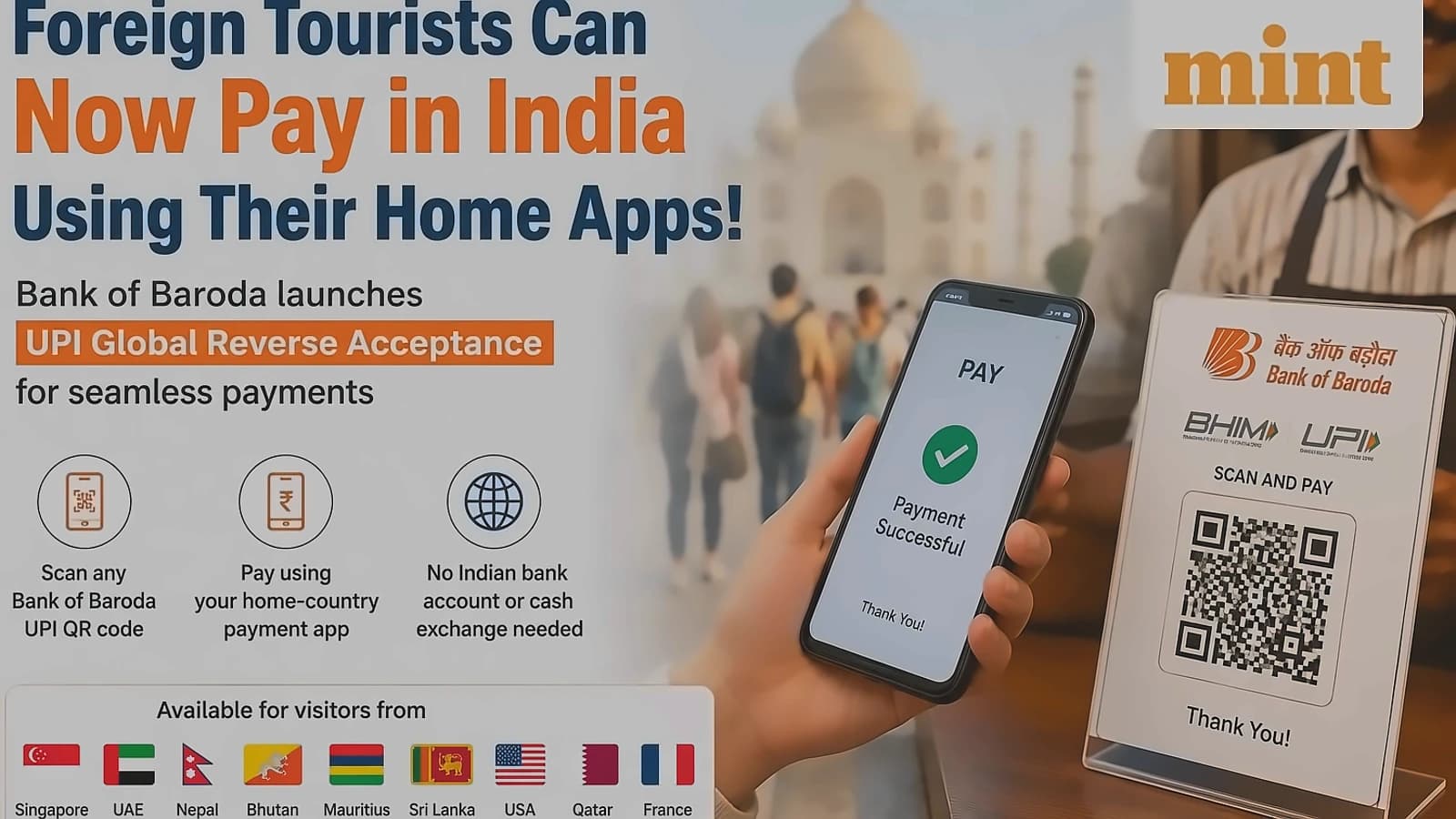
UPI has officially launched in Cambodia through a strategic partnership between the National Payments Corporation of India (NPCI) and ACLEDA Bank, marking a significant milestone in cross-border payment connectivity. As reported by the Ministry of Finance, the first phase enables millions of Indian travellers to make seamless QR payments at over 4.5 million Cambodian merchants using UPI-enabled applications. The launch facilitates a two-way corridor between the two countries, with the subsequent phase planned to become fully bi-directional. This partnership represents a major step forward in enabling Cambodian citizens visiting India to use their domestic banking and digital payment applications to scan millions of UPI QR codes throughout India.
UPI transactions reached a historic milestone of ₹29.90 lakh crore in May 2026, marking a significant surge driven by summer travel and IPL fever, according to data released by National Payments Corporation of India. The platform recorded 23.2 billion transactions during the month, representing a 24% increase from 18.67 billion transactions in the corresponding period last year. As reported by PTI, the value of transactions stood at ₹29.03 lakh crore in April compared to ₹25.14 lakh crore in the same month a year ago, registering a 19% annual growth. According to Cashfree Payments co-founder & CEO Akash Sinha, these numbers reflect strong organic demand and a maturing digital payment ecosystem.
India's UPI payment is now live in over nine countries, with the recent addition of Cambodia joining the global network. In terms of international growth, UPI transaction volume crossed the one million mark for the first time in FY26, with volumes nearly doubling to 1.48 million in FY26 (as of December 2025) from 0.75 million in FY25. In terms of value, UPI recorded ₹330.43 crore in FY26 compared to ₹258.53 crore in FY25, representing significant growth from just ₹19.7 crore in FY24 with only 37,060 transactions. NPCI International is exploring bilateral UPI linkages with Indonesia, Thailand and Malaysia to expand the global footprint of India's payments network. As reported by Zee News, the organisation has made seven to eight such pipes operational so far, with plans to operationalise UPI in Japan, Maldives, Greece, and other nations.

UPI is now accepted as a payment method in over nine countries, with the latest addition being Cambodia through the NPCI-ACLEDA Bank partnership. According to the Ministry of Finance, UPI is accepted in eight countries including Singapore, the United Arab Emirates, France, Mauritius, Nepal, Bhutan, Qatar and Sri Lanka. The platform is already accepted in Bhutan, France, Mauritius, Nepal, Qatar, Singapore, Sri Lanka, and the United Arab Emirates. NPCI operates UPI rails in India and has been clear that it needs 20 to 25 years to completely establish bilateral pipes with interested countries. The organisation has made seven to eight such pipes operational so far, with plans to operationalise UPI in Japan, Maldives, Greece, and other nations.

According to The Economic Times, Asbe highlighted that the next growth frontier will be additive to all of this. Credit-on-UPI is still in early innings and represents a significant new volume pool. Cross-border UPI is live in over eight countries and expanding, bringing a whole new transaction category onto the rails. The Reserve Bank of India (RBI) has been actively pursuing interlinking of Unified Payments Interface (UPI) with fast payment systems of other jurisdictions to promote cross-border payments. These initiatives are aligned with the G20 Roadmap for enhancing cross-border payments, with a focus on cheaper, efficient, more transparent, and more accessible payments. The RBI also has an ambition to give every eligible account holder in every district access to at least one digital payment option.