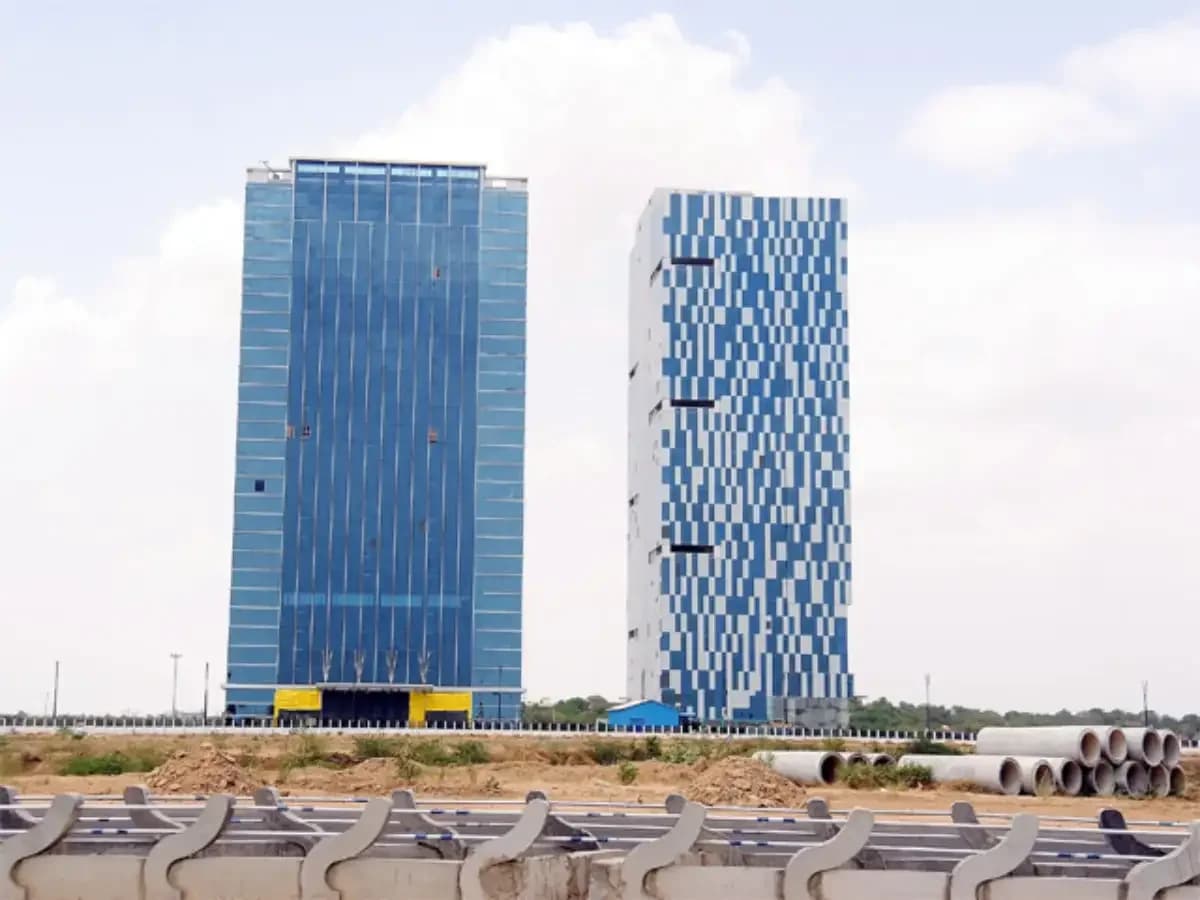
India and Vietnam are both developing International Financial Services Centres (IFSCs) to attract foreign capital for their next growth phases. According to reports from NDTV Profit, India's Gujarat International Finance Tec-City (GIFT City) near Ahmedabad and Vietnam's International Financial Centre (VIFC) in Ho Chi Minh City and Da Nang are designed to achieve these objectives. However, the two countries are starting from different positions - India already has a large and sophisticated financial system, while Vietnam is still building one. India was worried about financial transactions taking place in different jurisdictions such as Mauritius, Singapore, Dubai or the Cayman Islands, while Vietnam, on the other hand, relies heavily on the banking sector and needs more long-term capital for infrastructure and other sectors. The idea of GIFT IFSC was to encourage investments through India that would otherwise be conducted in other international cities, with the centre offering a different regulatory structure that allows banks to operate without maintaining reserves like domestic banks.
The GIFT IFSC idea took shape in 2007 and became operational in 2017, with the initial objective of bringing India-related financial activity onshore. As reported by NDTV Profit, nearly two-thirds of ECBs raised in FY26 so far were routed through GIFT IFSC. The centre offers a different regulatory structure with a single regulator separate from usual banking and securities regulators, allowing banks to operate without maintaining reserves like domestic banks. As of March 2026, GIFT had more than 1,100 registrations, over $111 billion in banking assets, more than $112 billion in average monthly exchange turnover, over $39 billion in cumulative fund commitments, and over 400 aircraft and ships leased. India has allowed various sectors to operate in GIFT City, including banking, insurance, reinsurance, fund management, aircraft and ship leasing, bullion trading, global treasury operations, fintech and other specialised services. Under the Foreign Exchange Management Act (FEMA), IFSC units are treated as non-residents, giving them greater flexibility to transact in foreign currencies, while the SEZ framework provides tax incentives including a tax holiday up to 20 years.

Vietnam formally began its VIFC journey last year, with the country's credit-to-GDP ratio already above 140%, reflecting heavy reliance on bank financing. According to NDTV Profit, Ho Chi Minh City serves as the broader financial hub covering capital markets, banking, asset management and other conventional financial activities, while Da Nang is intended to focus more on fintech, digital assets, innovation and experimentation. Vietnam has implemented significant policy changes, including allowing English to be used in proceedings before the specialised VIFC court and appointing foreign judges in some cases. The court can even apply foreign law or international commercial customs. New projects in priority sectors can receive huge tax breaks, with managers, experts and highly skilled professionals working at the centre receiving personal-income-tax exemptions. Foreign investors and professionals get easy access to visas and work permits. However, Vietnam has to move quickly from policy to transactions - in September, the government urged both centres to develop concrete products and transactions instead of waiting for the full system to be completed. The government has asked the cities to have concrete financial products and transactions in place by November 2026, marking the first real test of their operational capabilities.
Both centres have ambitious expansion plans to become international financial hubs. As reported by NDTV Profit, GIFT City aims to expand products such as rupee derivatives, rupee bonds and rupee-settled transactions, giving international investors and banks a platform to trade and hedge rupee exposure. The centre plans to expand land, commercial space, educational institutions and other facilities, while the proposed high-speed rail link to Mumbai will connect it to the city's financial institutions and talent. Vietnam's government has urged both centres to develop concrete products and transactions by November 2026, marking the first real test of their operational capabilities. In an increasingly self-reliant world, developing countries are competing harder for foreign capital, and India and Vietnam have an added advantage as they are becoming important alternatives to China. As businesses and manufacturing move in, the financial ecosystem around them can grow too, with India having an edge in services, especially finance and technology, deeper capital markets, skilled professionals and an English-speaking workforce.