Union Minister for Communications Jyotiraditya M Scindia has provided comprehensive clarification on the UPI MDR framework, emphasizing that no charges will be levied on ordinary customers or citizens under the government's decision. Speaking to ANI on Wednesday, Scindia outlined the rationale behind the MDR structure on the Unified Payments Interface platform. 'For a technology structure to be completely independent, it needs to be self-sustaining,' the minister stated, reinforcing the Finance Ministry's earlier position that 'India's UPI policy decisions are made independently' for building a self-sustaining, inclusive, and affordable digital payments ecosystem.
The gold jewellery sector has formally requested authorities to either exempt high-value transactions in the gold trade from merchant discount rate (MDR) or grant a special exemption to the industry. According to reports from The Hindu BusinessLine, S Abdul Nazar, State General Secretary of the Kerala Gold and Silver Merchants Association, highlighted that jewellery establishments are already burdened with multiple financial obligations including GST, hallmarking, HUID, banking charges, security expenses and employee-related costs. The addition of MDR would particularly impact small and medium-sized enterprises in the sector.
As reported by The Hindu BusinessLine, an MDR of up to ₹200 applies to UPI transactions of ₹50,000, while transactions exceeding ₹75,000 could attract MDR of up to ₹300. However, the government has introduced several exemption categories that provide relief to specific sectors. Person-merchant transactions, defined as small businesses receiving up to ₹1 lakh per month through UPI QR codes, are completely exempt from MDR. Additionally, essential sectors including Railways, fuel payments, telecom services, insurance premiums, agricultural inputs, utilities, credit-card payments, and government tax payments will attract a ₹5 fixed charge for all transactions above ₹2,000. Capital market transactions, including mutual funds, securities, and stockbrokers, will benefit from a 0.02% MDR rate, capped at ₹300 per transaction to support continued retail participation in formal financial markets.
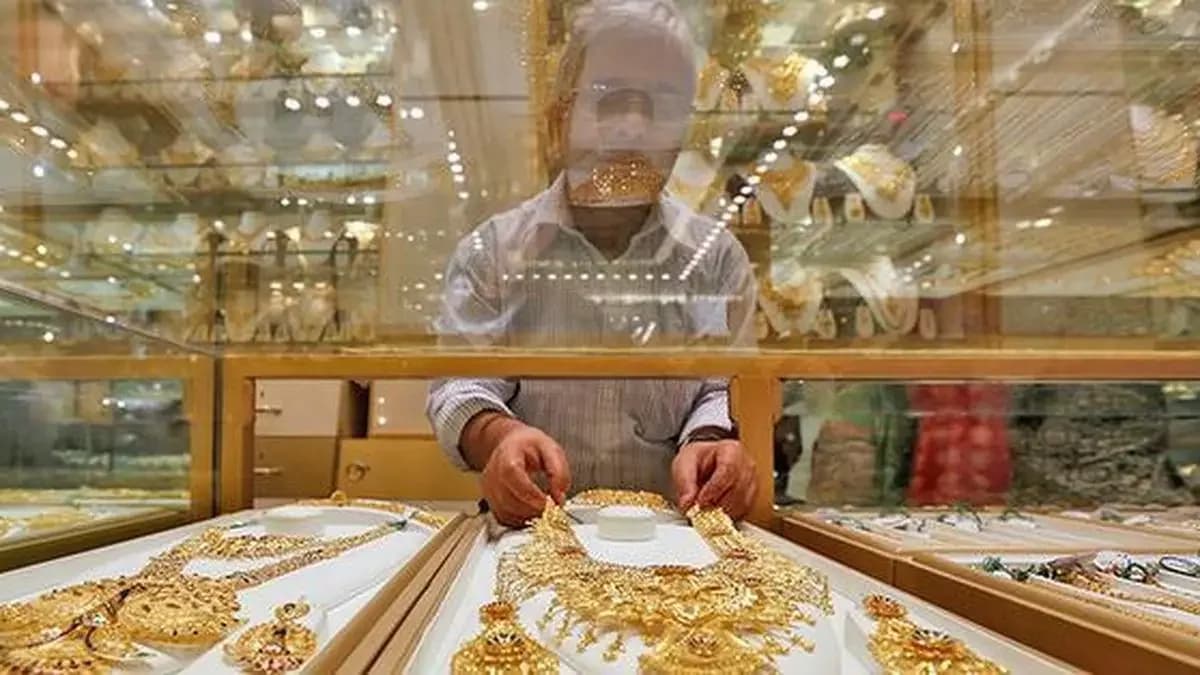
According to The Hindu BusinessLine, while the government has clarified that MDR should not be collected directly from customers, the financial burden would ultimately be borne by merchants. Nazar emphasized that given that UPI has become a cornerstone of India's digital economy, the gold jewellery trade sector requires special consideration. He argued that high-value gold transactions should not be treated on the same footing as routine retail transactions, as the sector's operational scale and transaction volumes create unique financial implications.
The government has ruled out withdrawing the proposed 0.4% MDR on specified UPI merchant transactions above ₹2,000, with the framework taking effect from October 15. Finance Minister Nirmala Sitharaman confirmed that most merchant transactions, including ordinary low-value payments, will continue to remain free. The government has clarified that person-to-person UPI payments will not attract MDR, while around 96% of person-to-merchant transactions will remain unaffected. For a ₹2,000 transaction, the merchant-side charge would be ₹8, with the issuing bank receiving ₹3.20 and the acquiring bank getting ₹2.40. The ministry emphasized that 'MDR is neither a tax nor a charge collected by the government or NPCI. The revenue will be distributed among payment ecosystem participants, including banks and payment application providers.'
Industry executives have raised concerns about enforcement challenges, with independent fintech analyst Parijat Garg noting that small merchants may split larger payments into multiple transactions to avoid MDR. Kumar Rajagopalan, executive director & CEO at Retailers Association of India (RAI), warned that small merchants will now think if they should accept cash or UPI. The detailed framework for the proposed 5% of MDR collections fund to support small merchants is expected to be finalised within three months in consultation with the RBI. While the government maintains that merchants should not pass MDR charges on to customers, enforcement will be challenging given the size of the merchant ecosystem. The ministry has clarified that 'UPI payments to merchants in rural and semi-urban areas will remain free. Five per cent of MDR collections will go to a dedicated fund to expand UPI acceptance among small merchants.'